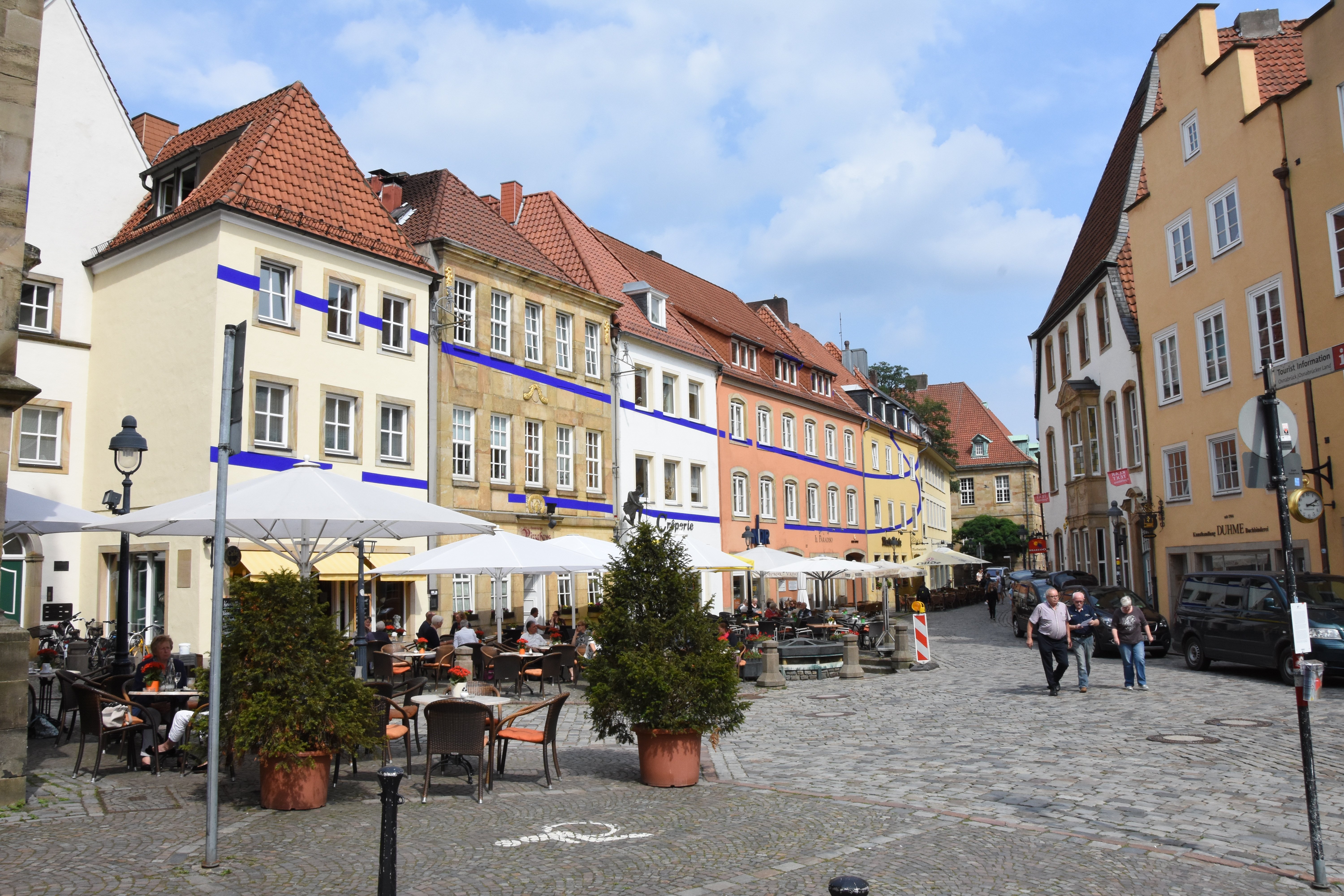
Osnabrück is a university city in southwestern Lower Saxony, best known as one of the two cities where the Peace of Westphalia was signed in 1648, ending the Thirty Years' War. The Rathaus (town hall) where the negotiations took place still stands in the old centre and is one of the finest Gothic civic buildings in northern Germany — the Hall of Peace inside, with its original wood-panelled walls and portraits of the negotiators, is worth seeing.
The old town is compact and pleasant, centred on the cathedral (St. Peter's, largely Romanesque) and the market square. The Felix Nussbaum Haus, designed by Daniel Libeskind, is a museum dedicated to the Osnabrück-born Jewish painter murdered at Auschwitz — architecturally striking and emotionally powerful.
Osnabrück sits between the Teutoburg Forest and the Wiehengebirge hills, and the surrounding countryside is good cycling and walking territory. The city is on the main rail line between Amsterdam and Berlin, about 150 km from Hannover.