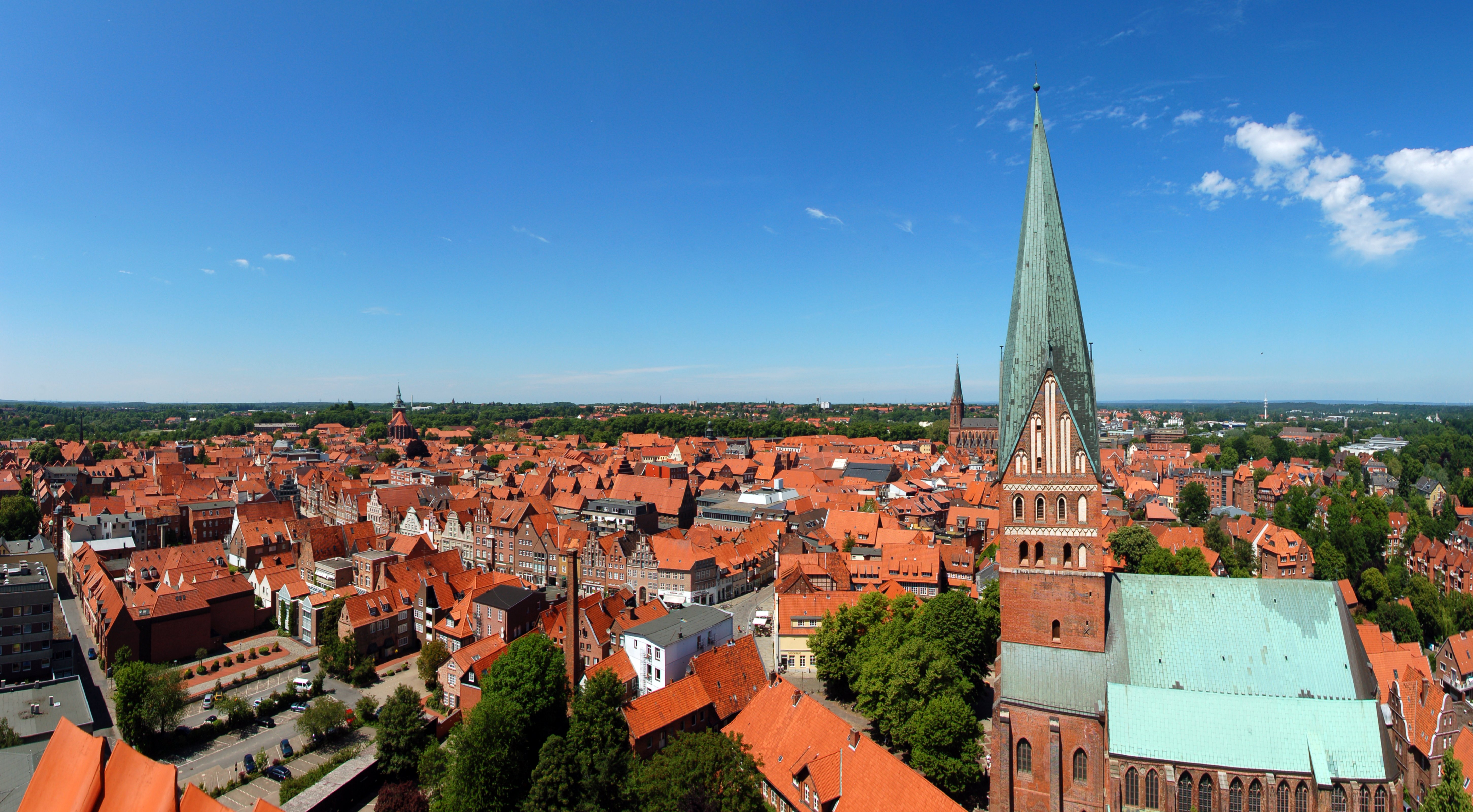
Lüneburg is one of northern Germany's best-preserved medieval cities, and it owes everything to salt. For centuries, "white gold" mined from beneath the city funded a spectacular run of civic building — Gothic brick churches, merchant warehouses, and gabled townhouses that crowd the old market squares. When the salt ran out in the 19th century, the city had no money to tear things down and rebuild, which turned out to be a piece of extraordinary luck. The result is an Altstadt that feels genuinely old rather than reconstructed.
The other thing Lüneburg owes salt is its odd character: underground brine extraction caused the earth to subside unevenly for centuries. Walk the older streets and you will notice buildings that tilt and lean at peculiar angles, walls bowing outward, doorframes that have settled into gentle trapezoids. It gives the place an eccentric, slightly tipsy atmosphere that is entirely its own.
The city sits about 50 kilometres southeast of Hamburg, connected by fast rail in under 40 minutes. That makes it an easy day trip, but it repays an overnight stay — the old town empties pleasantly after the day-trippers leave, and the pubs along the Stintmarkt waterfront come alive in the evenings.