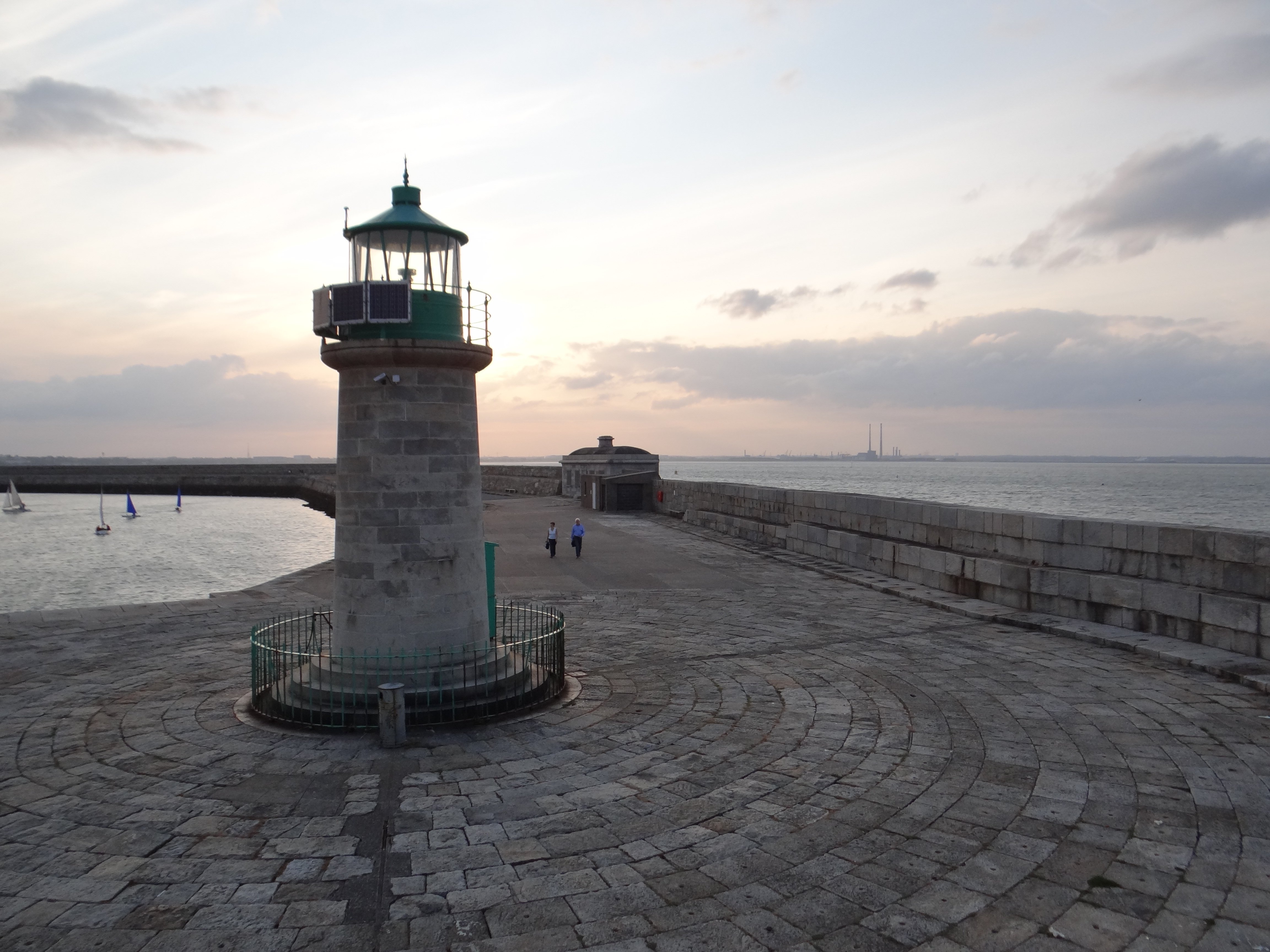
Dun Laoghaire is a large town about 11 km south-east of Dublin, on the southern curve of Dublin Bay. The name means "fort of King Laoghaire" — the 5th-century king who built a stronghold here. Today it’s a pleasant mix of Victorian terraced houses, a bustling harbour, and one of the easiest escapes from the city.
The main street, George’s Street, runs parallel to the sea one block inland. It’s been partly pedestrianised, which makes it genuinely pleasant to walk: the shops date mostly from the early 20th century, and the cornices and mouldings above the shopfronts are worth looking up at as you pass.
Marine Road leads straight down from George’s Street to the harbour — and the harbour is the reason to come. Two massive granite piers reach out into Dublin Bay, each about a mile long, enclosing a large stretch of sheltered water. Locals walk the piers in all weathers. It’s free, it’s bracing, and it’s one of the best simple walks in greater Dublin.
A promenade continues from the East Pier along the coast to Sandycove, a small sandy cove with a Martello tower above it — known as Joyce’s Tower because James Joyce set the opening chapter of Ulysses here. Easy walking distance from the town centre, and one of the most satisfying short walks on Dublin Bay.
Dun Laoghaire is also the ferry port for the Stena Line crossing to Holyhead in Wales. The DART commuter train connects it to central Dublin in about 20 minutes.