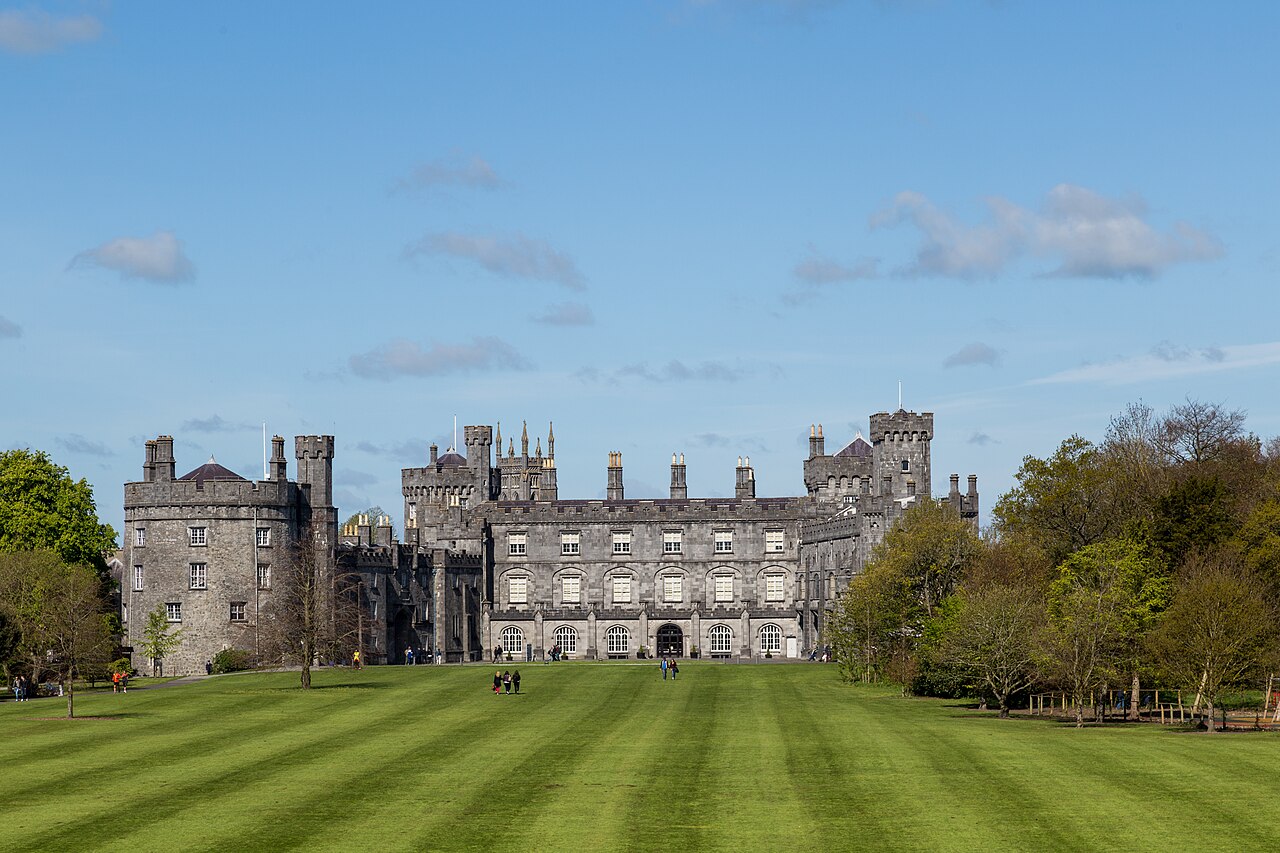
Kilkenny is Ireland's most beautifully preserved medieval city — compact enough to walk end to end in twenty minutes, but rich enough to keep you for several days. Narrow lanes of limestone buildings, a great Anglo-Norman castle, a round tower you can climb, and a string of ancient churches and abbeys make it one of the most satisfying cities to explore on foot anywhere in Ireland.
The medieval core runs along what is called the Medieval Mile — a kilometre of history between Kilkenny Castle at the south end and St Canice's Cathedral at the north. Between the two are Rothe House, a 16th-century merchant's townhouse with a garden, the Black Abbey, and the Tholsel — the old city hall with its distinctive octagonal clock tower. The Medieval Mile Museum, in St Mary's Church on James's Street, covers the whole sweep of the city's history in beautifully restored surroundings.
Kilkenny has excellent craft and design traditions. The Kilkenny Design Centre, across the street from the castle, is one of the best shops in Ireland for ceramics, glass, textiles, and jewellery made by Irish makers. The Jerpoint Glass studio, south of the city, is where you can watch the glassblowers at work.
From 1641 to 1650, Kilkenny was the seat of the Confederation of Kilkenny — an attempt by the Catholic Irish to govern themselves during the chaos of the English Civil War. The city had its own parliament, its own coinage, and controlled most of Ireland for nearly a decade before Cromwell arrived.
The pub culture is excellent. Tynan's Bridge House Bar on John's Bridge is one of the most authentic Victorian pubs in Ireland; Langton's on John Street is the city's best-known bar for a bigger night out; Kyteler's Inn on St Kieran's Street is the oldest in the city and comes with a genuine witchcraft trial story attached.