Isernia is one of two provincial capitals in Molise, Italy's least-visited region. The town sits on a narrow ridge at 420 metres, separating the Carpino and Sordo rivers, with mountain views in every direction.
The history runs deep. As the Samnite city of Aesernia, it was colonised by Rome in 263 BC and became an important road junction. Centuries of Goths, Byzantines, Lombards, and Saracens followed, and earthquakes have repeatedly flattened the place — the most destructive in 1349, 1456, 1688, and 1805. The result is a town that is constantly rebuilding itself, layering medieval and baroque over ancient foundations.
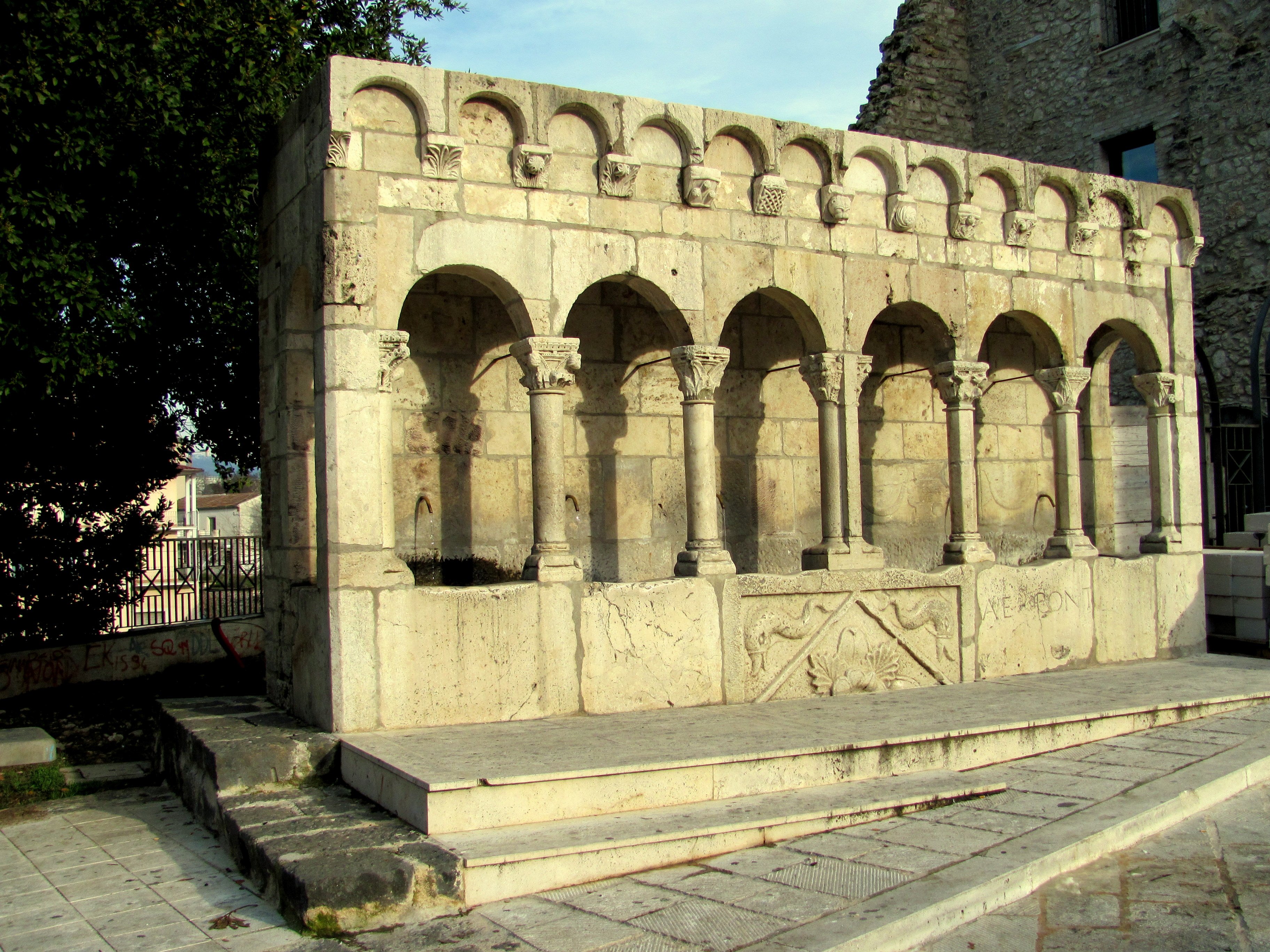
The Fontana della Fraterna, a 13th-century public fountain assembled from Roman and medieval fragments, is the symbol of the city — it stands in a small square and is genuinely beautiful. The cathedral, rebuilt in neoclassical style after the 1805 earthquake, sits over much older foundations. The Museo Nazionale del Paleolitico, just outside town, displays finds from one of Europe's oldest known human settlements, dating back 700,000 years.
Isernia is not a place most tourists seek out, but if you are passing through Molise it is worth a stop for the fountain, the museum, and the quiet atmosphere of a provincial Italian town that has not been touched by mass tourism.