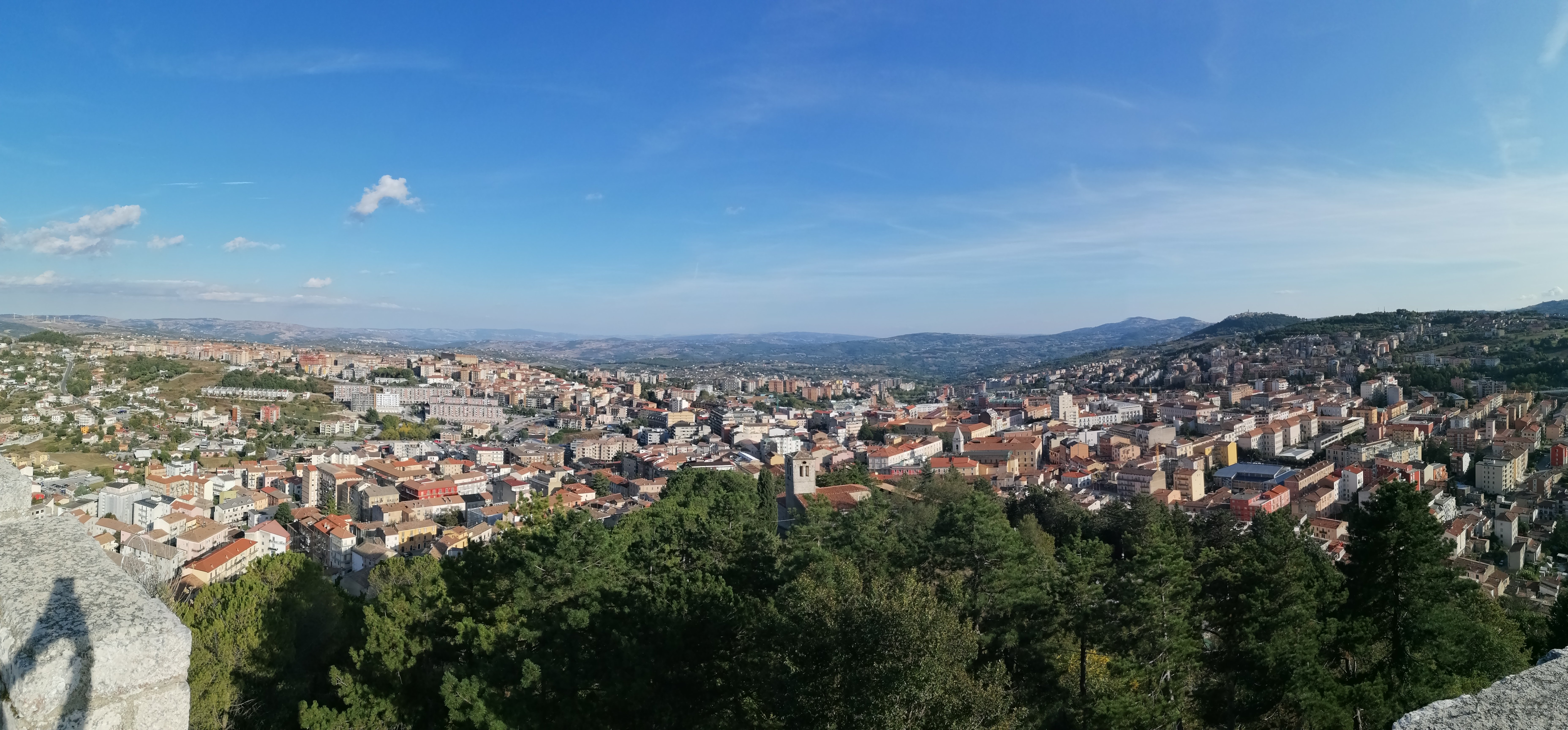
Campobasso is the capital of Molise, Italy's least-visited region — and that obscurity is precisely what makes it worth the detour. Perched at 701 metres on a ridge between the Biferno and Fortore river valleys, it is a quiet, unhurried hill town with a medieval core, a Lombard castle, and an almost complete absence of other tourists.
The old town climbs steeply toward the Castello Monforte, a 15th-century fortress built by the Monforte family on the foundations of a much older Lombard stronghold. The castle is more ruin than monument, but the views from its walls over the surrounding Molisan hills are the best reason to make the climb. Below it, narrow lanes and stone stairways connect a series of small churches — San Giorgio, San Bartolomeo, San Leonardo — each with its own worn fresco or half-forgotten altarpiece.
The lower, newer town holds the university, the regional government buildings, and a normal working-city life that has little to do with tourism. The pedestrianised Corso Vittorio Emanuele is the main promenade and the place to join the evening passeggiata. Campobasso is known throughout Italy for the production of cutlery and bladed tools — a craft tradition going back centuries — and small workshops can still be found in and around the town.
The city is also famous for the Sagra di Corpus Domini, a spectacular June procession in which costumed figures are suspended in mid-air on concealed metal armatures, appearing to float above the crowd. It is one of the more genuinely surprising festivals in southern Italy.
Campobasso is best used as a base for exploring Molise: the Samnite archaeological site at Saepinum, the medieval hilltowns of Oratino and Ferrazzano, and the Matese mountains are all within easy reach.