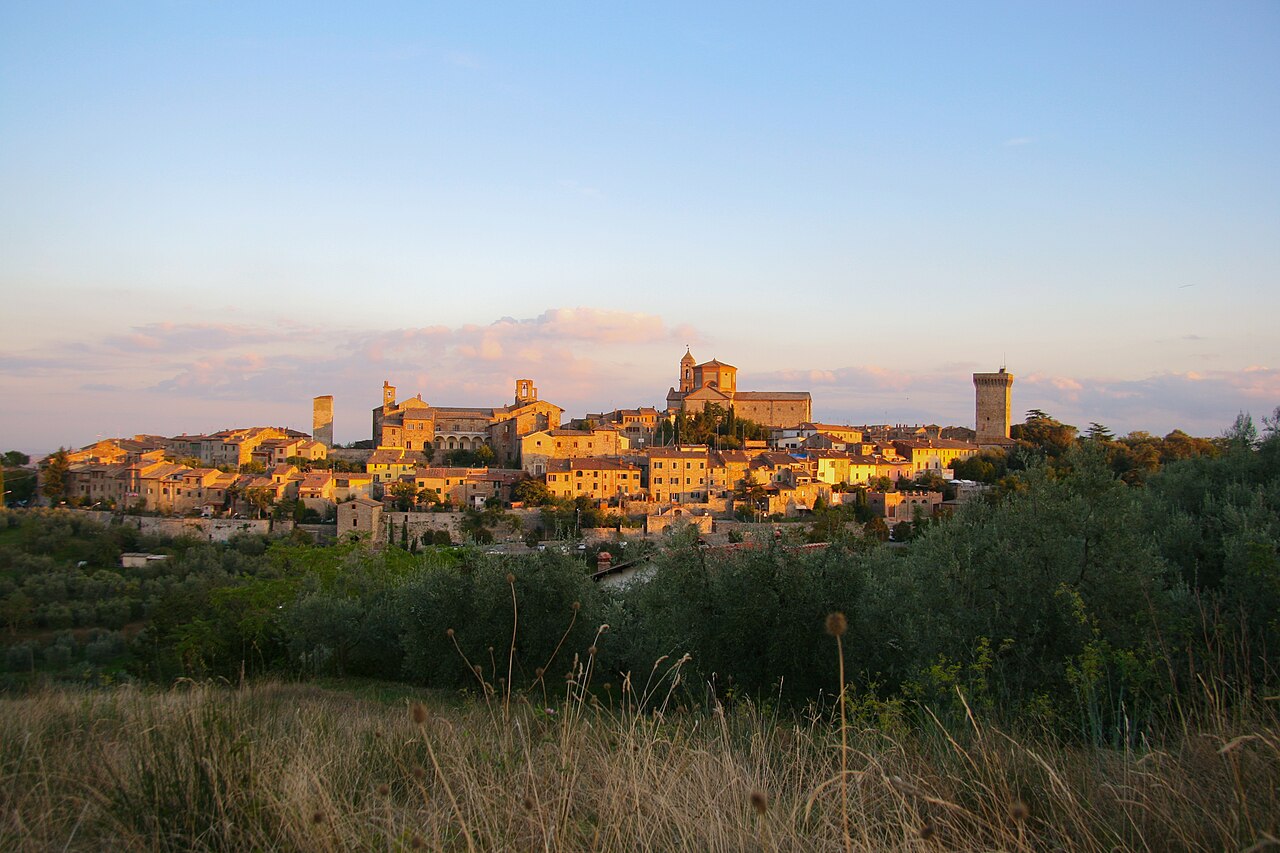
Lucignano is one of the most unusual medieval towns in Tuscany — not just charming, but geometrically extraordinary. Sitting at 414m above the Valdichiana valley between Siena and Arezzo, the entire town is laid out in a series of concentric elliptical rings. Walking its streets feels like threading a labyrinth, with the upper section — the Palazzo Comunale, the church of San Francesco, and the Collegiata — at the centre of the puzzle.
The town's strategic position made it bitterly contested through the Middle Ages, passing between Siena, Arezzo, Florence, and Perugia from the 1200s to the 1500s. Under the Medici from 1554, it acquired its current form: the fortress, several Renaissance churches, and the Madonna delle Querce sanctuary outside the walls, attributed to Vasari.
The distinction between the town's two main streets has survived intact: Via Matteotti, the sun-facing "rich street" lined with the palaces of the nobility, and Via Roma, the shadier "poor street" with smaller artisan dwellings. Today the town is known for olive oil, honey, ceramics, and stonework. It is quiet, unhurried, and far less visited than the Tuscan towns to the north.