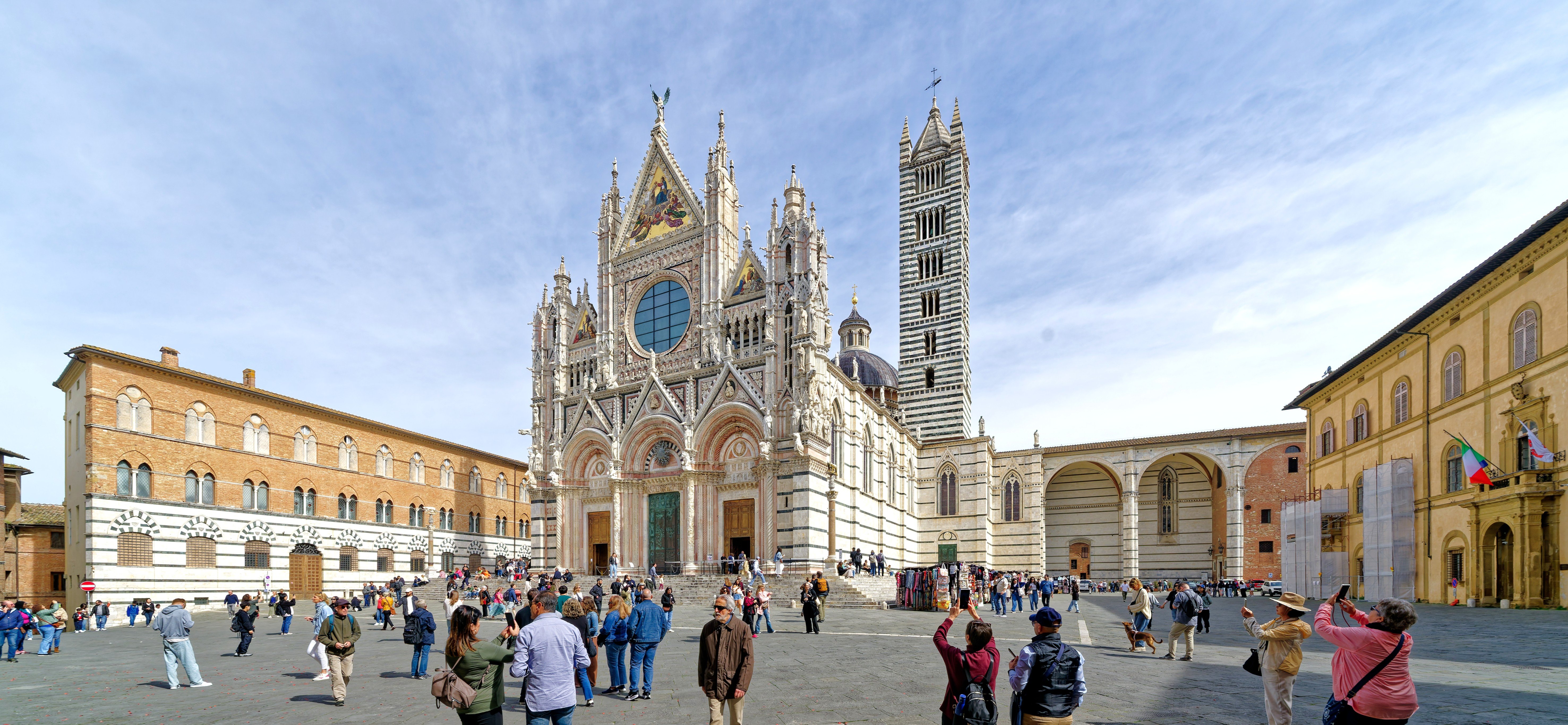
Siena is the great rival of Florence, and for many visitors the more lovable of the two. It is a medieval city virtually intact — the centre is closed to traffic, the towers and palaces of the 13th and 14th centuries still dominate the skyline, and the Piazza del Campo is one of the most beautiful urban spaces in Europe. It sits in the hills of Tuscany about 55 km south of Florence, surrounded by vineyards producing Chianti Classico.
The city reached its peak in the 13th and early 14th centuries under a merchant oligarchy known as the Nine, who poured money into buildings, art, and civic improvements. The Duomo, the Palazzo Pubblico, and the Campo all date from this period. The Black Death of 1348 killed much of the population and ended Siena's brief golden age. Florence eventually swallowed the city in 1555, which turned out to be good for preservation: Siena was never modernised.
The Palio is the defining event of the Sienese year — a 75-second horse race run around the Campo on 2 July and 16 August. The pageantry, the rivalries between the city's 17 contrade (districts), and the sheer intensity of the occasion are extraordinary. If you visit during the Palio, arrive early and buy a stand ticket in advance. The centre of the Campo is free but you will be trapped there for hours.
The other great art collections are at the Pinacoteca Nazionale (the world's finest survey of Sienese painting) and the Museo dell'Opera del Duomo, with Duccio's Maestà. The cathedral complex also includes the Baptistery and the vast Santa Maria della Scala. For relics of the city's most famous saint, head to the Basilica of San Domenico and the Sanctuary of Saint Catherine.
Florence is an easy day trip by train (90 minutes). San Gimignano, Monteriggioni, and the wine country of Chianti are all within an hour's drive.