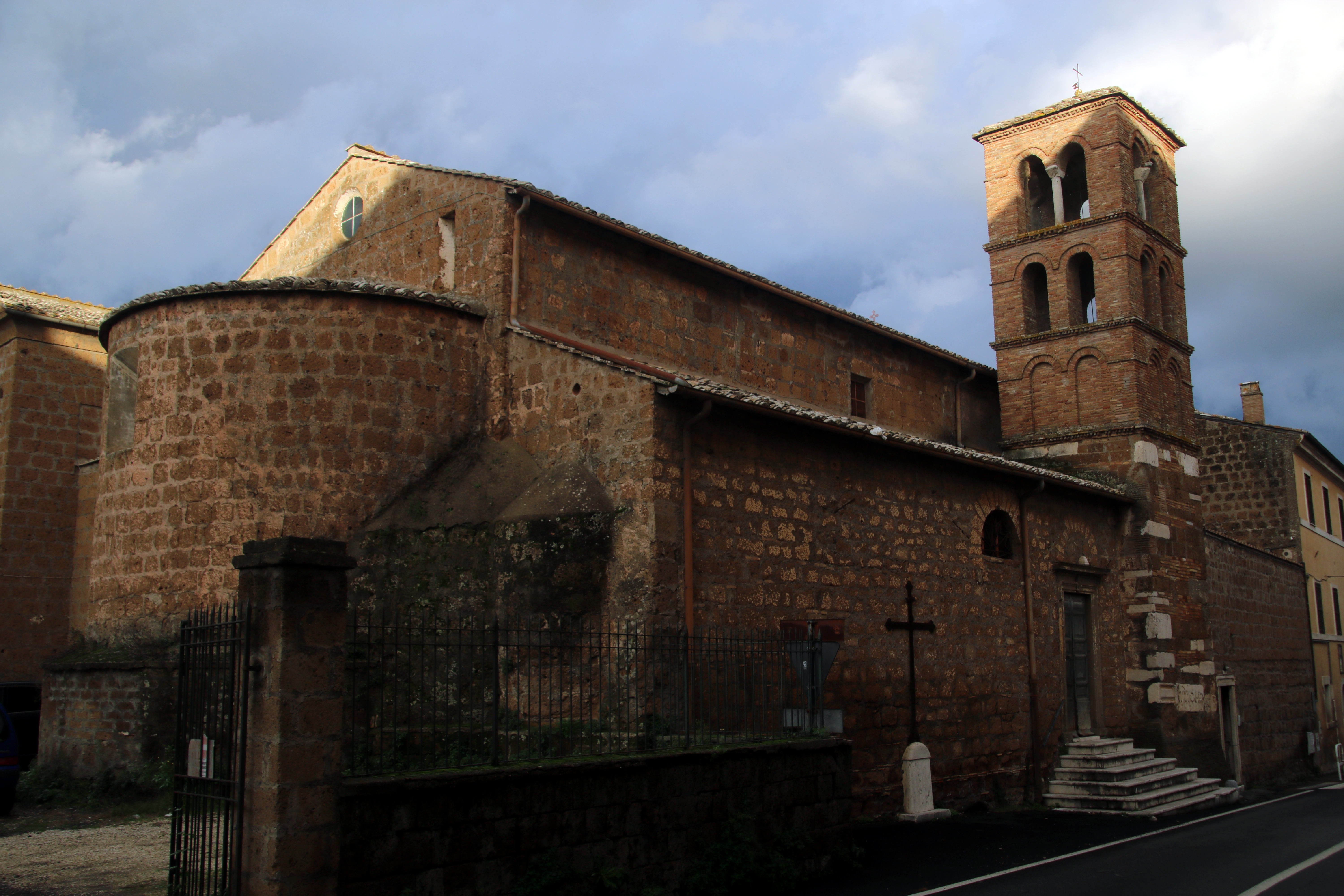
Northern Lazio tufa town above a gorge, with Faliscan archaeology and a Renaissance fortress.
Civita Castellana is a small town in northern Lazio, set on a tufa plateau above a deep gorge carved by the Rio Maggiore. It lies in the heart of the ancient Etruscan territory — the nearby Faliscan settlements date back to the 8th century BC — and has maintained a tradition of ceramic arts for centuries.
The town's centrepiece is the Forte Sangallo, a pentagonal Renaissance fortress designed by Antonio da Sangallo the Elder for Pope Alexander VI. Inside is the Museo Archeologico dell'Agro Falisco, with an excellent collection of Faliscan pottery. The Romanesque cathedral, with its 12th-century portico by the Cosmati family, is also worth a look.
From here the Etruscan sites of Cerveteri and Ostia Antica are easily reachable, as are Viterbo and Rome.
Guide
Day Trips
Viterbo is the most obvious day trip, about 40 minutes northwest — a medieval papal city with a well-preserved old quarter, hot springs at Terme dei Papi, and good restaurants. Orte is closer still, barely 20 minutes east along the Tiber, with a hilltop historic centre and an extensive network of underground Etruscan tunnels. Rome is a comfortable day trip in the other direction, an hour south on the Via Flaminia. The volcanic lake of Lago di Vico, a nature reserve in the crater of an extinct volcano, is also within easy reach — about 20 minutes west — and worth combining with a visit to Viterbo.
Guide
Getting There
By train from Rome Termini, take the FR3 regional line towards Viterbo and change at Capranica-Sutri; the total journey is around 70 minutes. Trains run roughly hourly. From Capranica-Sutri station a taxi or infrequent local bus covers the remaining few kilometres to Civita Castellana. Check current timetables before travelling, as the connection is not always well-timed.
By car the most direct route is the Via Flaminia (SS3), which runs directly from Rome through Civita Castellana towards Foligno. The drive from central Rome is about 65km and takes around an hour in normal traffic — less on a Sunday morning. The road passes through some attractive Tiber valley scenery north of Rignano Flaminio. From Viterbo, Civita Castellana is about 30km south on the SS2 and then local roads, under half an hour.