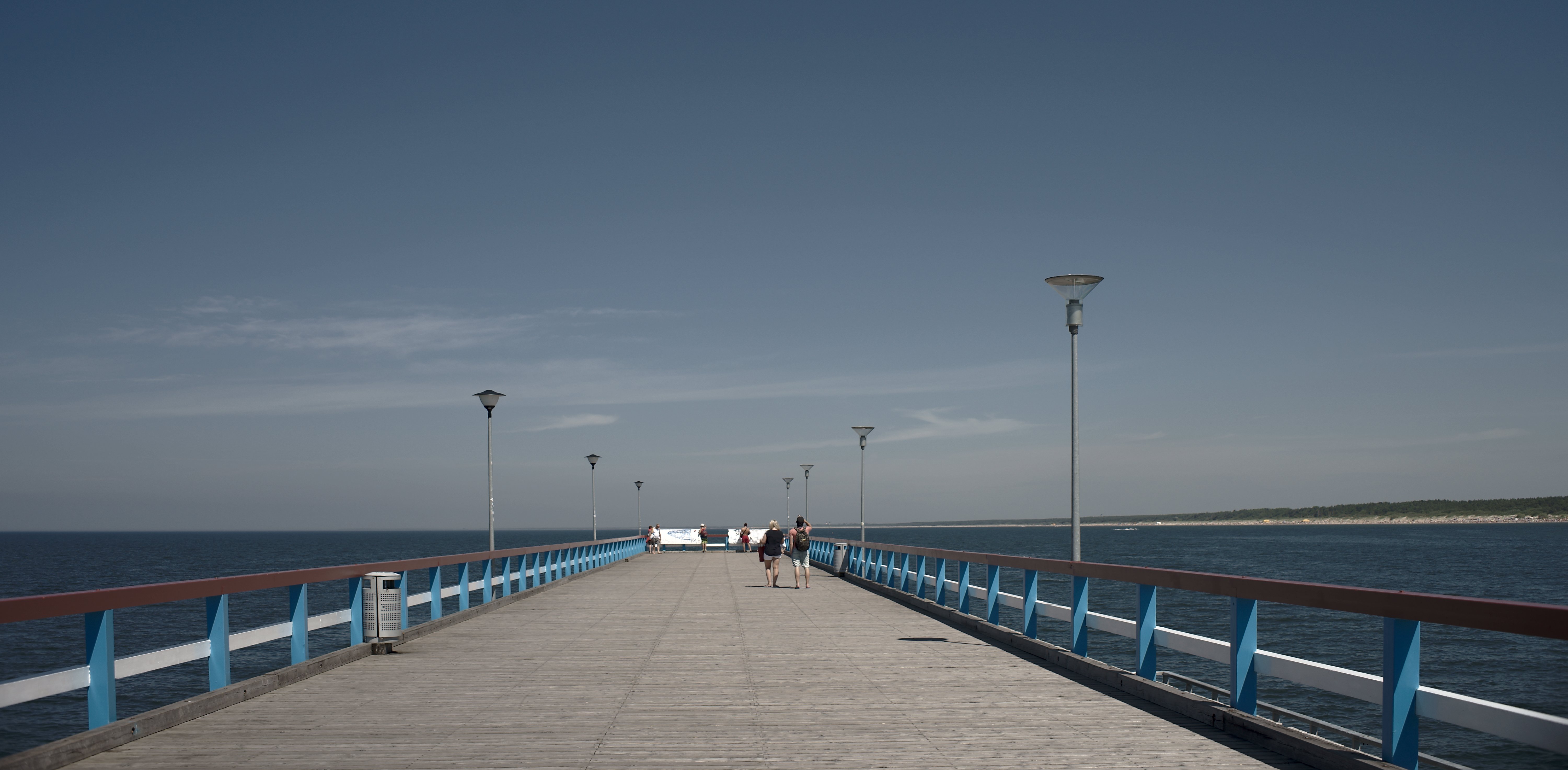
Palanga is Lithuania's main seaside resort, a small town on the Baltic coast that transforms every summer into a busy holiday destination. The beach stretches for kilometres in both directions — wide, sandy, and backed by dunes and pine forests. The Palanga Pier extends into the sea and serves as the town's social centre on warm evenings, when half of Palanga gathers there to watch the sunset.
The town's other main attraction is the Amber Museum, housed in the elegant 19th-century Tiskevicius Palace surrounded by a botanical park designed by the French landscape architect Edouard André. The collection includes thousands of pieces of Baltic amber, some containing perfectly preserved insects millions of years old. The park itself is worth a wander, with old trees, ponds, and paths winding through carefully maintained grounds down toward the beach.
Palanga has a lively and somewhat raucous summer atmosphere. Basanavicius Street, the pedestrian boulevard running from the town centre to the pier, is lined with restaurants, bars, and souvenir shops, and on weekend nights in July it buzzes with Lithuanian holidaymakers. The Church of the Assumption anchors the southern end of the boulevard with its handsome red-brick towers. Outside of summer the town is quiet, almost empty, and the beach belongs to dog walkers and the wind. If you want Baltic seaside without the crowds, come in late May or September.