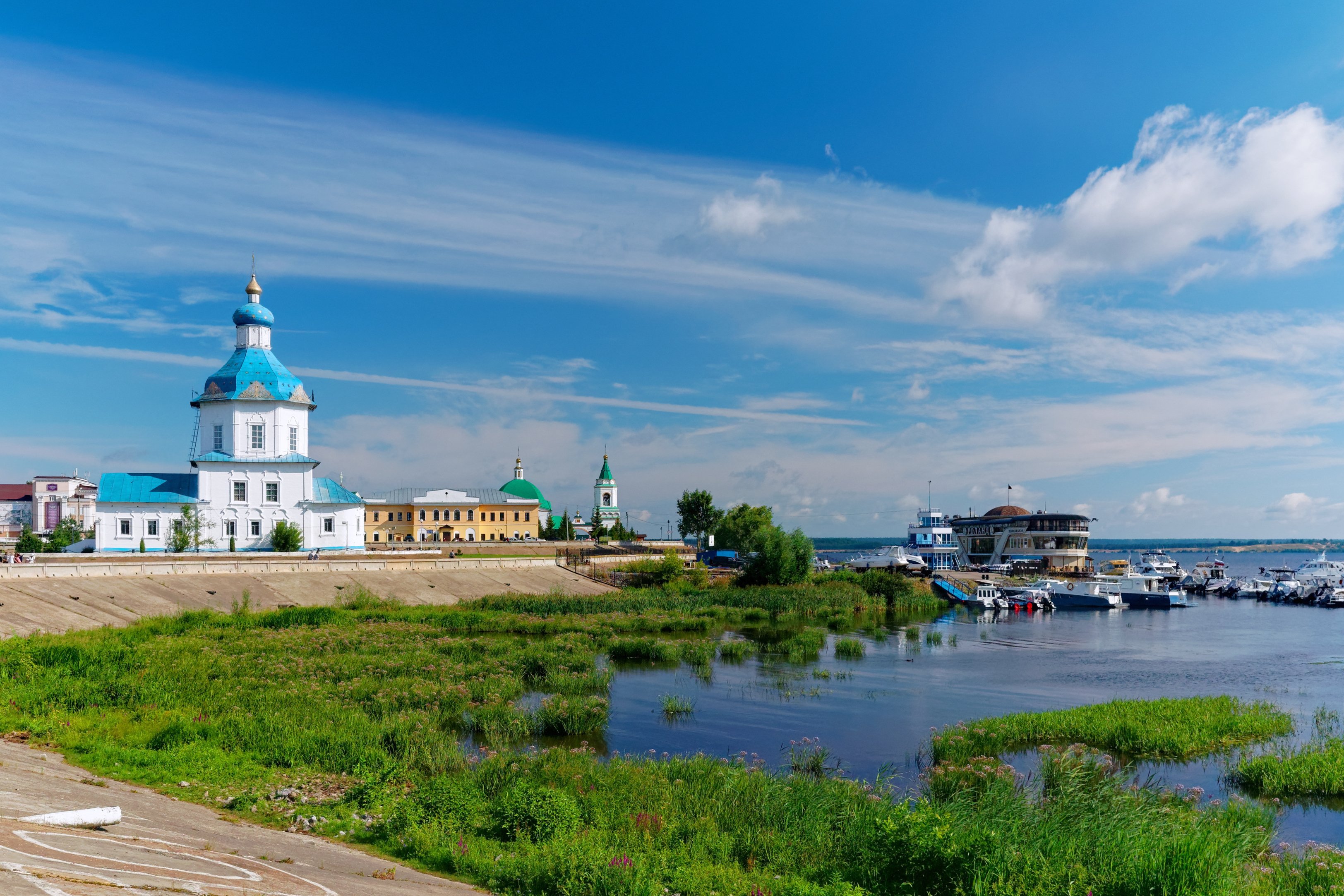
Cheboksary is the capital of the Chuvash Republic, a city of about half a million people on the south bank of the Volga River, roughly 650 kilometres east of Moscow. The Chuvash are a Turkic people with their own language, distinct from the Russian majority, and Cheboksary has a character that reflects this dual identity — Russian Orthodox churches alongside Chuvash cultural institutions, and bilingual street signs throughout the city.
The city's setting on the Volga is its strongest feature. A large artificial bay was created in the 1980s where the Cheboksarka River meets the Volga, and the embankment around it forms the heart of modern Cheboksary — a pleasant promenade with views across the water and the bronze Mother Patroness Monument standing watch over the waterfront. The old town on the bluff above retains a few pre-revolutionary buildings and churches, including the sixteenth-century Trinity Monastery.
Cheboksary is known within Russia as the home of the Chuvash National Museum and the birthplace of Vasily Chapayev, the Red Army commander who became a folk hero and the subject of countless Russian jokes. The museum dedicated to him sits in the city centre. For most visitors, Cheboksary is a stop on a Volga cruise or a detour from the Trans-Siberian railway route — a chance to see a corner of Russia's ethnic patchwork that few foreign travellers encounter.