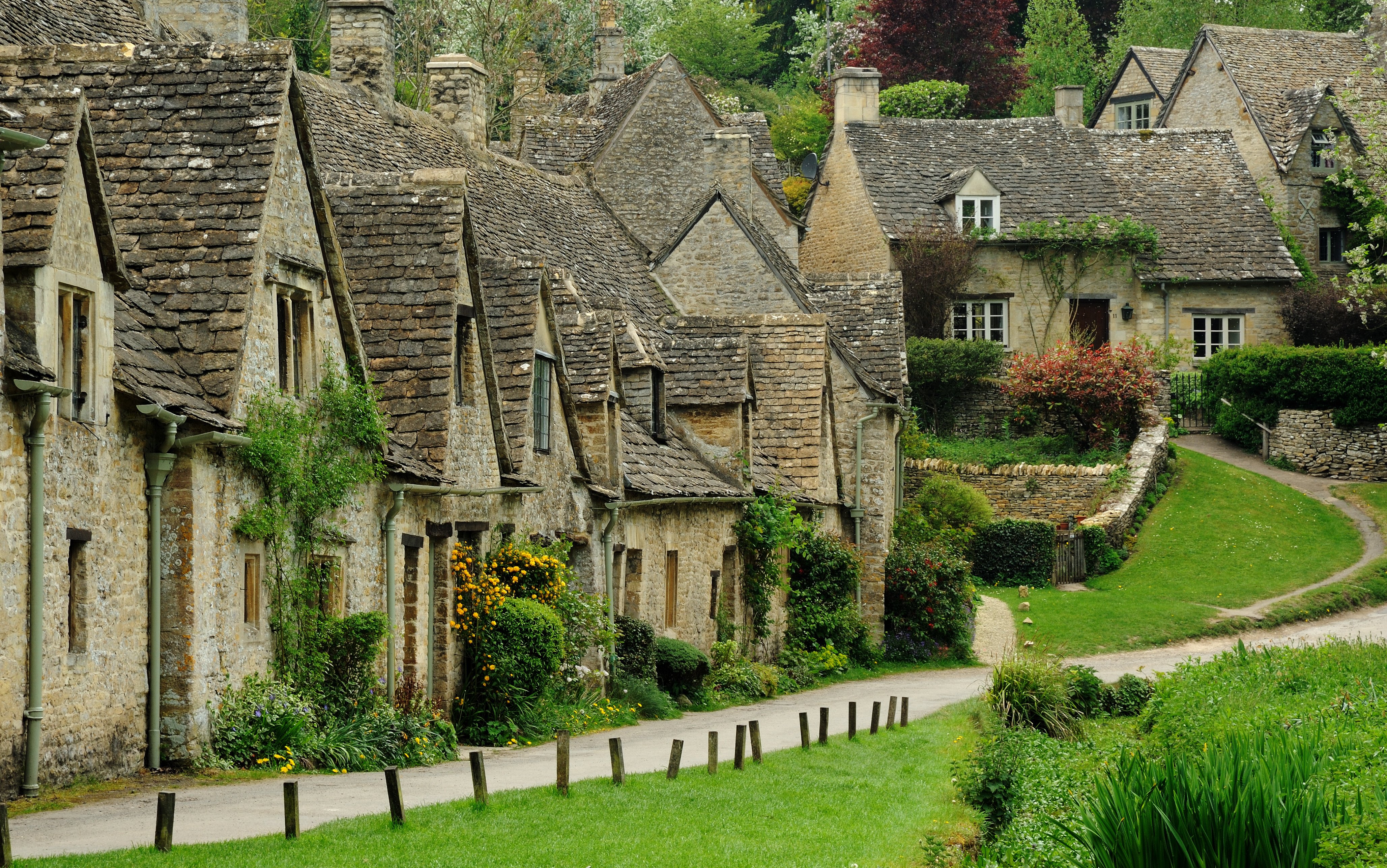
Bibury is a small village on the River Coln whose Arlington Row — a curved terrace of 14th-century weavers' cottages built in Cotswold limestone — has become one of the most reproduced images of English rural architecture. William Morris called it the most beautiful village in England; it appeared on the pre-decimal 50-pence piece. The reality is a pretty if very small place that absorbs enormous numbers of visitors with varying grace.
Arlington Row itself was originally a monastic wool store before being converted into cottages for weavers in the 17th century. The cottages remain inhabited and are in the care of the National Trust; the lane and stream in front of them are the photogenic element. Behind the row, Rack Isle is a water meadow that was once used to dry wool on wooden frames.
The Coln runs through the centre of the village past the Swan Hotel, and the trout farm alongside it is a modest but popular attraction. The village church of St Mary has Saxon origins and contains notable Norman work.
Bibury is best visited early on weekdays — it is extremely crowded at peak times, with coachloads arriving specifically for the Arlington Row photograph. The surrounding countryside along the Coln valley (Coln St Aldwyns, Quenington, Fairford) is quieter and equally beautiful.