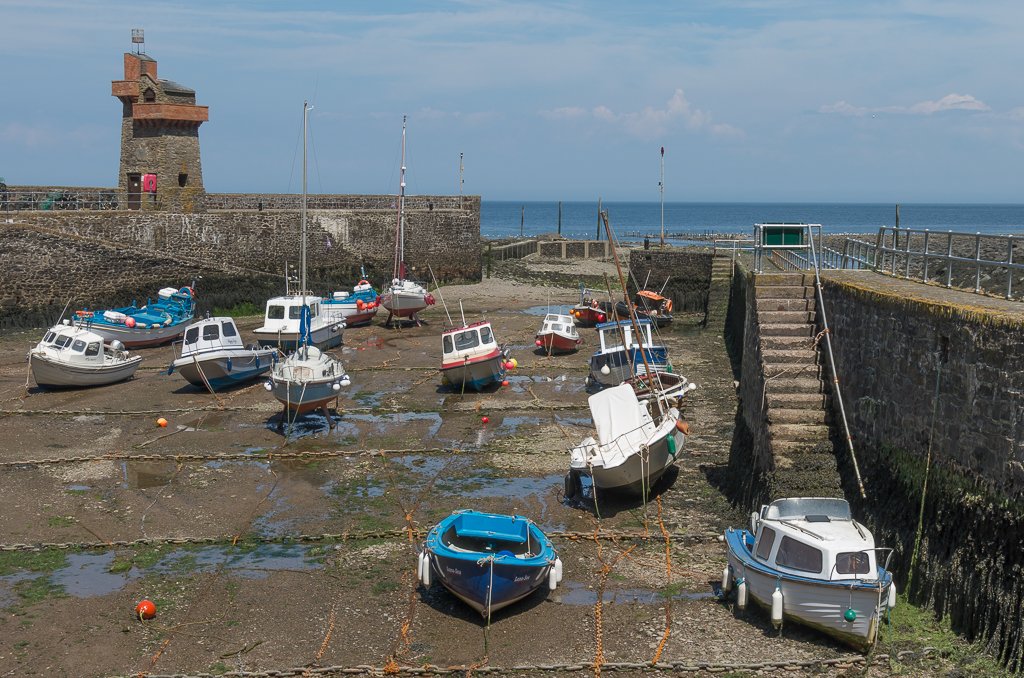
Lynton and Lynmouth are twin villages perched dramatically on the North Devon coast, within Exmoor National Park. Lynton sits high on the cliff; Lynmouth shelters at the bottom, right where the East and West Lyn rivers tumble into the Bristol Channel. The two are connected by a Victorian cliff railway — water-powered, still working, and genuinely useful — which saves you the white-knuckle drive down a road with gradients that seem unreasonable in any weather and outright terrifying in wet conditions.
Lynmouth is the prettier of the two, a small harbour village hemmed in by wooded cliffs. Walk west along the coast path and you'll reach the Valley of the Rocks, a dry valley filled with extraordinary jagged outcrops that rise straight out of the moorland. Feral goats wander among the rock formations. It's one of those landscapes that feels slightly improbable.
Just upstream from Lynmouth, the gorge at Watersmeet is worth the walk: a Victorian fishing lodge perched where the Hoaroak Water meets the East Lyn, now run as a National Trust café and the starting point for several riverside trails. The woods here are ancient and very green.
Lynmouth's history carries a shadow. In August 1952, after days of heavy rain on Exmoor, the Lyn rivers flooded catastrophically. Walls of water, trees, and boulders swept through the village in the night, destroying houses and bridges and killing 34 people. The event reshaped the village, and the flood memorial in the harbour explains what happened plainly and without sentimentality. It's well worth stopping at.