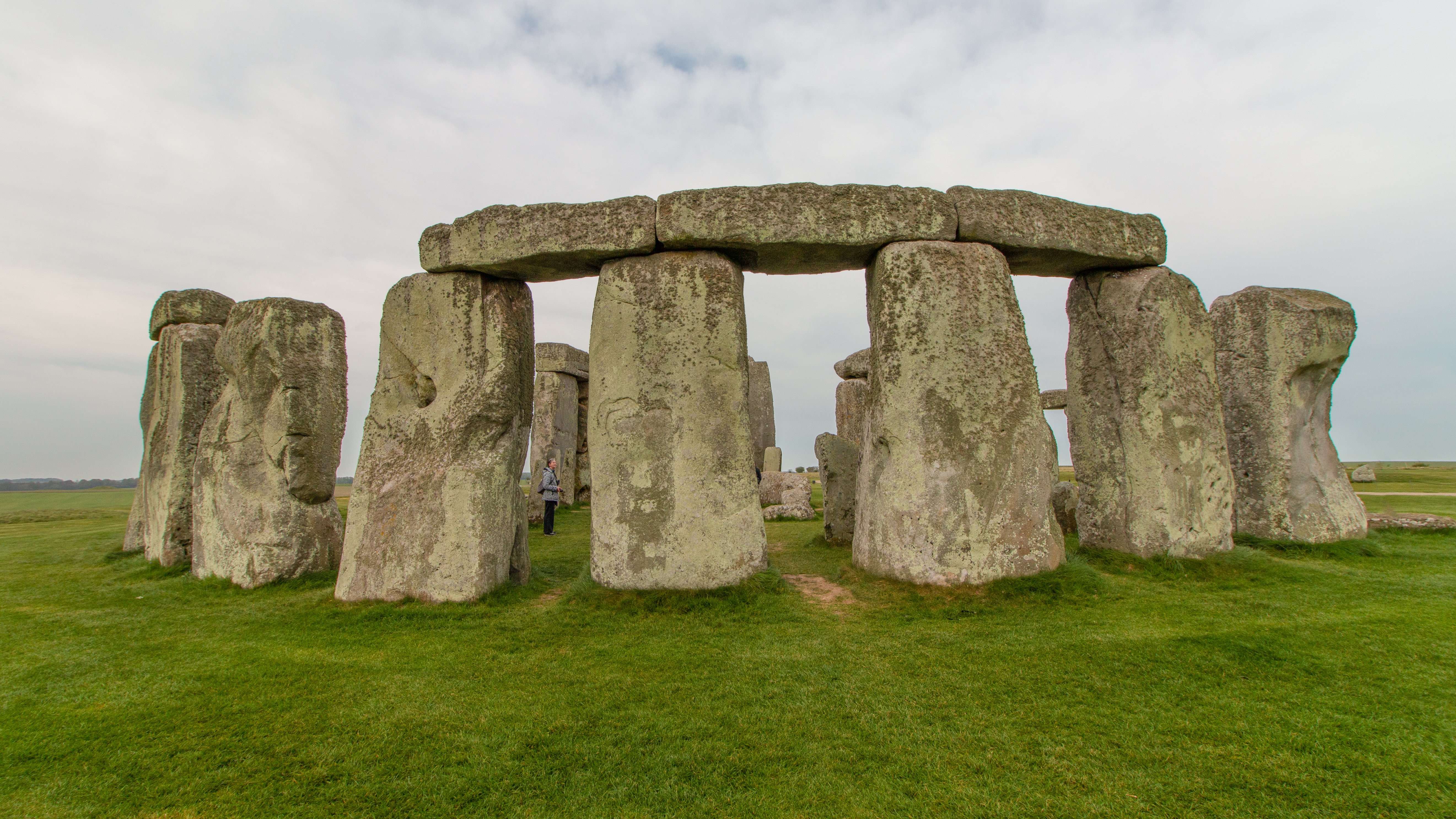
Stonehenge is the most famous prehistoric monument in Europe, a ring of massive standing stones on Salisbury Plain in Wiltshire. The stones were raised in stages between roughly 3000 and 2000 BC, and how the largest sarsens — weighing up to 25 tonnes — were transported from Marlborough Downs, 25 miles to the north, remains a matter of debate. The site is a UNESCO World Heritage Site, managed by English Heritage.
The visitor experience has improved greatly since the old car park and road were removed. You now arrive at a visitor centre about two kilometres from the stones, with an exhibition on the site's history and reconstructed Neolithic houses outside. A shuttle bus or a pleasant walk across the grassland takes you to the stone circle itself. You cannot walk among the stones during normal visiting hours — you view them from a roped path — but English Heritage runs special access visits at dawn and dusk that let you get up close.
Stonehenge is extraordinary, but it is not the only ancient site on the plain. The landscape around the stones is studded with barrows, earthworks, and processional avenues that form part of a much larger ritual complex. For a less crowded and arguably more atmospheric experience with standing stones, consider visiting Avebury, about 30 km to the north, where a larger stone circle surrounds an entire village and you can walk freely among the megaliths.