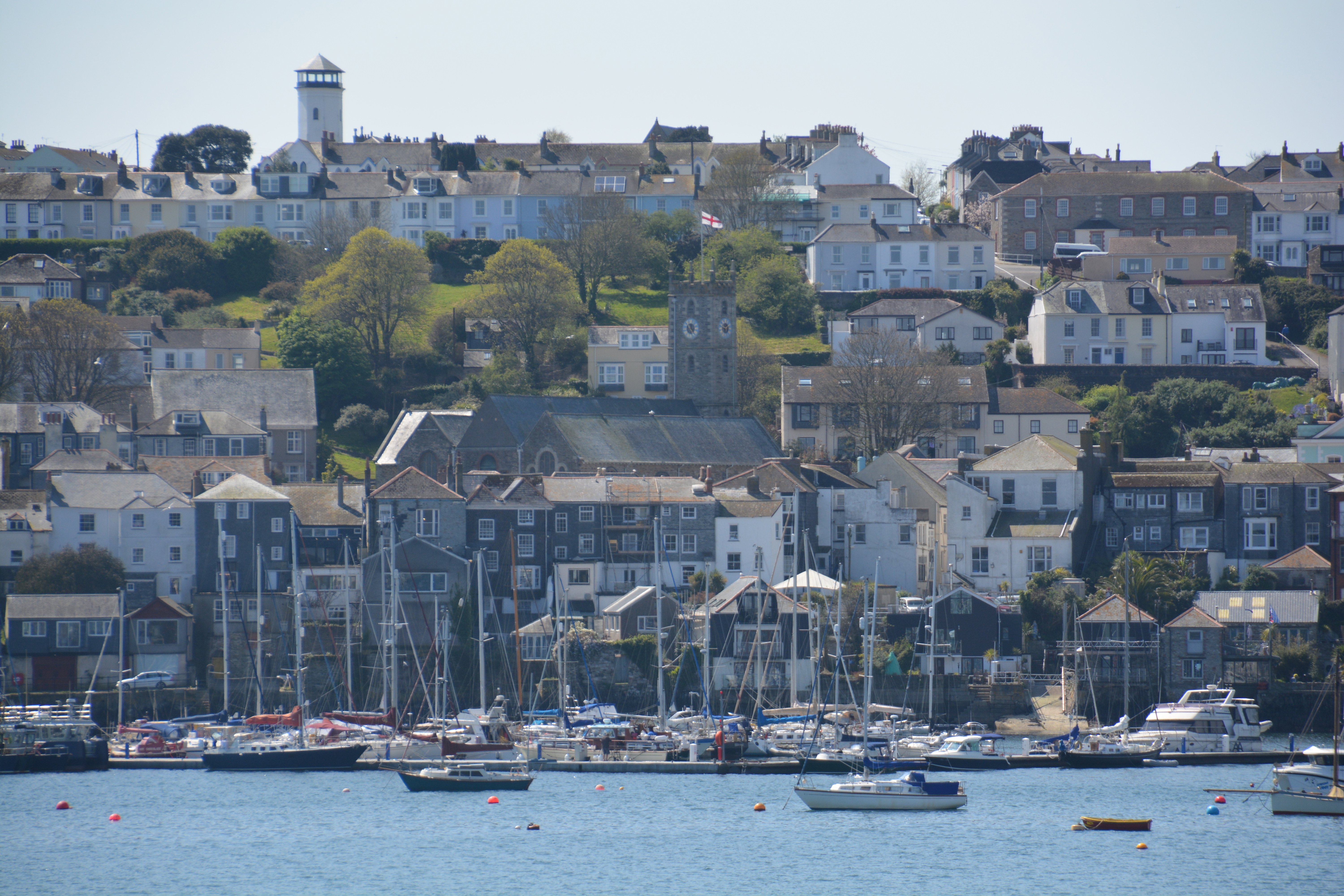
Falmouth sits at the mouth of the Fal estuary, which forms the third-deepest natural harbour in the world — Falmouth Roads has sheltered ships from the age of sail to the present day. It was established as a port in the 17th century and became the terminus for the Royal Mail packet ships that carried correspondence to and from the Americas and West Indies. The town that grew up around the harbour is compact, handsome, and genuinely oriented towards the sea in ways that many English coastal towns are not.
The National Maritime Museum Cornwall, opened in 2003 on the waterfront, is one of the best museums of its kind: well-designed, well-interpreted, and with a significant collection of small boats in a central well where you can walk around them. The Tidal Zone gallery below the waterline offers unusual views into the harbour itself.
Pendennis Castle, set on the headland above the town, is a well-preserved Tudor artillery fort built by Henry VIII. It faces St Mawes Castle across the estuary, part of the same defensive chain. The views from the headland take in the entire Carrick Roads estuary, the Black Rock, and on clear days the Lizard peninsula.
The town beach at Gyllyngvase is popular in summer. Ferries run up the Fal to Truro (tidal and seasonal), and a foot ferry crosses to St Mawes. The university and sailing community give Falmouth a younger feel than many Cornish towns, and the restaurant scene is correspondingly lively.