Painswick is a small hilltop town in the Slad Valley with an outsized reputation for elegance — described as the "Queen of the Cotswolds" in the Victorian era and still among the most architecturally intact of the Cotswold settlements. The streets of grey-white stone buildings (Painswick stone is paler than the honey-coloured Cotswold stone of the northern villages) climb steeply from the valley, and the town has an unhurried, slightly austere character distinct from the more tourist-oriented villages.
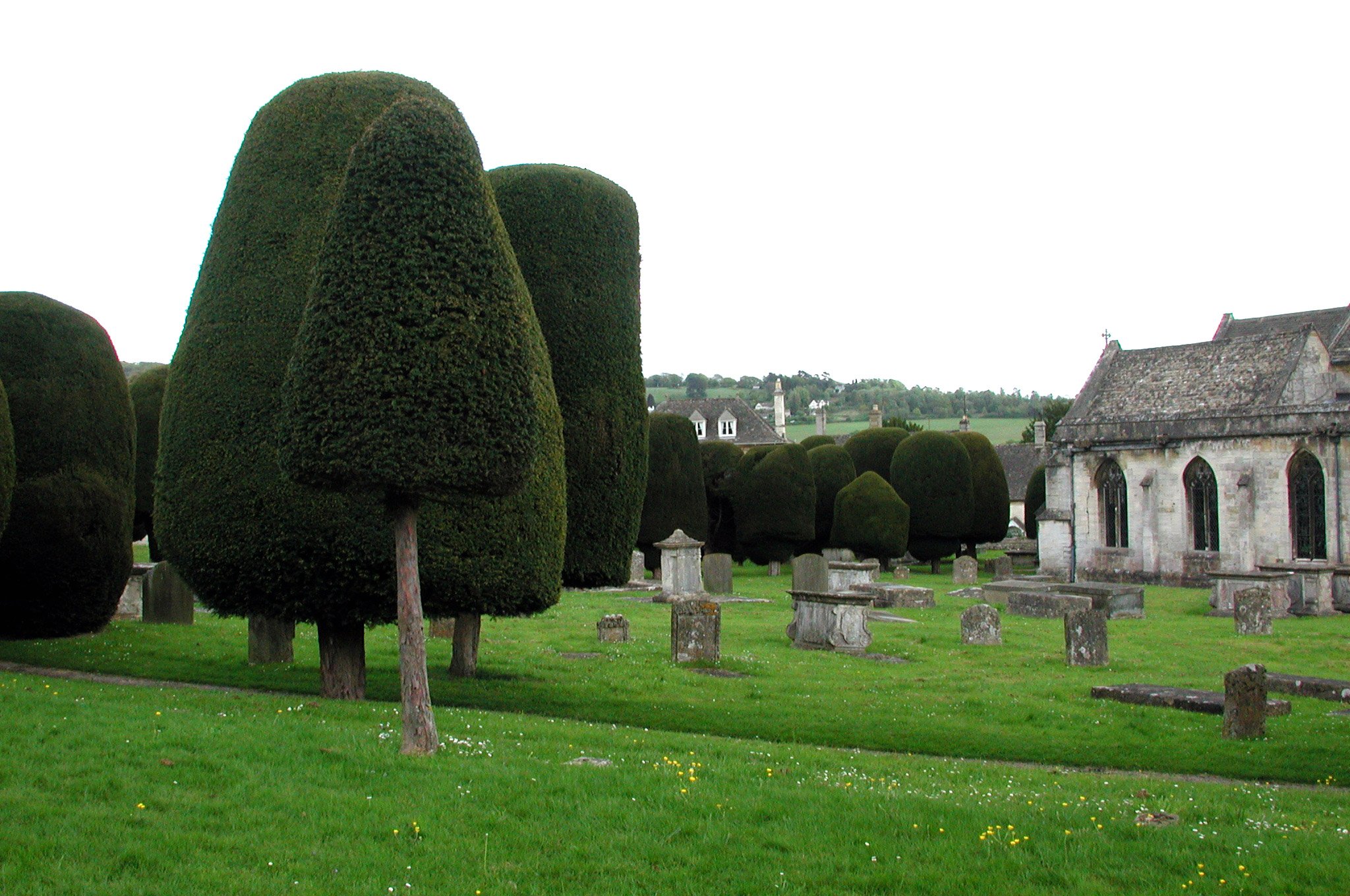
The churchyard of St Mary the Virgin contains 99 yew trees, many of them centuries old and clipped into tight topiary shapes. They are so closely planted that walking between them feels like navigating a green maze. The tradition holds that a hundredth yew always dies — in practice the number fluctuates and the legend is more durable than the trees. The churchyard is one of the most atmospheric in England.
The Rococo Garden, a short walk from the centre, is the only surviving complete example of English rococo garden design, dating from the 1740s. It is particularly beautiful in February when snowdrops carpet the ground.
The Slad Valley, running below the town, was the landscape of Laurie Lee's memoir Cider with Rosie (1959), one of the most beloved accounts of rural English childhood. The Woolpack pub at Slad, a mile down the valley, was Lee's local.