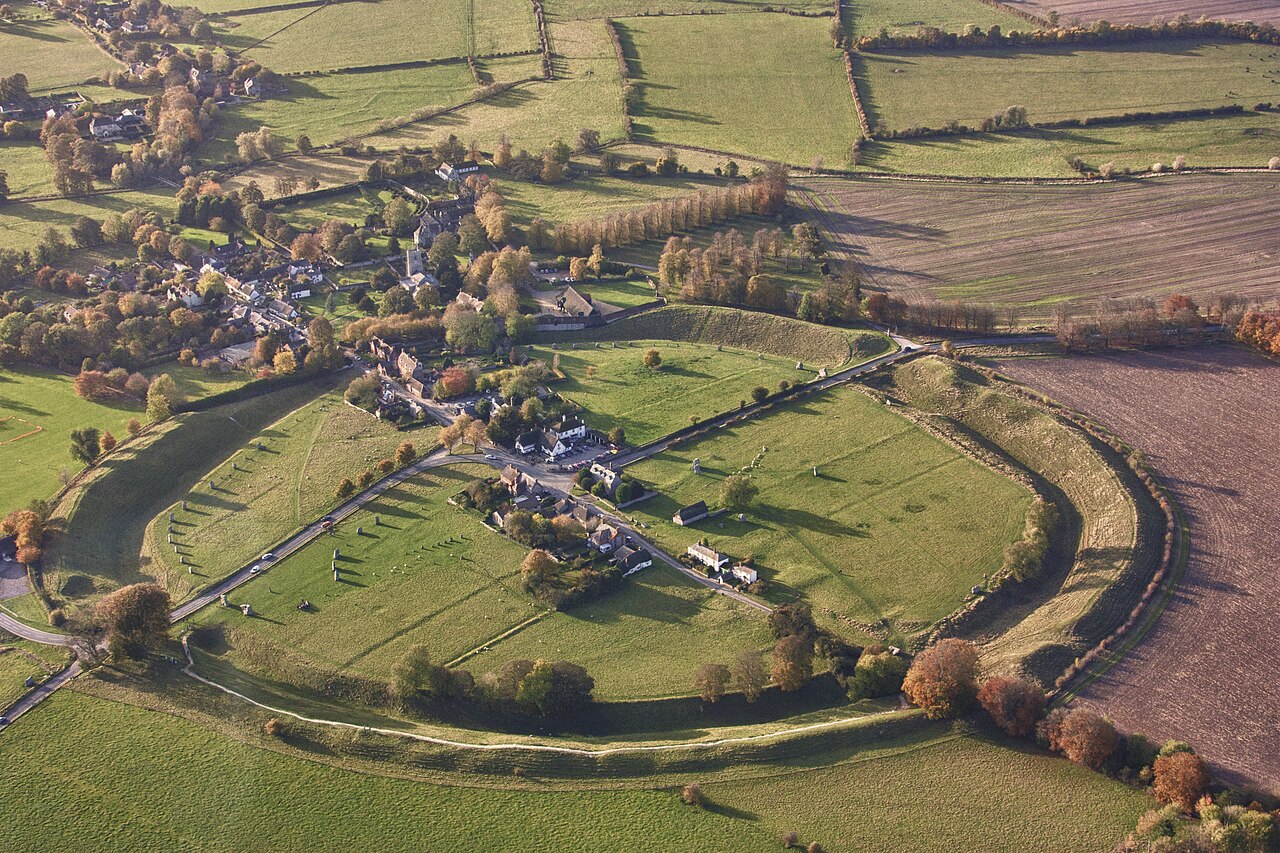
Avebury is a village in Wiltshire, England, built right inside the largest stone circle in Europe. While Stonehenge gets the crowds, Avebury is in many ways more impressive — the circle is so large that the village, a pub, and a church all sit within it. You can walk among the stones and touch them, something Stonehenge no longer allows.
The monument dates from around 2850 BC and consists of a massive outer circle of standing stones enclosed by a deep ditch and bank, with two smaller stone circles inside. Many stones were toppled or buried by medieval villagers who feared them, and some were broken up for building material, but enough remain to convey the scale of what the Neolithic builders achieved.
The Alexander Keiller Museum in the village explains the site's history and the 1930s excavations that uncovered many of the buried stones. A walk south along the West Kennet Avenue — a processional route lined with paired stones — leads toward Silbury Hill, the largest artificial mound in prehistoric Europe, and the West Kennet Long Barrow, a 5,000-year-old burial chamber you can enter. The Red Lion pub, reputedly the only pub in the world inside a stone circle, is a good place to end the walk.