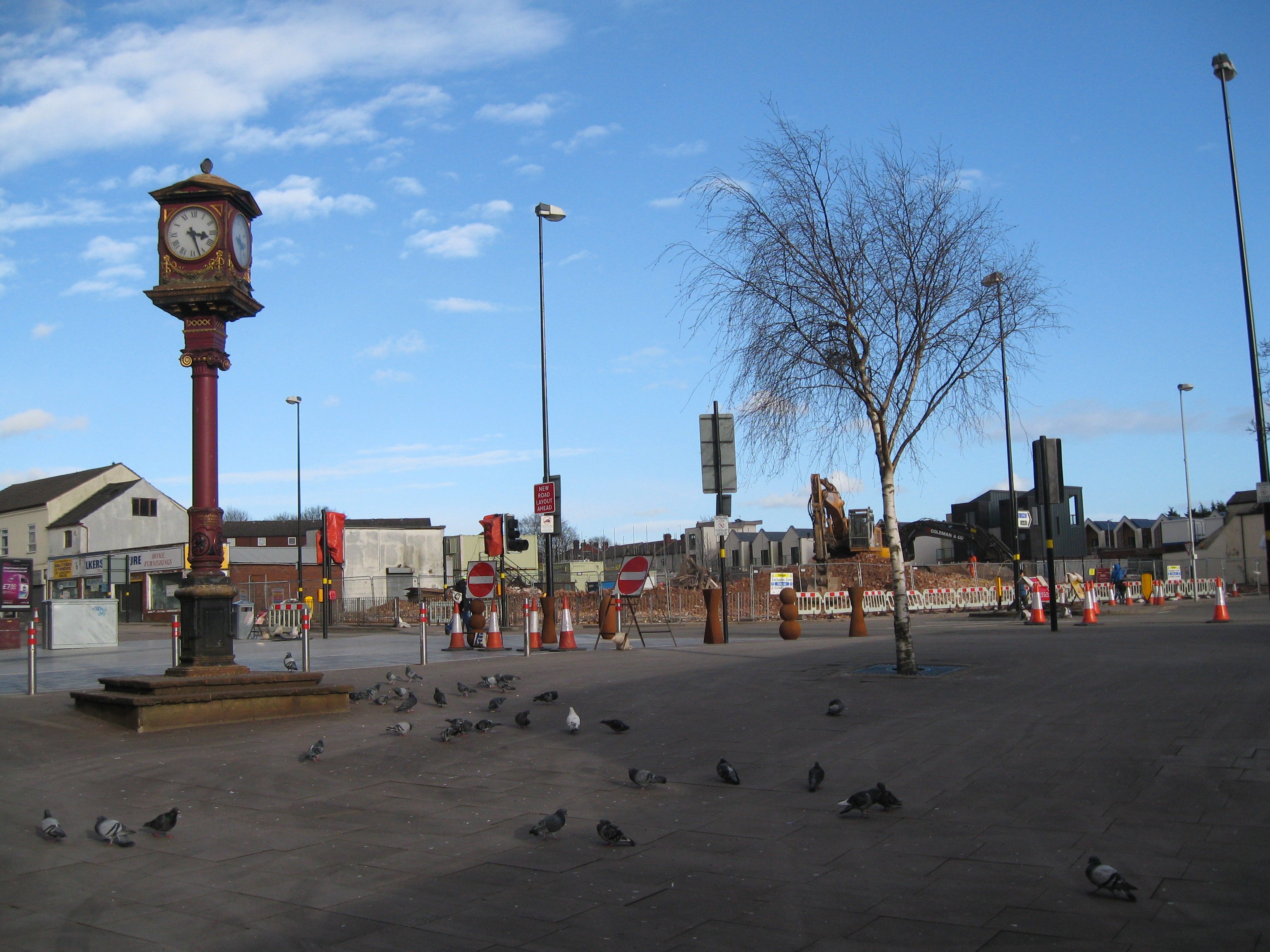
West Bromwich grew from a roadside settlement on the main route from the northwest to London into an industrial town shaped by the Black Country's coal seams and iron foundries during the 18th and 19th centuries. Mining is long gone and the steel industry followed, leaving the town with above-average unemployment and a landscape that is more post-industrial than picturesque. It sits in a dense West Midlands conurbation stretching between Birmingham and Wolverhampton.
That said, there's more here than the industrial legacy suggests. The moated Manor House near Stone Cross — now a pub — dates from the Middle Ages. Oak House near the town centre is a fine late-Elizabethan timber-framed building open as a museum. Sandwell Priory ruins and fragments of Dartmouth Hall survive as archaeological curiosities in Sandwell Valley Country Park, which provides green space and a nature reserve tucked between the M5 motorway and the suburbs.
West Bromwich is probably best known as the home of West Bromwich Albion Football Club (The Baggies), whose ground at The Hawthorns is the highest above sea level of any Football League ground in England. The extensive Black Country canal network — rundown in places but atmospheric — is accessible for walking, cycling, and boating.