Coventry is a city defined by reinvention. Devastated by German bombing on the night of 14 November 1940, it was rebuilt in a style that mixed modernist ambition with the scars of what was lost. The result is a city that can feel jarring — brutalist concrete next to medieval fragments — but that is part of what makes it interesting.
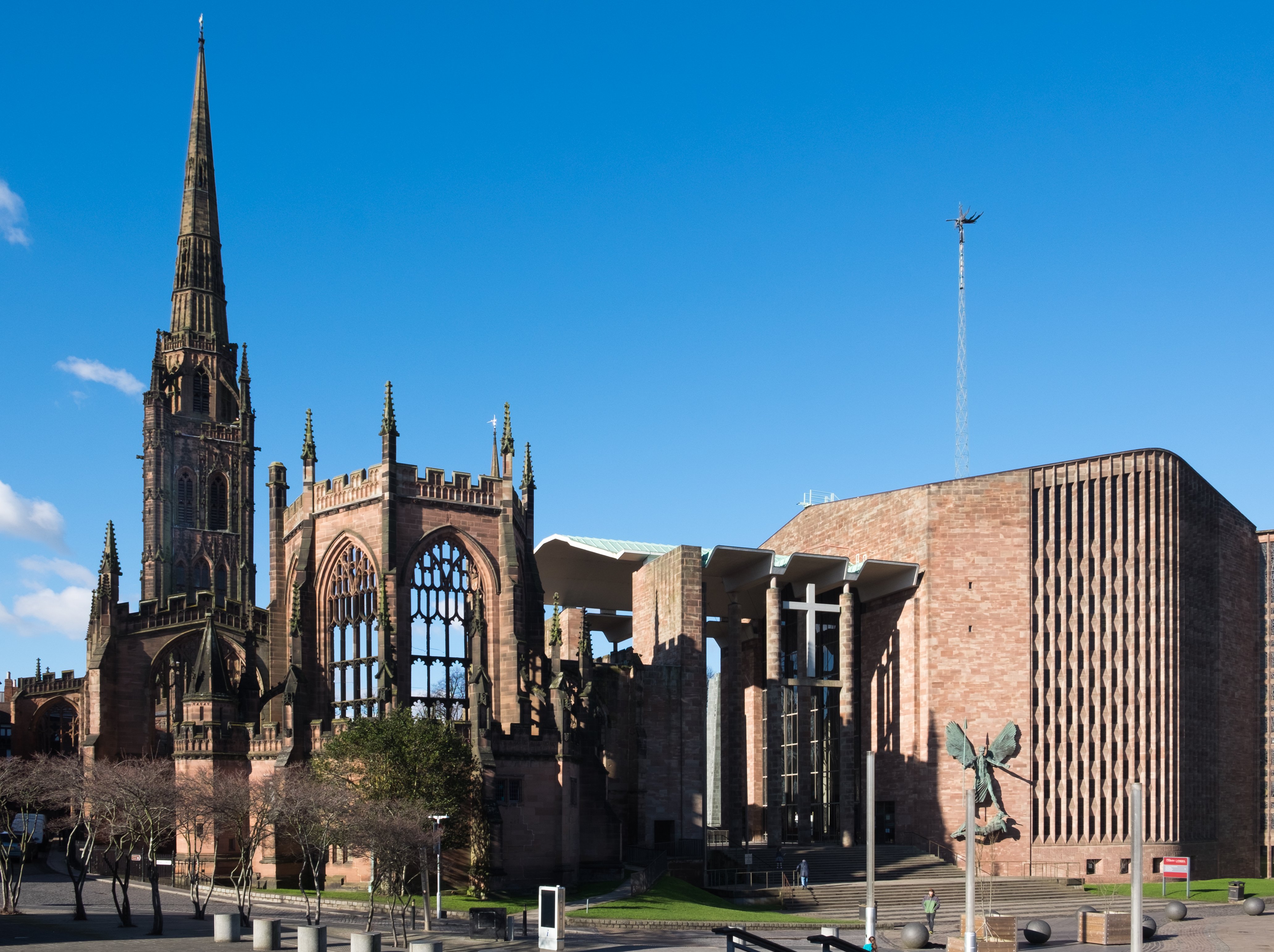
The ruined shell of the old cathedral stands open to the sky beside Basil Spence's striking 1962 replacement, connected by a walkway. The contrast between the two is one of the most powerful war memorials in England. Jacob Epstein's bronze of St Michael guards the entrance; inside, the Graham Sutherland tapestry and John Piper's baptistry window are worth the visit alone.
The medieval city was not entirely destroyed. St Mary's Guildhall, where Mary Queen of Scots was held prisoner, survived intact and has a magnificent 14th-century tapestry and carved ceiling. Spon Street preserves a row of timber-framed buildings, some relocated from elsewhere in the city. Ford's Hospital and Bond's Hospital are two Tudor almshouses whose courtyards survive in almost original condition. The Herbert Art Gallery and Museum does a good job of telling the city's story, from Lady Godiva through the watchmaking and bicycle industries to the Blitz and the motor trade.
The Coventry Transport Museum is one of the most underrated free museums in England — Coventry produced Britain's first production bicycles, the Triumph, the Jaguar, and the Daimler, and the museum makes that history genuinely interesting. FarGo Village on Far Gosford Street is the liveliest eating and drinking destination, with craft beer from Twisted Barrel Ale and independent food traders operating from repurposed railway arches.
Coventry was UK City of Culture in 2021, which left a legacy of renovated public spaces and a livelier arts scene than the city had before. It rewards a day or two rather than a quick stop, especially for anyone interested in how cities survive catastrophe and reinvent themselves.