Kelso is one of the most appealing towns in the Scottish Borders, built at the confluence of the Tweed and Teviot rivers. The Square — a broad cobbled space fed by four streets and lined with Georgian and Victorian stone buildings — feels genuinely lived-in rather than preserved for tourists. Walter Scott, who attended school here as a boy, called it the most beautiful in Scotland.
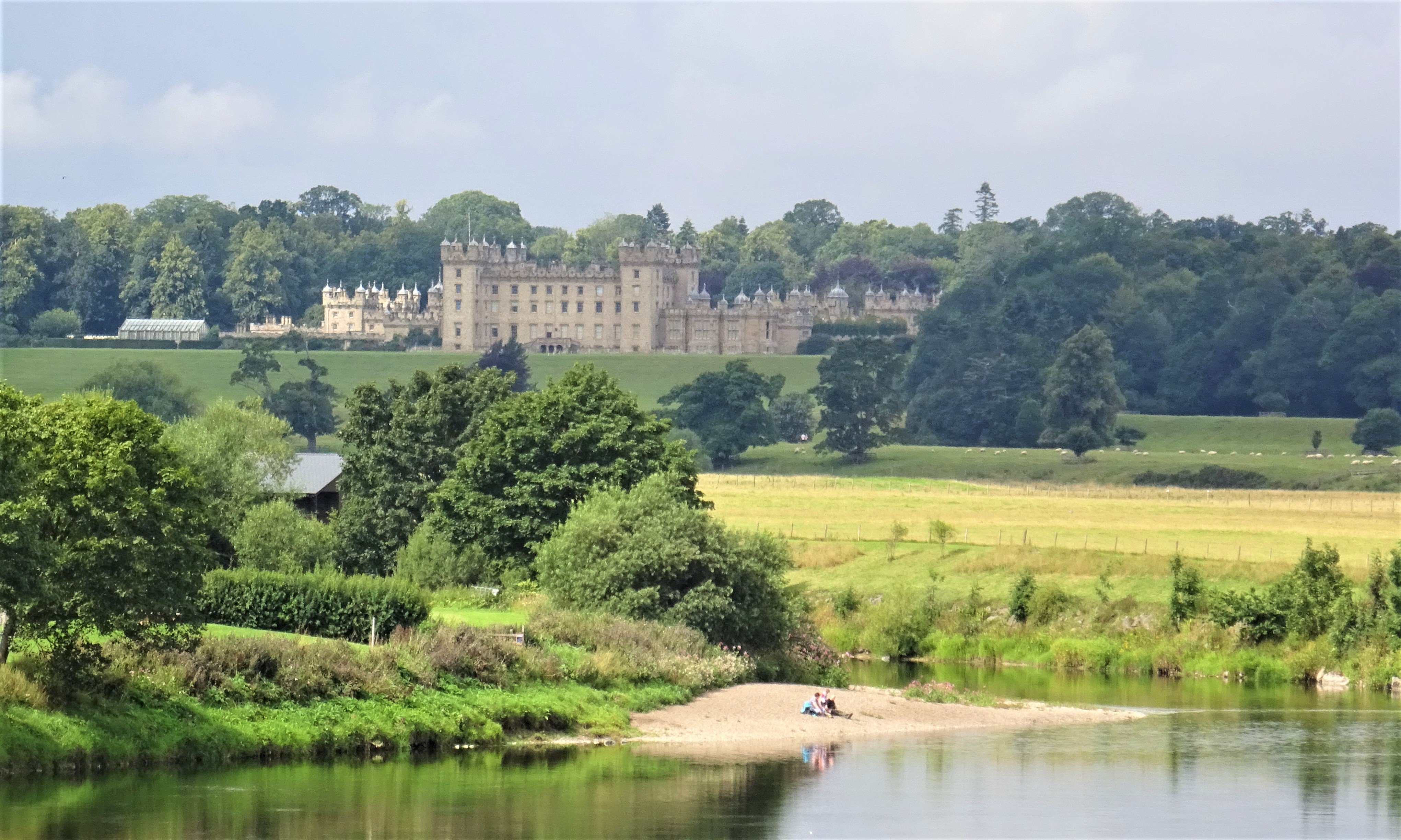
Kelso Abbey, founded in the 12th century by David I, is the least visited of the four great Borders abbeys and entry is free. The surviving Romanesque tower has a satisfying fortress-like solidity, and the lack of crowds makes it worth the stop. A mile west, Floors Castle is the seat of the Duke of Roxburghe and the largest inhabited house in Scotland — William Adam's original Georgian block transformed in the 1830s into a baronial extravaganza by William Henry Playfair.
Kelso Bridge, built by John Rennie between 1800 and 1803, is worth a look from the riverbank: its five elliptical arches directly inspired Rennie's later Waterloo Bridge in London. Across the water in the Floors Castle grounds, the grassy mound of Roxburgh Castle marks the site of a fortress that changed hands repeatedly between Scotland and England — and where James II was killed by his own cannon in 1460.
For families, Harestanes visitor centre between Kelso and Jedburgh has good indoor and outdoor play areas alongside craft workshops. Kelso Racecourse, a mile north of town, hosts National Hunt meetings from September through May — unpretentious, good value, and genuinely friendly.