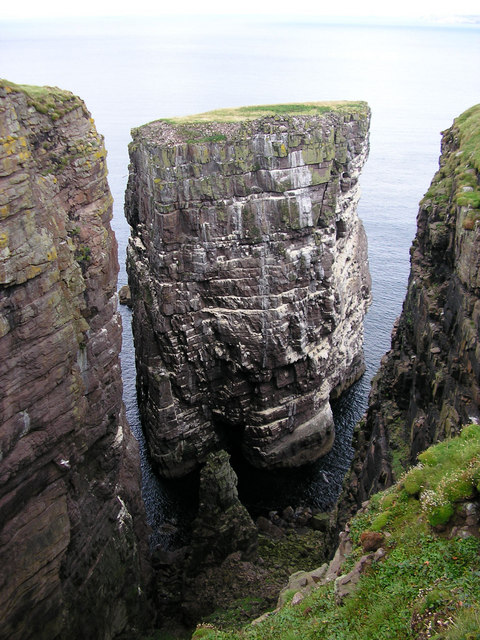
Handa is a small island off the coast of Sutherland, formed of ancient Torridonian sandstone and managed by the Scottish Wildlife Trust as a nature reserve. In summer it holds one of the most impressive seabird colonies in northwest Europe — guillemots, razorbills, kittiwakes, fulmars, puffins, and great skuas all breed here in numbers that can overwhelm the senses.
The island's most dramatic feature is the Great Stack on the north coast: a detached pillar of reddish sandstone rising 120 metres from the sea, its ledges packed with nesting birds through June and July. The clifftop walking route — a circular three-mile path — takes in the Stack viewpoint and the full sweep of the western cliffs before looping back to the landing beach. Two to three hours is comfortable; birders routinely spend the full day.
The island has no permanent residents. The last community — around 65 people — left in 1847 after famine and emigration hollowed out their numbers. Their ruined houses stand near the landing beach, the village that was once governed by a "Queen" — the oldest widow — who chaired the daily assembly that decided each day's fishing and work rota. The great skuas, known locally as bonxies, have filled the vacuum. They nest across the moorland and will mob anyone who strays too close to their chicks; the wardens recommend holding a stick above your head when crossing the interior.
Access is by passenger ferry from Tarbet, a hamlet a few miles north of Scourie, on the coastal route between Ullapool and Durness. The crossing takes ten minutes and runs on demand; there is no booking system.