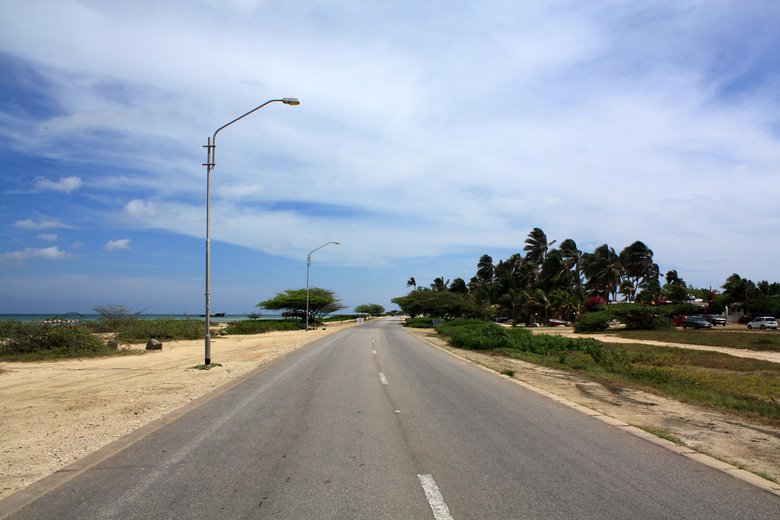
Aruba is the driest and sunniest island in the Caribbean, and it leans into that identity. The southern coast is all calm turquoise water and wide white beaches. The northern coast is wild — rugged limestone cliffs, crashing surf, and a landscape of cactus and divi-divi trees bent sideways by the trade winds. It looks more like a desert than a tropical island.
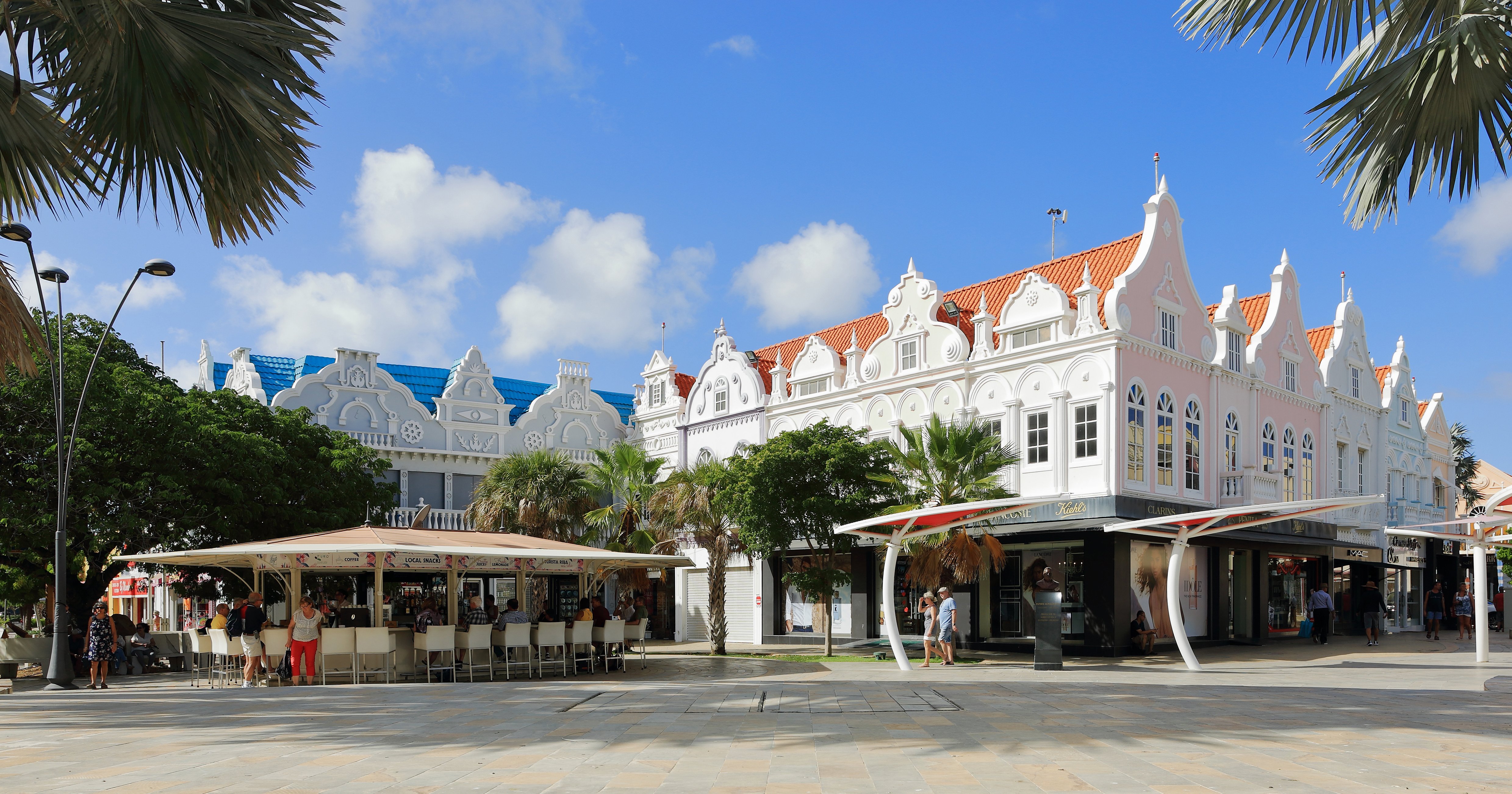
The capital, Oranjestad, has colourful Dutch colonial architecture and a waterfront lined with shops. Most visitors stay along the hotel strips of Palm Beach and Eagle Beach on the western shore. Palm Beach is high-rise and busy; Eagle Beach is lower-key and arguably the better stretch of sand.
Aruba sits just 25 km off the coast of Venezuela and has been part of the Kingdom of the Netherlands since the 17th century. It left the Netherlands Antilles in 1986 to become a separate constituent country. The language situation reflects that layered history: the local language is Papiamento (a creole of Portuguese, Spanish, Dutch, and English), but nearly everyone speaks English and Spanish too. Dutch is the official language, though you will rarely need it.
Beyond the beaches, the interior of the island is worth exploring. Arikok National Park covers nearly a fifth of the island — all cactus scrub, rock formations, and caves with ancient Arawak petroglyphs. The California Lighthouse at the northwestern tip has good views. And the constant trade winds make Aruba one of the best windsurfing and kitesurfing spots in the Caribbean.