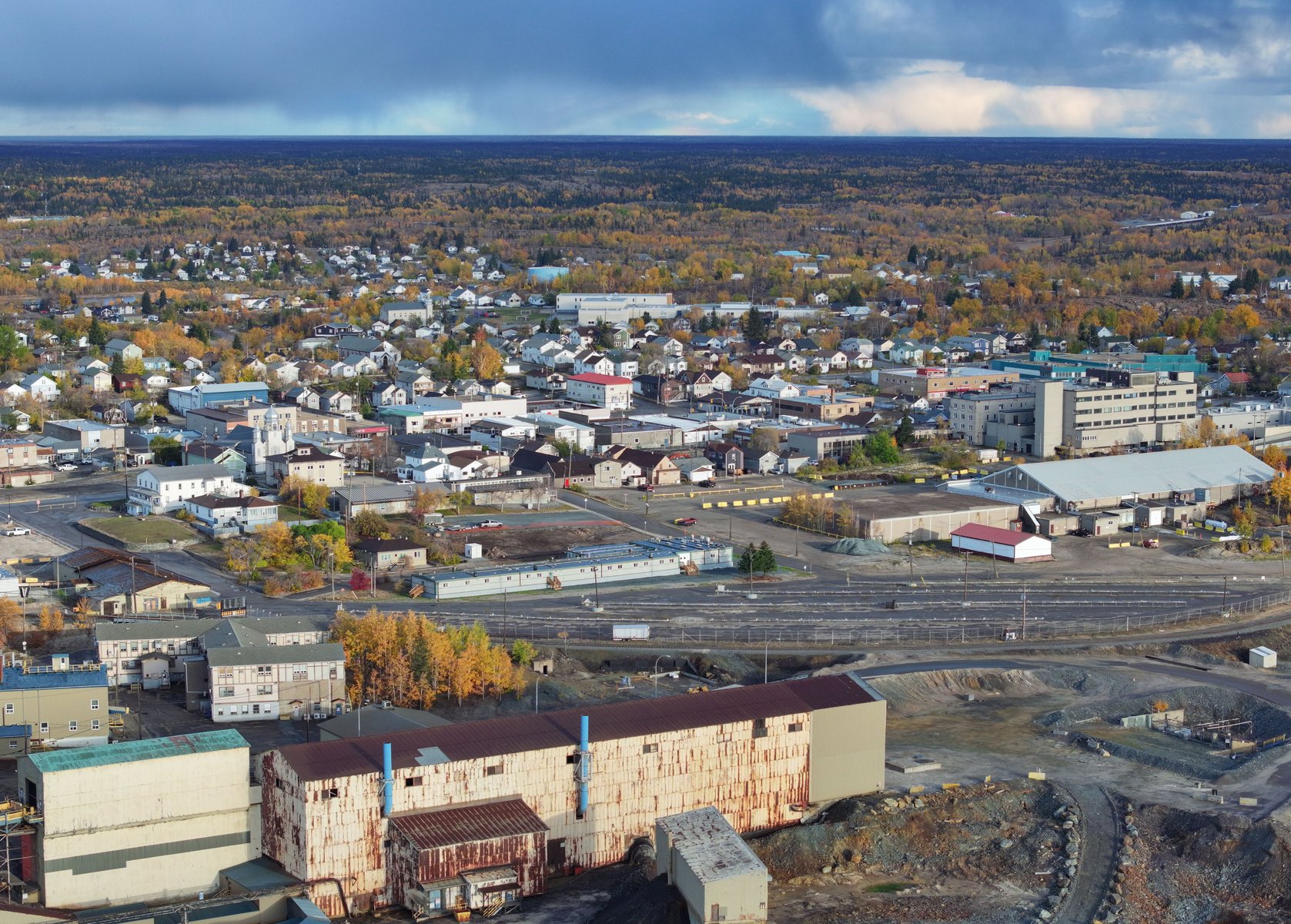
Flin Flon is the kind of northern town that makes no sense until you stand in it: streets climbing over hard Canadian Shield rock, lakes appearing between houses, mine works on the skyline, and a name borrowed from an Edwardian adventure novel. It sits on the Manitoba-Saskatchewan border, but its mood is more boreal frontier than prairie.
The town's best sights are small and local rather than polished. Start with the Flin Flon Station Museum for mining history, then look for the Flinty statue, the Hundred Stairs, and the odd above-ground sewer boxes that double as wooden walkways in places where bedrock would not let pipes go underground.
Flin Flon is also a lake town. Ross Lake sits in the middle of things, with boardwalk walking and rocky views, while Bakers Narrows Provincial Park gives you the larger boreal-lake version a short drive southeast.
Come if you like northern places with real texture. Flin Flon is not a postcard town, and that is much of the appeal: it is practical, strange, hard-edged, and surrounded by water and spruce.