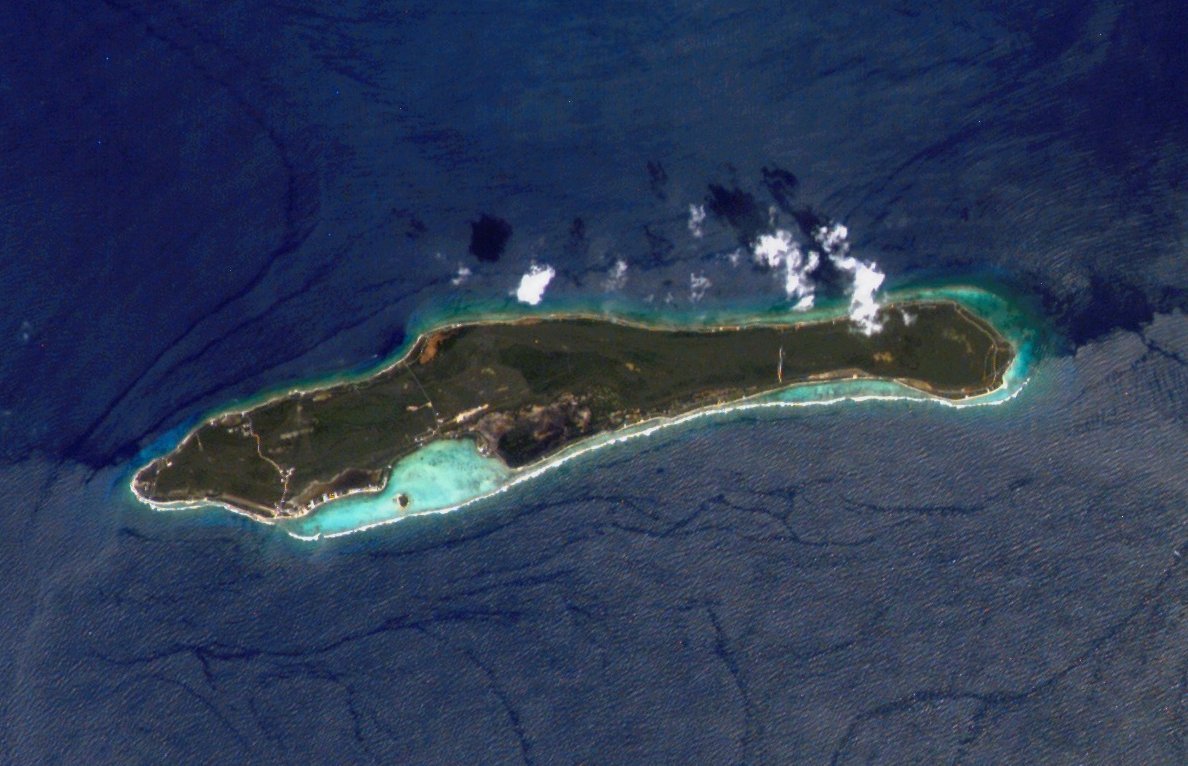
Little Cayman is the smallest and quietest of the three Cayman Islands — 16 kilometres long, two kilometres wide at the widest, and home to roughly 170 permanent residents. There is one paved road that runs around the island, an unfenced airstrip that the road crosses (priority is given to landing aircraft), and a handful of small dive lodges. Iguanas — endemic Little Cayman rock iguanas, the most endangered iguana species on earth — outnumber humans many times over and have the right of way on most of the island.
What brings people here is what is underwater. Bloody Bay Wall, on the north shore, is consistently ranked among the world's top wall dives — the shelf drops at six metres straight to 1,800, the visibility is reliably over 30 metres, and the wall is dense with sponges, black coral and the occasional eagle ray cruising past in the blue. The adjacent Jackson's Bight and the Mixing Bowl extend the same drop along several kilometres of marine park. The diving is the reason every single visitor comes here.
Above water Little Cayman is barely developed. Booby Pond Nature Reserve, in the south-west, holds the largest red-footed booby colony in the western Caribbean — 5,000 nesting pairs in a single mangrove — and a viewing platform looks out over the lagoon. The Central Caribbean Marine Institute at Little Cayman Beach runs reef research and is open to visitors. There is no town, no supermarket worthy of the name, one restaurant that is not part of a dive lodge, and nothing much to do at night beyond looking at the stars — which, in the absence of light pollution, are spectacular. People come back because of the diving, the iguanas, and the silence.