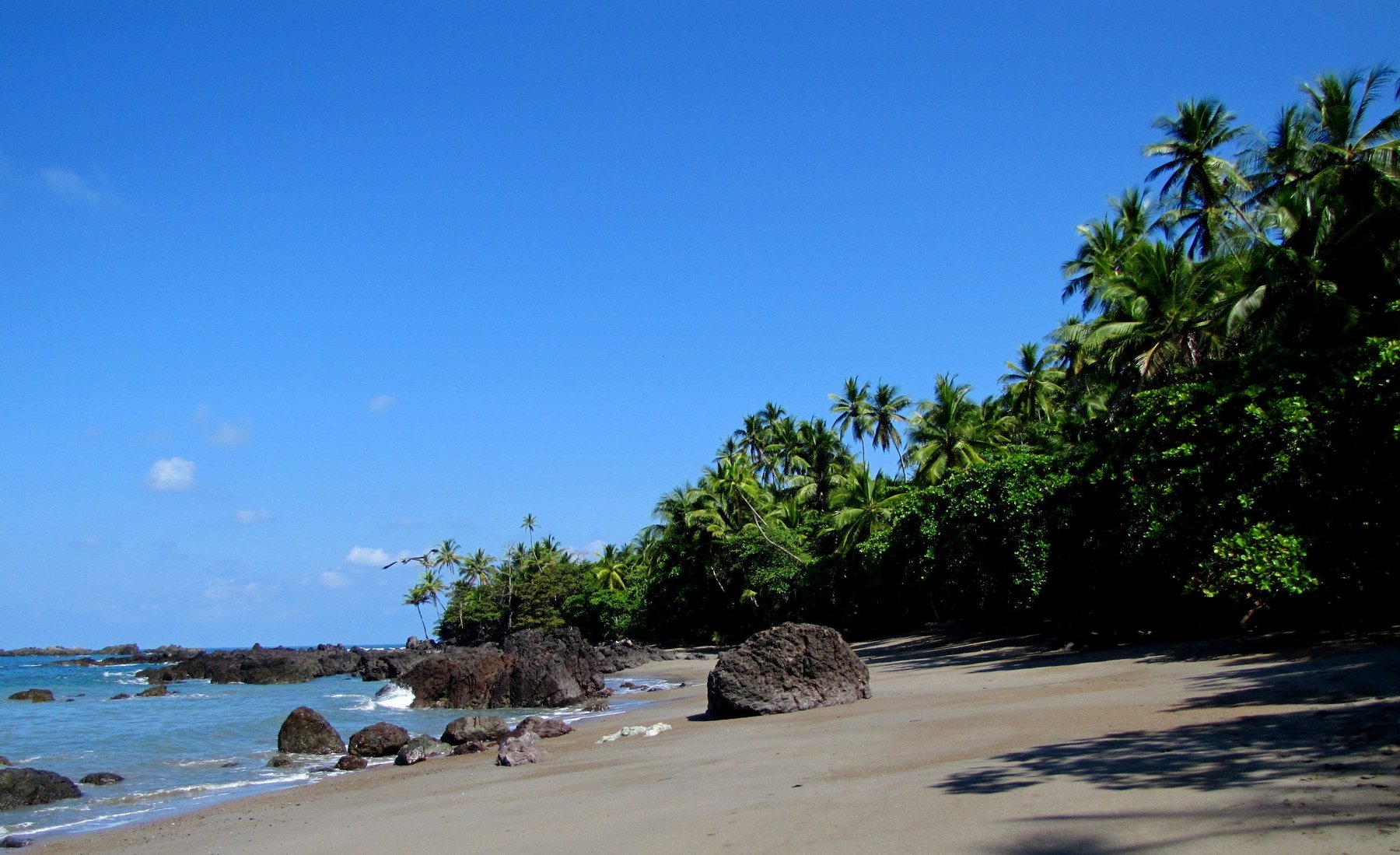
Remote Costa Rican national park on the Osa Peninsula, protecting Pacific rainforest, beaches, and dense wildlife.
Corcovado is widely regarded as the most biologically intense place on Earth. The national park covers 424 square kilometers of the Osa Peninsula's southern tip — rainforest, mangrove, wetland, and coastline — and contains more species per square kilometer than almost anywhere else on the planet. This is not a zoo or a nature trail. It's a genuine wilderness.
The park holds the largest primary rainforest on the Pacific coast of the Americas. Trees reach 70 meters. Scarlet macaws fly in pairs overhead. Four species of sea turtle nest on the beaches. Jaguars and pumas patrol the interior — you won't see them often, but you'll find their tracks. The squirrel monkey, found almost nowhere else in Costa Rica, lives here in small troops.
The heart of the park is Sirena, a ranger station on the coast where the Río Sirena meets the Pacific. Getting there takes real effort: an 8-hour hike through jungle from Los Patos, or a small plane from Puerto Jiménez. Once there, you're surrounded by nothing but forest and ocean. Sirena has dormitory accommodation, meals, and a small fleet of dugout canoes for exploring upstream.
Access is controlled and requires advance registration with SINAC (Costa Rica's park service). You must enter with a licensed guide. That's not bureaucracy for its own sake — the park limits visitors to protect what makes it extraordinary.
Guide
Getting There
The base for visiting Corcovado is Puerto Jiménez on the Osa Peninsula. From San José, you can fly (30 minutes, several daily departures) or take a bus to Palmar Norte and then a local bus to Puerto Jiménez — about 8 hours total overland.
From Puerto Jiménez, there are three ways into the park. The most common is to take a 4WD taxi to La Palma and hike in via Los Patos ranger station to Sirena. The coastal approach goes south by 4WD to Carate and enters at La Leona. The quickest option is a light aircraft from Puerto Jiménez directly to the Sirena airstrip — expensive but it saves a full day of hiking.
You must book Sirena accommodation and register with SINAC well in advance, especially in dry season (December–April). All visits require a licensed guide — freelancers operate from Puerto Jiménez and rates are regulated.
Guide
Things to Do
The park's activities are essentially variations on one theme: walking through one of the most wildlife-rich forests on Earth and paying close attention. There are several trail systems, all requiring a licensed guide, and the experience varies enormously depending on which entry point you use and how long you stay.
The classic route enters from Los Patos in the north and hikes 20 km through the forest interior to Sirena on the coast — about 8 hours with a good guide. The coastal trail from La Leona in the south is shorter but exposed, involving long beach stretches at low tide and two river crossings. Both trails reward patience: slow down, stop often, look at the canopy and the forest floor.
At Sirena, rent one of the dugout canoes and paddle up the Río Sirena. This is where tapir sightings are most likely. In the evening, walk to the river mouth at high tide — bull sharks and crocodiles congregate there in numbers that make the water visibly restless. It's one of the stranger wildlife spectacles in Central America.
Guide
When to Go
Corcovado receives up to 5,000 mm of rain per year — more than almost anywhere else in Central America. There is no dry month, but the dry season runs roughly December through April, when trail conditions are much better and river crossings less hazardous. This is also when visitor numbers peak, so book Sirena accommodation at least a month ahead.
The wet season (May–November) brings daily downpours that turn the trails into mud and raise rivers to knee- or waist-level. Some routes become impassable. That said, wildlife activity often increases in the wet season and you'll have far fewer people around. Experienced hikers who don't mind wet conditions sometimes prefer it.
Avoid September and October, the heaviest months of the rainy season, when some trails close entirely.