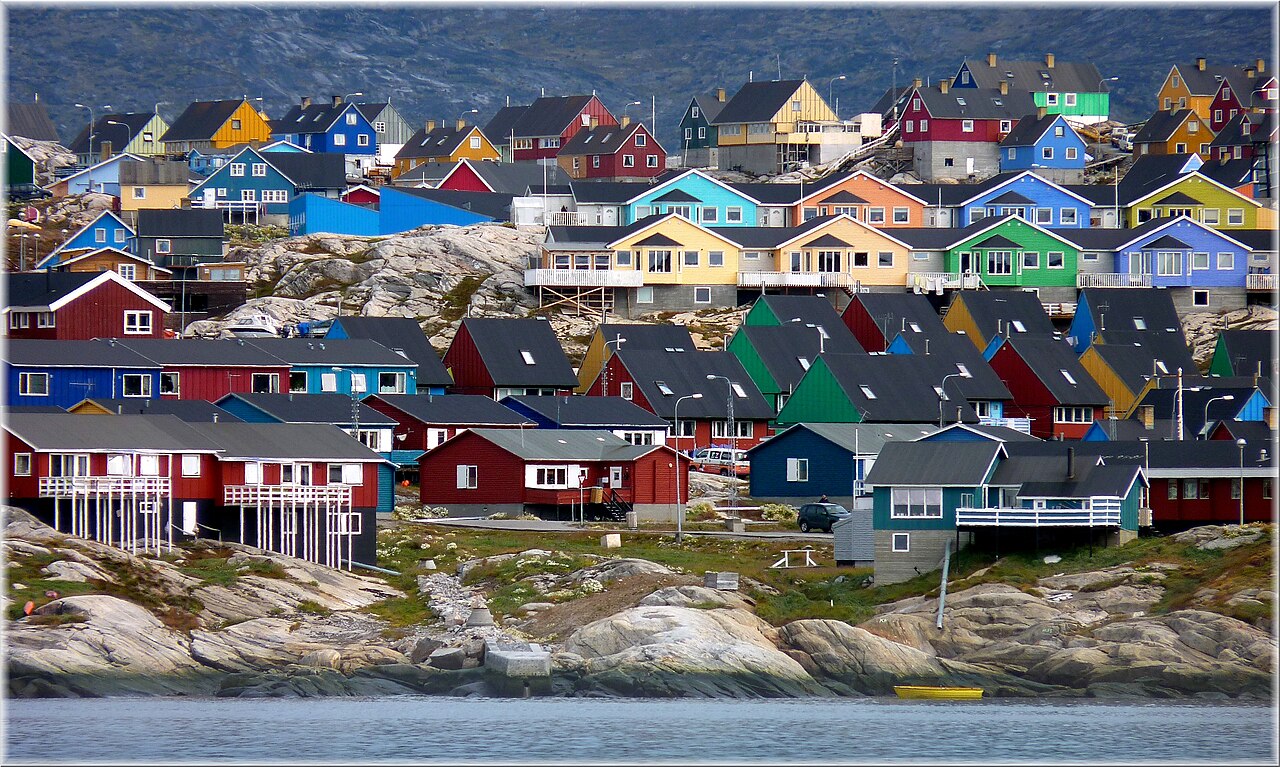
Greenland town on Disko Bay, gateway to the UNESCO-listed Ilulissat Icefjord.
Ilulissat — the name means "icebergs" in Greenlandic — is the third-largest town in Greenland and the main gateway to the Disko Bay region. It was founded in 1741 by Danish trader Jakob Severin and long known by its Danish name, Jakobshavn. About 4,500 people live here alongside roughly 3,000 sled dogs, which outnumber the human population for most of the year and are an unmistakable part of the town's character.
The town sits beside the Ilulissat Icefjord, one of the most spectacular natural phenomena in the Arctic. The Sermeq Kujalleq glacier feeds the fjord at a rate of 20–30 meters per day, calving enormous icebergs that pile up at the fjord mouth before breaking out into Disko Bay. The icefjord is a UNESCO World Heritage Site; trails along its edge and the Icefjord Centre — a striking piece of architecture opened in 2021 — make it accessible to visitors of all fitness levels. Just below the Centre, the ancient Inuit settlement of Sermermiut has been inhabited since around 2200 BCE.
In summer, boat trips among the icebergs run daily, whale watching is excellent in the bay from July onward, and the midnight sun means you can hike or kayak at any hour. In winter, the sea ice freezes and dog sledding begins — Ilulissat is the best place in Greenland to experience this, with organized tours available from November through April. The northern lights are visible from September through April.
The Knud Rasmussen Museum, in the childhood home of the great Arctic explorer who was born here in 1879, is a small but essential stop for anyone interested in Arctic exploration or Inuit culture.
Air Greenland flies to Ilulissat from Nuuk and Copenhagen; Icelandair also flies here from Reykjavik. A new international airport is planned for Ilulissat, expected to open by 2026.
Guide
Getting Around
Ilulissat is small enough to walk everywhere. The town center, the harbor, the museum quarter, and the trailhead for the icefjord paths are all within comfortable walking distance of each other. There are no public buses.
Taxis are available and cheap by European or North American standards — useful for reaching the Icefjord Centre quickly or getting back from the airport. Most tour operators will pick you up from your accommodation.
In winter, snowmobiles are a common form of local transport, and dog sled tours typically depart from a meeting point just outside town. In summer, boats from the harbor are the main way to access outlying areas.
Guide
Getting There
Ilulissat Airport (JAV) is served by Air Greenland with regular flights from Nuuk (about an hour) and seasonal direct flights from Copenhagen. Icelandair operates seasonal direct flights from Reykjavik in summer. A new, larger international airport is under construction and expected to open in 2026, which will significantly expand direct connections from Europe.
There is no road access to Ilulissat — like all Greenlandic towns, it is entirely accessible by air or sea. In summer, boats connect Ilulissat to other Disko Bay communities and occasional cruise ships call at the port. The helicopter service Air Greenland Helicopter connects to smaller settlements in the region.
From the airport to town is a short taxi ride of about 10 minutes.
Guide
When to Go
Ilulissat divides neatly into two seasons and both are genuinely worth visiting.
Summer (June to August) brings the midnight sun — from about late May to late July the sun never sets, which means you can hike to the icefjord at 2am and have full daylight. Boat trips among the icebergs run daily, whale watching is excellent from July onward, and the landscape is green and surprisingly warm by Arctic standards (10–15°C on good days). July is the peak tourist month.
Winter (November to April) is dog sledding season. The sea ice freezes, the northern lights appear (September through April, with peak activity around the equinoxes), and the town takes on a completely different character — quieter, more local, and genuinely dramatic. Temperatures drop to minus 20°C and below; dress for it.
March and April offer the best of both worlds: the days are lengthening rapidly, temperatures are still cold enough for good sledding, and the northern lights are still visible on clear nights.
Avoid May and October if possible — the ice is neither stable enough for sledding nor absent enough for good boat access, and the weather is raw.