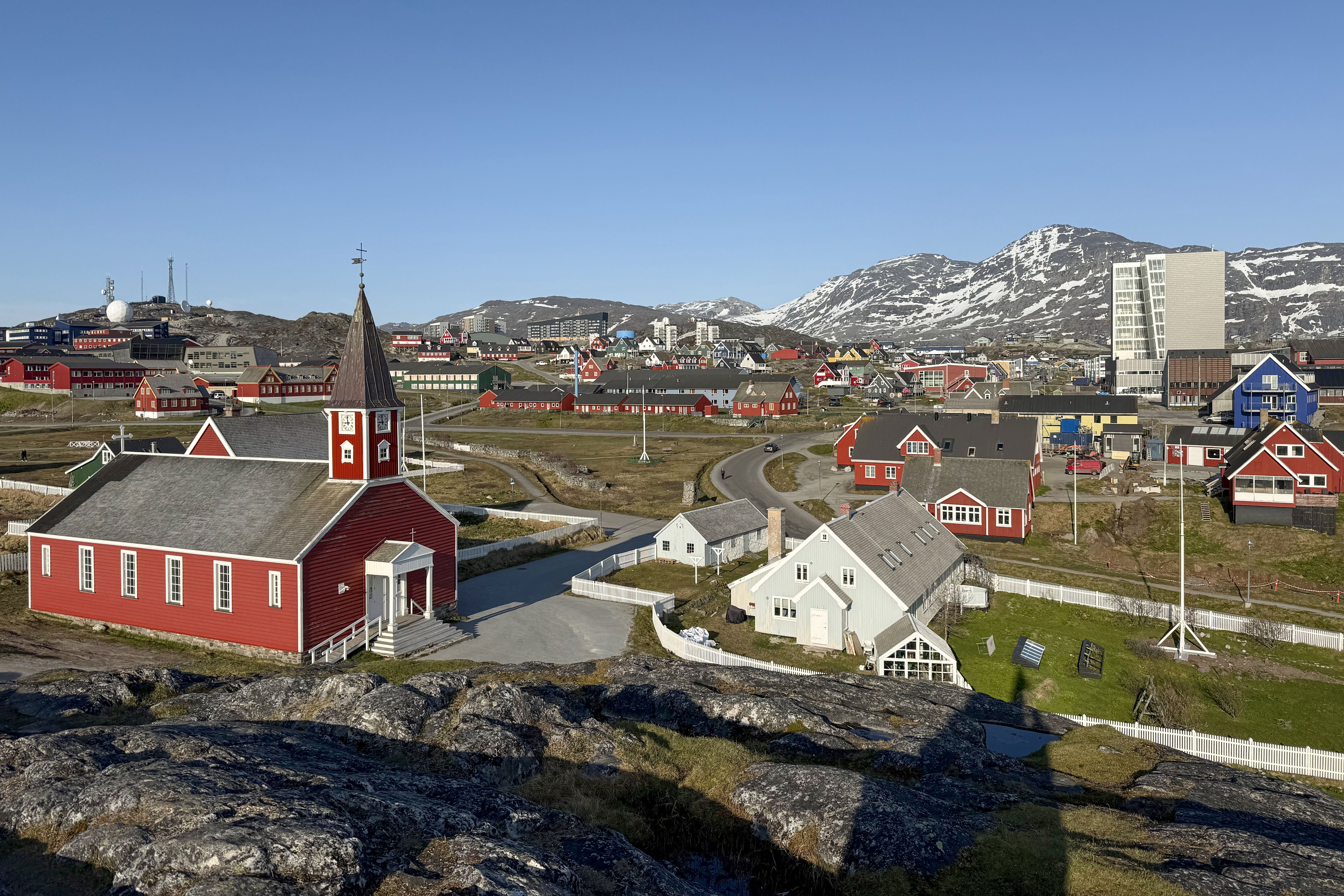
Nuuk is the capital of Greenland, situated on a peninsula on the southwest coast, some 300 km north of Qaqortoq. With around 20,000 inhabitants it is by far the largest city in Greenland, home to roughly a third of the country's entire population. It feels small by any international standard but has the cultural and political weight of a capital: parliament, university, national museum, and since November 2024, a new international airport capable of handling transatlantic flights directly.
The city was founded in 1728 by Hans Egede, a Norwegian Lutheran missionary who had come to Greenland seeking the descendants of the Norse settlers. He found none, but stayed to work among the Inuit and became a central figure in the Danish colonization of Greenland. A statue of Egede overlooks the old colonial harbor. The National Museum of Greenland nearby is one of the best in the Arctic, with exhibits on Inuit culture, Norse settlement, and the famous Qilakitsoq mummies — 15th-century Inuit mummies found naturally preserved by the cold.
The Katuaq cultural center, designed to resemble the aurora borealis, serves as a concert hall, cinema, and gallery. The old colonial quarter around Nuuk fjord is worth an afternoon on foot. The food scene has developed considerably — there are several good restaurants serving local ingredients.
Nuuk sits at the mouth of a spectacular fjord system. Day trips by boat into the surrounding landscape — icebergs, uninhabited islands, whale watching in season — are easily arranged.