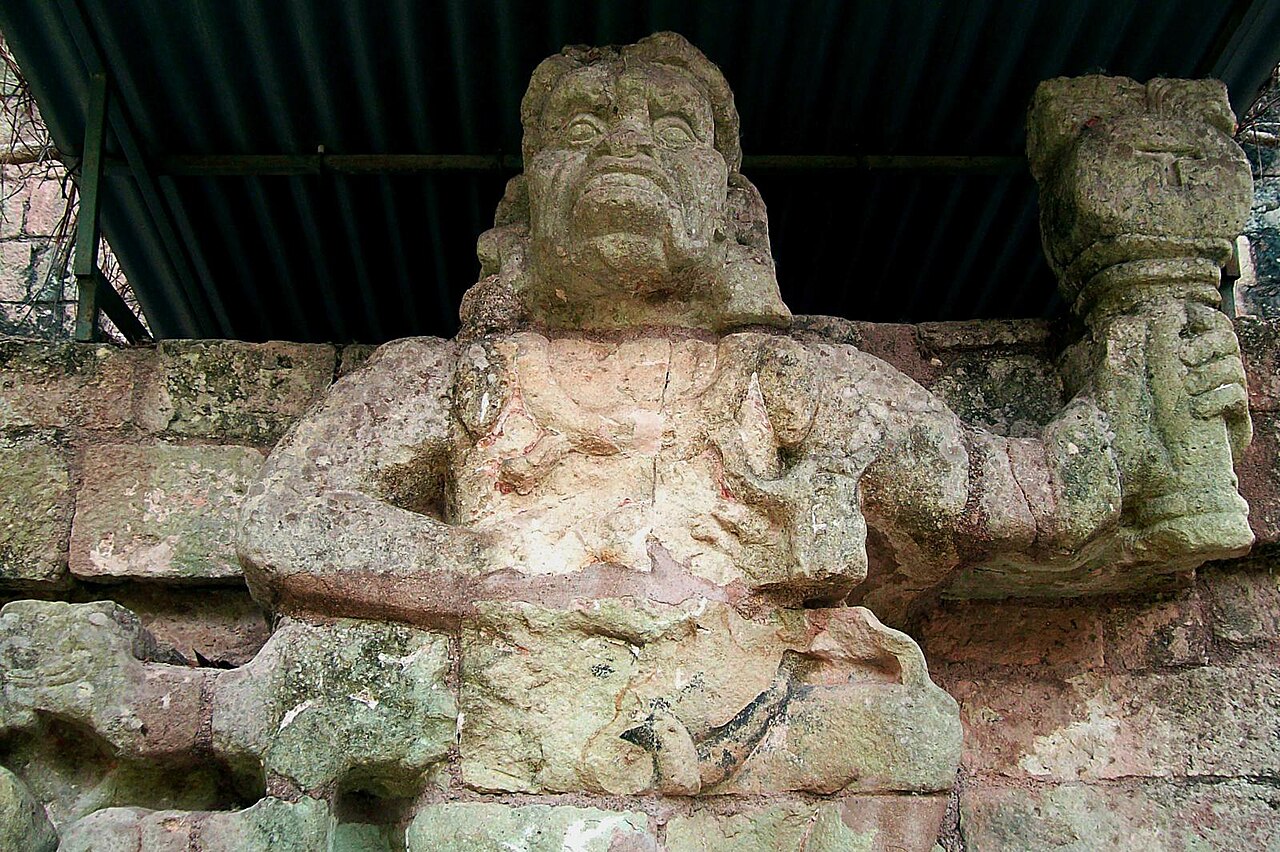
Copán is one of the great Mayan cities, and arguably the most artistically accomplished. While Tikal in Guatemala may be larger and Chichén Itzá more famous, Copán has the finest sculpture in the Mayan world: 21 stone stelae carved with extraordinary detail, each a portrait monument to a ruling king. The Hieroglyphic Stairway — the longest known Mayan inscription — is here too.
The site occupies a beautiful fertile valley on the Copán River near the Guatemalan border, at an elevation of about 640 metres. The climate is mild and the setting green. Only a fraction of the estimated 4,000 structures have been fully excavated, and tunneling into existing pyramids has revealed intact earlier temples beneath — including the Rosalila Temple, found completely preserved inside a later structure. A full-scale replica is on display in the Museum of Mayan Sculpture in the adjacent town. The Acropolis, with its Altar Q dynastic record, and Las Sepulturas residential zone round out the main archaeological site.
The nearby town of Copán Ruinas is small and pleasant, with good restaurants and guesthouses clustered around the main square. It's well set up for travelers and easy to reach by bus from San Pedro Sula (about 3 hours) or by crossing the border from Guatemala at El Florido (a short minibus ride). Macaw Mountain Bird Park, just outside town, is a worthwhile half-day trip.
Allow at least a full day for the ruins, ideally two. The site is open daily; guides are available at the entrance.