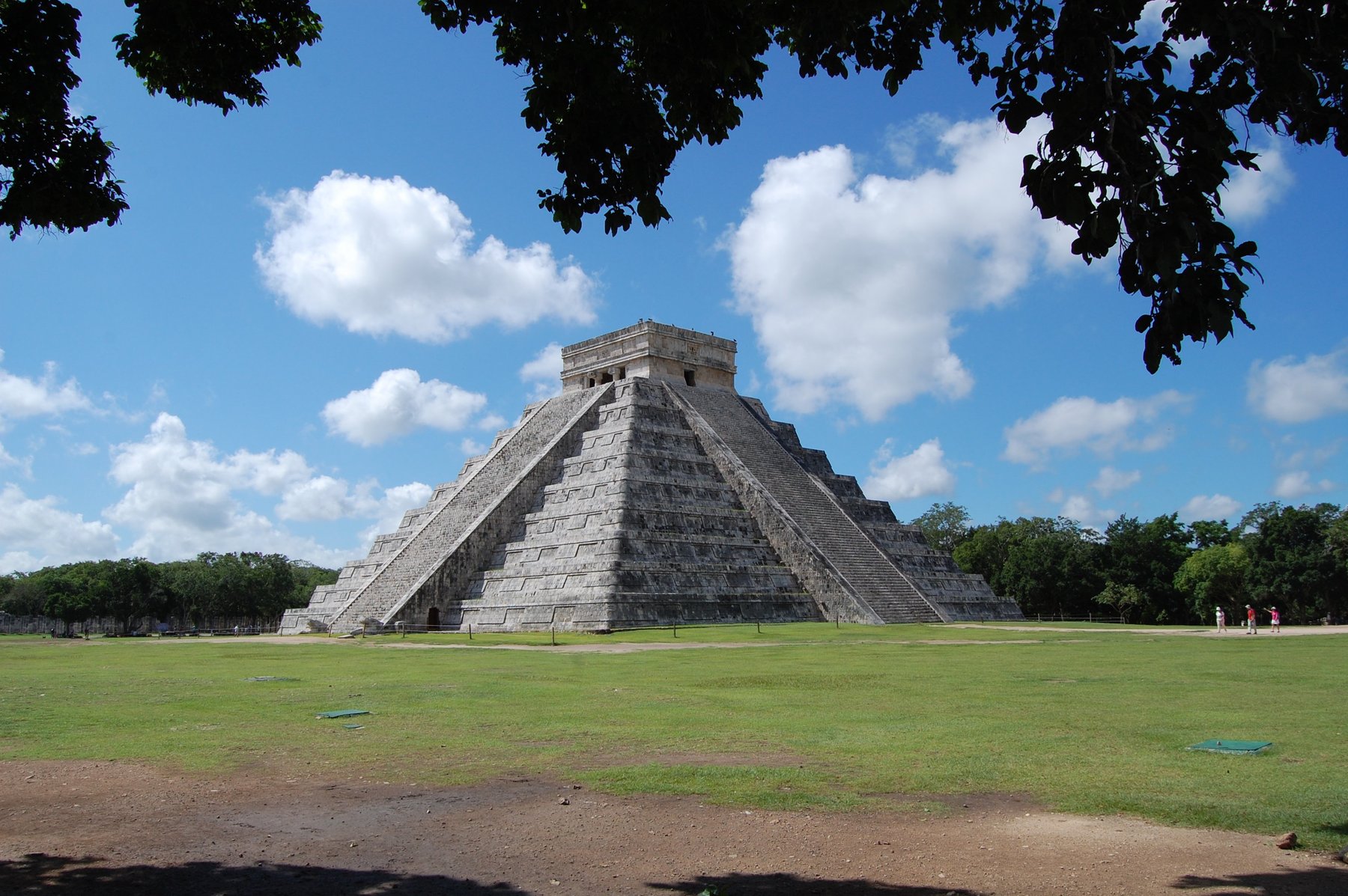
Maya archaeological city in the Yucatán, dominated by Kukulcán's stepped pyramid and vast ceremonial courts.
Chichen Itza is the most visited archaeological site in Mexico and one of the great ancient cities of the world. A UNESCO World Heritage Site and one of the New Seven Wonders of the World, it sits in the heart of the Yucatan Peninsula and draws visitors from across the globe — and for good reason.
The centerpiece is El Castillo, the stepped pyramid of Kukulcán that rises 30 meters above the jungle floor. Built with extraordinary precision, its four stairways each have 91 steps — add the top platform and you get 365, one for every day of the year. Twice a year at the equinoxes, the afternoon sun casts a shadow down the north staircase that looks unmistakably like a serpent descending from the sky. If you can time your visit, it is worth it.
Beyond El Castillo, the site is vast. The Great Ball Court is the largest in Mesoamerica, stretching 168 meters long, with stone rings set high on the walls through which players drove a rubber ball using only their hips. The acoustics are remarkable — a whisper at one end carries clearly to the other. El Caracol, the round observatory, is an outlier among Mayan architecture: a cylindrical tower on a rectangular base, its windows aligned to track Venus across the sky. And the Sacred Cenote, a natural sinkhole some 60 meters wide, was a site of ritual offering — archaeologists have recovered gold, jade, incense, and human remains from its depths.
Chichen Itza is about two hours from Cancún and one and a half hours from Mérida, making it an easy day trip from either city. Arrive as early as possible — the site opens at 8am and the first tour buses from Cancún typically roll in around 10am. By midday the site is crowded and the heat is serious. Bring water, sunscreen, and comfortable shoes.
Guide
Day Trips
The Yucatan Peninsula rewards exploration beyond the main site. A handful of destinations make easy day trips from Chichen Itza.
Balankanche Caves
About 3km east of the ruins, Balankanche (Throne of the Jaguar Priest) is a labyrinth of underground caverns discovered in 1959. Clay vessels, incense burners, and other offerings remain exactly where they were left on the cave floor. A chamber beneath the altar holds a limestone formation shaped like the sacred ceiba tree; deeper in, another altar surrounds a pool dedicated to Tlaloc, the Toltec rain god. The site has electric lighting throughout. Entry fee approximately 22 pesos; open 9am to 7pm daily.
Rio Lagartos
About 50km north, Rio Lagartos is a small fishing town on a biosphere reserve estuary where large flocks of pink flamingos come to breed. Boat tours of the reserve depart from town and offer close-up views of the flamingos alongside herons, spoonbills, and other wading birds.
Puerto Morelos
Around 130km east on the Caribbean coast, Puerto Morelos is a low-key town near the Mesoamerican Barrier Reef. Dive operators based here run trips to the Palancar Reef; snorkelling is equally rewarding. The town has good seafood restaurants and a relaxed central square.
Xcaret
About 150km southeast near Playa del Carmen, Xcaret is a large eco-theme park built around a series of natural cenotes and underground rivers. It is commercial and busy but genuinely impressive in scale, with butterfly pavilions, sea turtle exhibits, a bat cave, and the option to snorkel or swim through the underground passages. Open roughly 11am to 7:30pm; check current admission prices before going.
Guide
Shopping
Souvenir stalls cluster around the main entrance and along the road through Piste. Quality varies widely, and wood carvings sold in the streets of Piste and nearby Xcalacoop are often made from illegally logged timber — buying them contributes to deforestation and habitat loss in the area. Better choices are hand-embroidered dresses, Maya ceramics, and handwoven hammocks.
Toh Boutique at Hacienda Chichen carries work by local Maya artists and ceramicists — fine clay vessel replicas, embroidered textiles, handmade jewellery, and Maya glyph necklaces. Profits support a children's programme and a reforestation effort in the surrounding jungle reserve.
The Yaxkin Spa Gift Shop (Zona Hotelera, Km. 120; tel. 985 851 0046; [email protected]) sells Mayan herbal skin care products, handmade soaps, and aromatherapy candles. A percentage of sales goes to the Maya Foundation's children's programme.