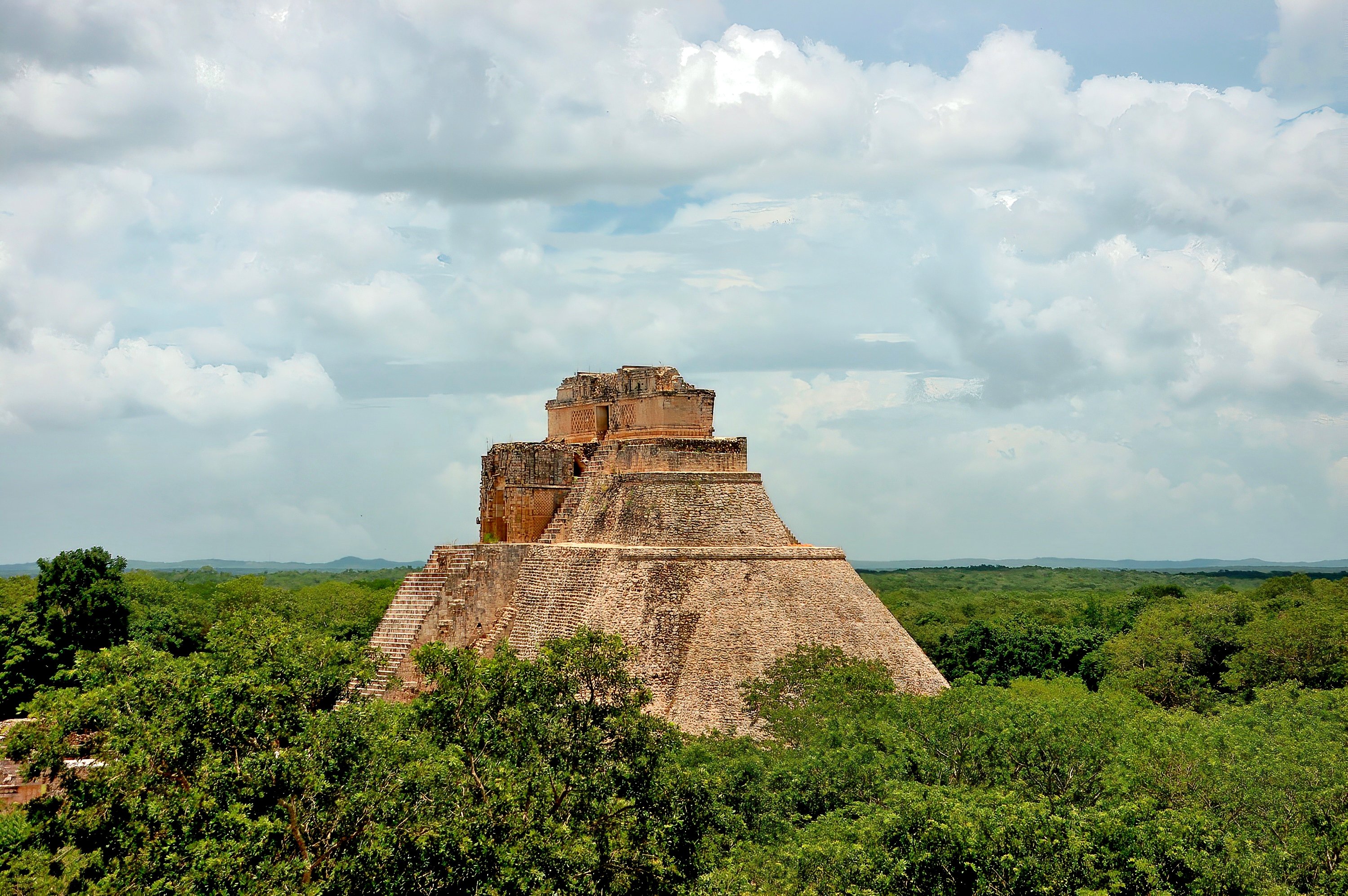
Uxmal is the finest Maya archaeological site in the Yucatan and, many archaeologists would argue, one of the most beautiful examples of pre-Columbian architecture anywhere in the Americas. Unlike Chichen Itza, which sits in a flat scrub forest and receives millions of visitors a year, Uxmal remains quieter and more intimate. The buildings are more refined, the decorative work more intricate, and the atmosphere more authentically ancient.
The site flourished between roughly AD 600 and 900, during the Late Classic period, and reached its peak under a ruler known as Lord Chac (named for the rain god whose mask appears thousands of times on the buildings' stone facades). Uxmal means 'built three times' in Yucatec Maya, a reference to repeated construction episodes visible in the layered architecture. The city was abandoned around AD 1000, possibly due to drought — the rain-god imagery throughout the site speaks to a culture preoccupied with water in a landscape with no rivers and unreliable rainfall.
The buildings follow the Puuc style, named for the range of low hills in which Uxmal sits. Puuc architecture is distinguished by plain lower walls and upper facades densely decorated with stone mosaic — geometric patterns, serpent masks, and thousands of Chac masks, each with its hooked nose and staring eyes. The effect, repeated at the scale of the Nunnery Quadrangle's four long palaces, is extraordinary.
Uxmal is a UNESCO World Heritage Site, designated in 1996. It lies 62 km south of Merida on a good road, making it an easy day trip from the Yucatan capital. The site is at its best in the early morning before the heat builds; by midday in summer the stone radiates heat mercilessly.