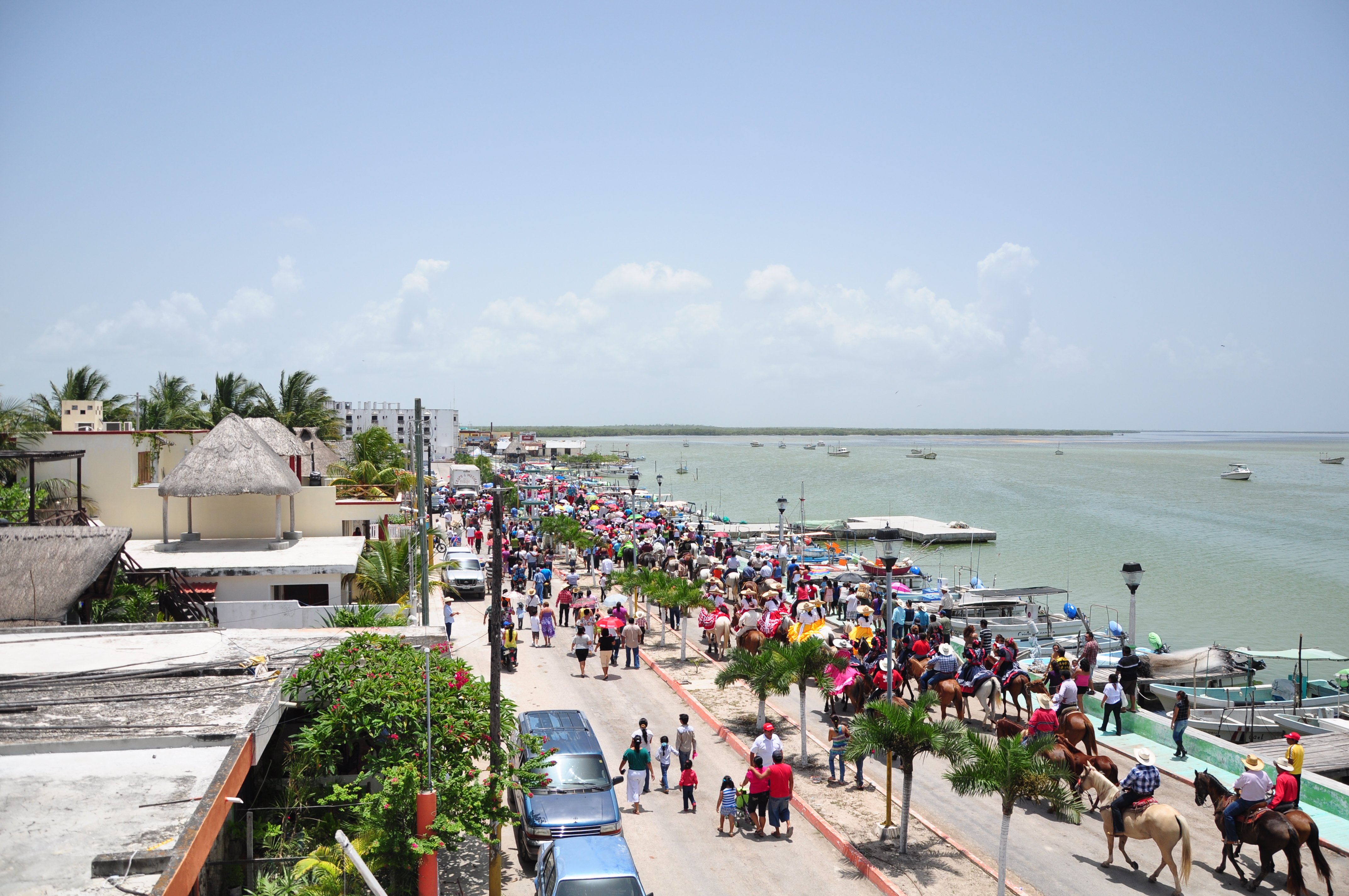
Yucatán fishing village beside Ría Lagartos Biosphere Reserve, known for flamingos and mangrove lagoons
Rio Lagartos is a small fishing village on the north coast of the Yucatan Peninsula, best known for the flamingo colony in the surrounding biosphere reserve. Thousands of Caribbean flamingos breed in the shallow lagoons and salt flats of the Ría Lagartos Biosphere Reserve — boat tours to see them are the main reason visitors come. The reserve also supports over 300 bird species and extensive mangrove habitat.
The village itself is quiet and unpretentious — a handful of streets, simple seafood restaurants, and a waterfront where fishing boats come and go. It makes a good base for boat tours into the lagoon system, including crocodile-spotting trips and visits to Las Coloradas — the extraordinary pink salt pans about 20 kilometres east. The sport fishing is excellent — tarpon, snook, and jacks in the protected lagoon waters.
Rio Lagartos is about three hours from Mérida via Tizimín. Chichén Itzá and other Yucatán ruins are within a couple of hours' drive.
Guide
Getting There
Rio Lagartos is about 215 kilometres northeast of Mérida by road, roughly a three-hour drive via Tizimín. There is no direct bus from Mérida; the usual approach is to take a bus to Tizimín and then a local bus or taxi the remaining 50 kilometres to Rio Lagartos.
From Tizimín, shared vans (combis) leave regularly for Rio Lagartos during daylight hours. The drive from Tizimín takes about 45 minutes. Chichén Itzá is about two hours southwest; Valladolid, the nearest significant town with good accommodation options, is about 90 minutes south.
Guide
When to Go
The flamingo colony is present year-round but peaks between May and August, when tens of thousands of birds concentrate in the salt pans to breed. This is the best time for flamingos but also the hottest and most humid, with temperatures consistently above 35°C. Hurricane season runs from June through November, though storms rarely affect this area directly.
The dry season (November to April) is more comfortable for travel and still offers flamingo sightings, albeit smaller groups. Birding for waders and migratory species is excellent from October through February, when the reserve fills with birds moving through the Yucatán on their way between North and South America.