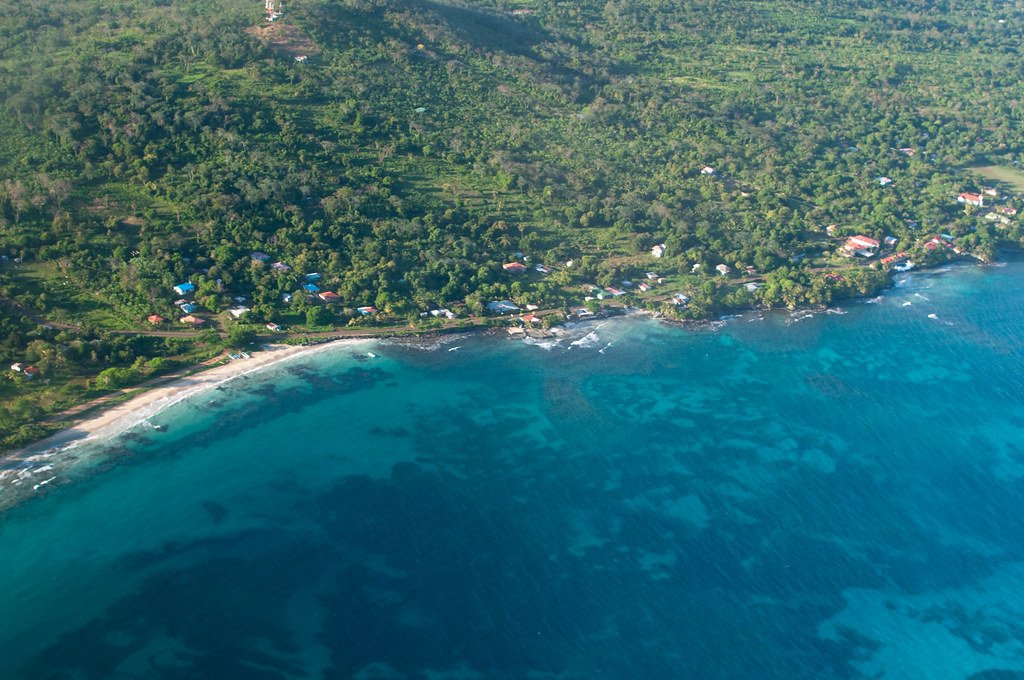
Caribbean island pair off Nicaragua, with white beaches, coral reefs, and Afro-Caribbean culture.
Two small islands floating in the Caribbean, 70 kilometres off Nicaragua's Atlantic coast — the Corn Islands are among the most rewarding places in Central America that most people have never heard of. Big Corn and Little Corn together offer white sand beaches, healthy coral reefs, and an Afro-Caribbean culture that feels entirely distinct from the rest of Nicaragua.
Big Corn is the larger island: it has a proper airport, paved roads, ATMs, and a range of places to eat and sleep. It moves at a relaxed Caribbean pace but it is recognisably a working community with fishing boats, a hospital, and a supermarket. Little Corn, reached by a short but sometimes rough panga ride across the channel, has none of that — no cars, no paved roads, no ATMs. What it does have is some of the finest diving in the Caribbean, beaches where you can go a full morning without seeing another tourist, and an unhurried rhythm that is genuinely difficult to leave.
The islands were historically settled by Afro-Caribbean and Creole communities, many descended from Jamaican migrants. English-based Creole is widely spoken alongside Spanish, and the cultural identity here — the music, the food, the pace — leans more toward the Caribbean than toward Managua.
Guide
Beaches
The Corn Islands have the kind of Caribbean beaches that justify a long journey: clear turquoise water, white sand, and coconut palms. Between the two islands you have a range of options, from popular social spots to deserted stretches where you will only see local fishermen.
On Big Corn, Picnic Beach on the southwestern shore is the most popular — calm water, soft sand, and a few restaurants serving cold Toña beer and fried fish with plantains. Long Bay on the eastern side is quieter and more local in feel. Southwest Bay is another good option with calm, swimmable water.
Little Corn's beaches are smaller and wilder. Otto Beach on the north side is a favourite: palm-strung hammocks, rough surf, and very few people. Pelican Beach near the village is more social. For real solitude, head to the beaches on the island's eastern face — there is no road, just a footpath through the vegetation.
Guide
Eating Out
The local food on the Corn Islands is rooted in Afro-Caribbean tradition. Rundown — a rich, slow-cooked stew of fish or seafood in coconut milk with vegetables — is the dish most associated with the islands and worth seeking out at any local spot that makes it properly. Grilled lobster, whole fried snapper, and seafood curries are also mainstays. The lobster season runs roughly October through June; outside those months it may be off the menu.
On Big Corn, you will find a wider range of restaurants and a few beach spots at Picnic Beach serving cold beer and simple grills. On Little Corn, most accommodation includes a restaurant, and the choice is more limited — but the quality at the better places is genuinely high. Prices are higher than on the mainland, as nearly everything is brought over by boat or plane.
Bring enough cash before you arrive on Little Corn — there are no ATMs on the island. Big Corn has ATMs but they can run out of cash on busy weekends. USD is widely accepted alongside córdobas.
Guide
Getting Around
On Big Corn, a single paved road circles the island — about 12 kilometres in total. The main local transport is a fleet of shared minibuses and pickups that run a continuous loop, picking up anyone who flags them down. A ride anywhere on the island costs around 20 córdobas (under USD $1). Taxis cost more but are still cheap by any standard. Bicycle and scooter rentals are available from a few places in Brig Bay if you want to set your own pace.
On Little Corn there are no roads and no motor vehicles at all. Everything is done on foot. Concrete paths run from the village across to Otto Beach in the north and out to the lodges on the eastern coast — none of it takes more than 25 minutes to walk. Bring a torch for after dark; there is almost no street lighting and the paths get genuinely black once the village ends.
Between the two islands, the panga is the only way across. See Getting There for departure times and prices.
Guide
Getting There
The easiest way to reach the Corn Islands is by air. La Costeña, Nicaragua's domestic airline, runs daily flights from Managua to Big Corn Island (airport code RNI). The flight takes around 80 minutes, sometimes with a brief stop in Bluefields, and costs roughly USD $95–105 one-way. There are usually two departures daily in each direction, with extra flights on certain days of the week. Book ahead — these flights fill up.
If you are already in Bluefields and want to save money, passenger ferries run to Big Corn on Wednesdays and Saturdays, departing at 9am and taking five to six hours. The crossing costs around USD $8 each way. It is slow and the Caribbean swell can be rough, but many travellers find the experience worthwhile.
From Big Corn to Little Corn, you take a panga — a small open boat — from the wharf on the island's western side. The crossing takes 30–40 minutes and costs USD $10 each way. The standard departure times are 10am and 4:30pm from Big Corn, and 6:30am and 1:30pm from Little Corn, though these shift with the season and demand. The crossing can be choppy, especially in the afternoon. If you are prone to seasickness, sit toward the front and take medication in advance.
Guide
Things to Do
The primary draw of the Corn Islands is underwater. The reefs here are among the healthiest in the Caribbean — partly because the islands are remote enough to have avoided the worst of the regional overfishing and tourist pressure. Dive sites ring both islands, and Little Corn in particular has become one of the most affordable places in the Caribbean to get certified. Blowing Rock, a volcanic pinnacle about 11 kilometres from Big Corn, is considered one of Nicaragua's best dive sites: it draws nurse sharks, eagle rays, and large schools of fish.
For non-divers, the snorkelling is also exceptional. Reef systems come close to shore on Little Corn, and guided snorkel trips typically cost USD $25–40 per person. You can see turtles, rays, and reef fish without ever putting on a tank.
Above water, the islands reward slow exploration. On Big Corn, the road around the island takes you past fishing communities, mangroves, and lookout points. On Little Corn, the only way around is on foot — a walk across the island through jungle paths takes about twenty minutes and gives you a real sense of the place.
Guide
When to Go
The Corn Islands sit in the Caribbean, so their climate follows Caribbean patterns rather than the Pacific-facing dry season that governs most of Nicaragua's tourism calendar. The driest months are generally March through May, and again in September and October — these are the best times for diving visibility and calm seas for the panga crossing to Little Corn.
The wettest months are November through January, with heavy rain and rougher seas possible. The La Costeña flights and panga crossings can be delayed or cancelled in bad weather, which is worth factoring into your plans if you have a tight schedule.
Lobster season runs from October through June, so if you are coming specifically for the seafood, avoid the July–September period when lobster is officially off the menu. Water temperatures are warm year-round, rarely dropping below 26°C, making the diving comfortable in any season.