Isla Ometepe
©
Isla Ometepe

Isla Ometepe

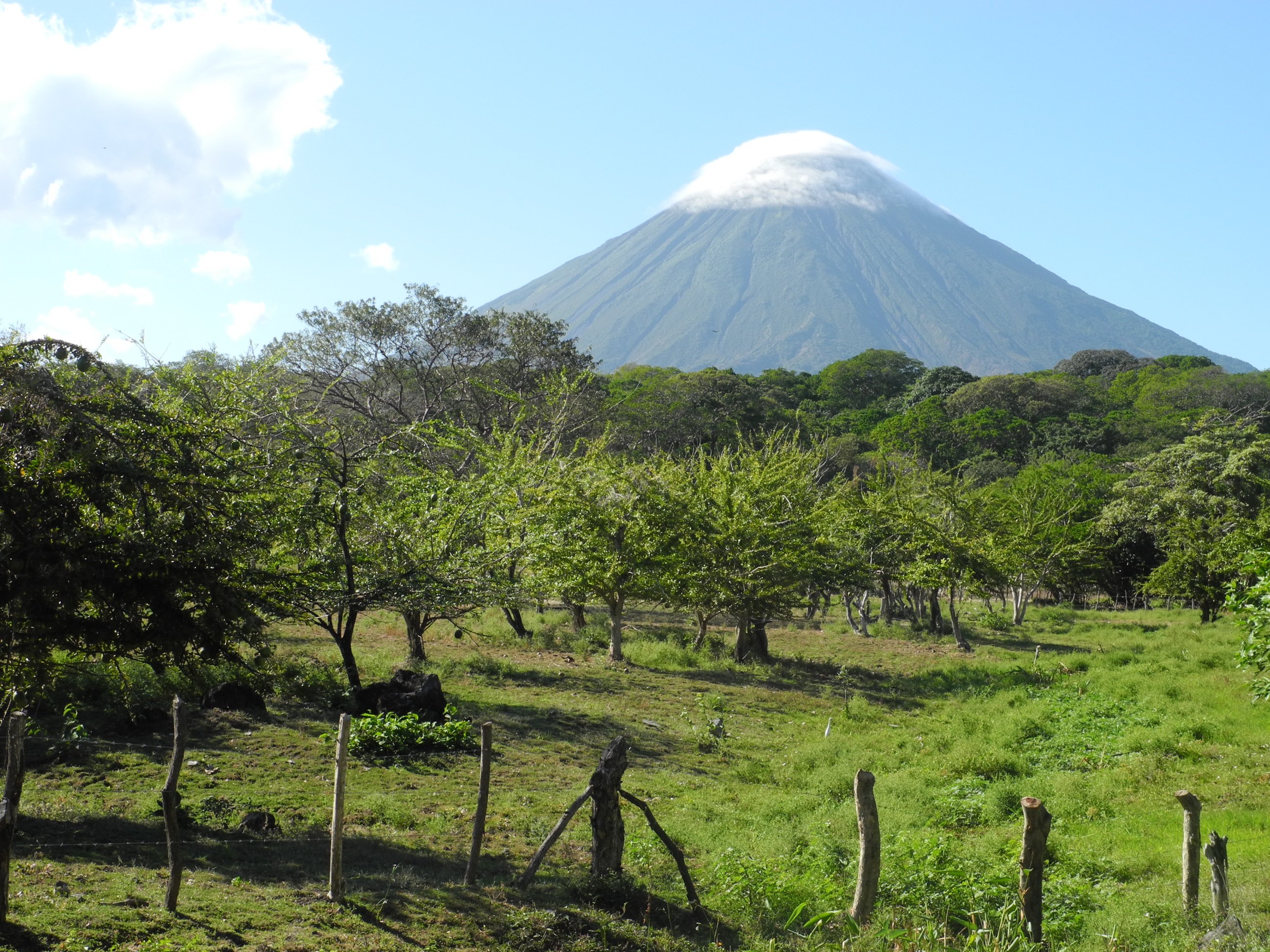
Lake Nicaragua island formed by the twin volcanoes Concepción and Maderas joined by an isthmus.

Ometepe is an island in Lake Nicaragua, formed by two volcanoes — Concepción and Maderas — joined by a low isthmus to create an hourglass-shaped landmass of 276 square kilometres. The name comes from the Nahuatl words for "two hills." It is one of the most striking islands in Central America: perfectly symmetrical Concepción rising to 1,610 m at the north end, the older, forested Maderas at 1,394 m in the south.

Concepción is still active and has erupted numerous times since 1880; climbing it requires a guide and a good level of fitness. Maderas is quieter, its crater holding a lagoon, and the ascent through cloud forest is a full-day affair. Both volcanoes can be climbed from the town of Altagracia (Concepción) or Balgüe (Maderas).

Beyond the volcanoes, the island offers kayaking on the Río Istián, swimming in Ojo de Agua — a natural spring-fed pool — petroglyphs scattered across the farmland, and a pace of life that makes the mainland feel very far away. The two main settlements are Moyogalpa, the ferry port on the western shore, and Altagracia, the larger town to the north-east. Ferries run from San Jorge on the mainland, taking about an hour.

Guide

Activities

Two volcanoes rising out of a freshwater lake, joined by an isthmus: that is the island, and it is also the list of things to do. Concepción is the perfect cone on the northern half, an eight-to-ten-hour return climb, hot and exposed near the top. Maderas on the southern half is lower, wetter and harder underfoot — cloud forest, deep mud, and a crater lagoon at the top you can wade into. Guides are compulsory on both, and worth having on Maderas whatever the rule says.

Between them the Istián channel runs through mangrove and reed, and paddling it at dawn is the quietest thing on the island: caimans, turtles, and more birds than anywhere else in Nicaragua outside the Río San Juan.

The rest is gentler — the spring-fed pools at Ojo de Agua, the petroglyphs on the Maderas slopes, and plantation roads that are ideal on a bicycle and punishing on a scooter.

Guide

Eating Out

Most travellers eat where they sleep — the lodges and guesthouses on Ometepe almost all run their own kitchens, and the food is generally simple, fresh, and decent. Expect plantains, beans, gallo pinto, grilled fish from the lake (guapote, mojarra, or tilapia), and chicken in various forms.

In Moyogalpa, Los Ranchitos is reliable for a sit-down dinner of grilled meats and fish under a thatch roof, and Comedor Doña Pancha does the cheapest decent plate of comida típica on the island. On the Maderas side, El Bambú in Balgüe is the social spot, with wood-fired pizza and a long bar; Café Campestre has a small but accomplished menu drawing on European-trained chefs who have settled on the island. Finca Magdalena does generous farm meals at long communal tables.

Lake fish is the local specialty. The guapote — a freshwater bass — is meaty and excellent grilled whole with garlic.

Guide

Getting Around

Ometepe is bigger than it looks — 276 square kilometres and a single ring road that hugs the coastline. Getting from Moyogalpa to the Maderas side takes well over an hour by any vehicle. Buses run a few times a day around the island but are slow and infrequent; for a short visit, hiring a scooter or a mountain bike is by far the most practical option.

Scooter rental is available in Moyogalpa for around $25 a day. The roads are paved between the main settlements but rough and dusty elsewhere; ride carefully and watch for animals and potholes. Bicycle hire is cheaper and reasonable for shorter distances — Moyogalpa to Punta Jesús María, for example, or a circuit around the western side. The isthmus and the Maderas side are hillier and harder on a bike.

Taxis can be hired by the hour or for fixed routes. Tuk-tuks operate in and around Moyogalpa. For volcano climbs, your guide will usually arrange transport to the trailhead as part of the tour.

Guide

Getting There

The standard route is from San Jorge, the small port a few kilometres outside the mainland city of Rivas. Ferries and lanchas (smaller boats) run every hour or two between San Jorge and Moyogalpa from early morning until late afternoon. The crossing takes about an hour on a ferry, slightly less on a lancha. Tickets are cheap and bought at the dock — there is no need to book ahead unless you are bringing a vehicle.

A second, slower ferry runs from Granada to Altagracia twice a week (currently Mondays and Thursdays, but check locally). The crossing takes around five hours and gives you a long, atmospheric voyage down Lake Nicaragua, but it is not always reliable.

To reach San Jorge from Managua, take a bus to Rivas (around three hours) and a short taxi or local bus to the port. From the south, buses run from the Costa Rica border at Peñas Blancas to Rivas.

Cars can be brought across on the ferries, but parking on the mainland is easy and a hire car is rarely worth the cost — local transport and bike or scooter rental on the island is cheaper and easier.

Guide

Things to Do

Ometepe is built for the active traveller. The two volcanoes anchor every itinerary — Concepción for the punishing summit climb, Maderas for a forested hike to a crater lagoon. Around them are petroglyphs in farmyards, freshwater swimming holes, kayak routes through mangrove channels, and viewpoints that look out across Lake Nicaragua to the mainland.

Use the filter to pick by category — volcanoes and viewpoints, archaeology, beaches and swimming, or natural reserves.

Guide

When to Go

The dry season runs from December to April and is the best time to visit: clearer skies, more reliable views from the volcano summits, easier hiking on the mud-prone Maderas trail, and warmer evenings. December and January are the most popular months and accommodation can fill up at New Year and during Semana Santa (the week before Easter), which is the busiest local holiday.

The wet season (May to November) brings afternoon thunderstorms but is otherwise still perfectly liveable — mornings are usually clear, the island turns lush and green, and waterfalls like San Ramón run at full force. October is the wettest month and the cloudiest; the volcano summits are often invisible for days at a stretch.

The Fiesta de San Diego in Altagracia, held in the second week of November, is the biggest cultural event on the island, with traditional dances and processions. The Fiesta de la Virgen del Carmen in Moyogalpa in mid-July is the other date worth timing a visit around if you are interested in local festivals.

Picked by people who know it

What most visitors miss

Know Isla Ometepe?

Nobody has picked anything here yet. Tell us the one thing most visitors miss, or what we got wrong. We read every mail, update the guide and write back.