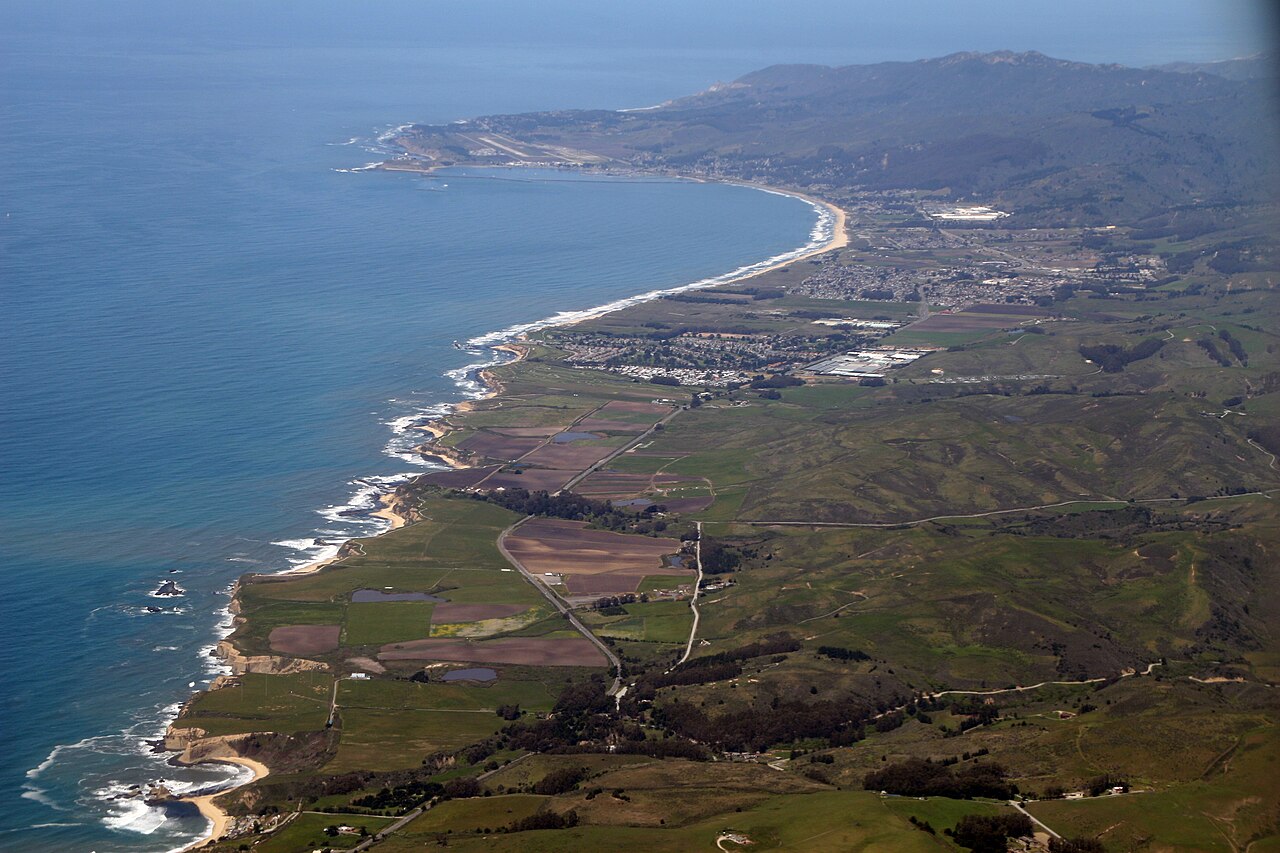
Half Moon Bay is a small coastal town of about 12,000 people on the Pacific side of the San Francisco Peninsula, 45 minutes south of San Francisco by road. It sits in a fertile coastal valley — flower farms and pumpkin patches stretching away from the beach towards the coastal hills — and it is the nearest stretch of genuinely rural California coastline to the city. On weekends San Franciscans pour over the coastal mountains via Highway 92 to walk on the beach, eat oysters, and pretend for an afternoon that they are somewhere much further north.
The main beach, Half Moon Bay State Beach, is a long crescent of pale sand backed by dunes and reached by a four-mile coastal trail that runs from the harbour at the north end to Poplar Beach in the south. It is often cold, foggy, and windy even in summer — this is the Pacific in California, not the Mediterranean — but on a clear day it is one of the finest stretches of coast in the Bay Area. A few kilometres north, Pillar Point Harbor is a small working fishing port where you can buy fresh dungeness crab straight off the boats in season, eat at the old-fashioned Sam's Chowder House, and look out at the surf break offshore known as Mavericks — one of the most dangerous big-wave surf spots in the world, where in winter storms waves reach 15 metres and an invitation-only surfing competition draws the world's top big-wave riders.
The town's biggest event of the year is the Art & Pumpkin Festival on the third weekend of October — the town is the self-proclaimed "Pumpkin Capital of the World", and the festival's centrepiece is the Safeway World Championship Pumpkin Weigh-Off where farmers bring monster pumpkins, some over half a tonne, to compete for the title. It is crowded and slightly chaotic but worth seeing once. Beyond that, Half Moon Bay is a place for walking, eating, and driving slowly up or down Highway 1 — the coast road south from here towards Santa Cruz, with its lighthouses, tidepools and sheer cliffs, is one of the great California drives.