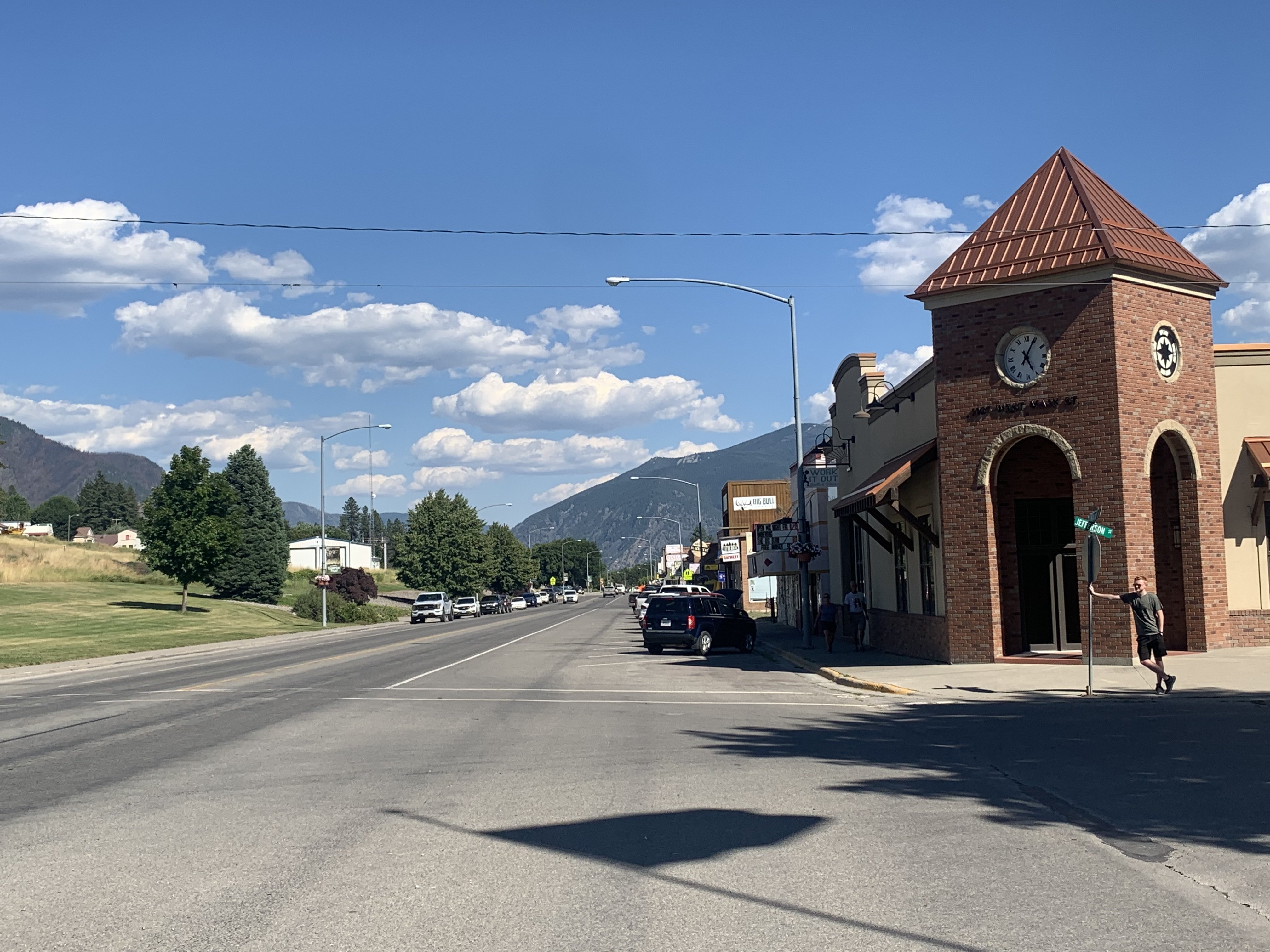
Thompson Falls
©
Thompson Falls

Thompson Falls

Small Clark Fork River town in western Montana, set below Cabinet Mountains and a historic dam.

Thompson Falls sits in a tight river valley in far-western Montana, where the Clark Fork River cuts through the Cabinet Mountains before crossing into Idaho. It is a small, unhurried town — county seat of Sanders County, population around 1,300 — that most travelers pass through on US-2, but it rewards a stop.

The namesake falls no longer roar. They were submerged in 1914 when the Thompson Falls Dam was built, creating a long reservoir on the Clark Fork. The dam itself is worth a look, and the small Thompson Falls State Park on the riverbank is a pleasant place to stretch your legs. In summer, fishing and floating on the river draw visitors from across the region.

The town takes its name from David Thompson, the Scottish-Canadian fur trader and cartographer who built Saleesh House nearby in 1809 — one of the first European trading posts in what is now Montana. A historical marker near the river commemorates the site. Thompson mapped much of the Pacific Northwest with extraordinary precision, and his journals remain essential reading for anyone interested in the early exploration of the region.

Thompson Falls is a practical base for exploring the Cabinet Mountains Wilderness, which begins just to the north. The wilderness is roadless and relatively uncrowded, with good hiking to alpine lakes and decent fishing in its streams.

Guide

Getting There

Thompson Falls sits on US Highway 2, which runs east-west across northern Montana and is the main travel corridor between Spokane, Washington and Glacier country. It is roughly 90 miles east of Libby, 60 miles west of Plains, and about 100 miles northwest of Missoula via State Highway 200 (the more direct route if coming from the east). There is no commercial air service, train service, or intercity bus to Thompson Falls itself.

By car is the practical approach. From Missoula, take I-90 west to St. Regis and then follow State Highway 135 north to Thompson Falls — about 90 minutes. From Spokane, US-2 east across the Idaho panhandle is the direct route, taking just under two hours. From Glacier National Park, US-2 west from Browning and Kalispell is the most direct, running about 2.5 to 3 hours depending on your starting point within the park.

There is no public transit to or within Thompson Falls. Gas stations are present in town and reliable on US-2 through the corridor, though the mountain passes into Idaho can be isolated in winter — keep your tank reasonably full if you are traveling in November through March. Cell service in the Clark Fork valley is patchy in places; download offline maps before you leave the highway if you plan to venture into the Cabinet Mountains.

Guide

Things to Do

Thompson Falls is a small town, but it punches above its weight for outdoor recreation and history. The Clark Fork River is the central draw — fishing, floating, and simply watching it run through the narrow valley. The Cabinet Mountains Wilderness begins just north of town, giving serious hikers roadless country without driving hours to find it. In town, a handful of historic buildings and a good small museum anchor the walkable core.

Guide

When to Go

The best times to visit Thompson Falls are late spring (mid-May to mid-June) and early autumn (September to mid-October). In late spring, the river is running high and cold from snowmelt, the cottonwoods are leafing out, and the Cabinet Mountains still have snow on the high ridges — the valley is green and the days are long. Autumn brings clear skies, cooler temperatures, good fishing conditions, and elk activity in the forests north of town.

Midsummer (July and August) is perfectly fine — warm and dry, with long days that suit outdoor recreation — but fire smoke from wildfires in the region is increasingly common and can settle into the valleys for days at a time. The Clark Fork corridor is particularly susceptible to smoke trapping due to the narrow canyon geography. Check air quality forecasts if you're planning extended time outdoors.

Winter is cold and quiet. US-2 stays open year-round, but the Cabinet Mountains roads can be snowy and the wilderness trails are buried. Thompson Falls does see some ice fishing on the reservoir in deep winter, but services in town are minimal and some businesses close or operate reduced hours from November through March. The town's small population means this isn't a ski destination — the closest downhill skiing is at Turner Mountain near Libby, about 90 minutes northwest.