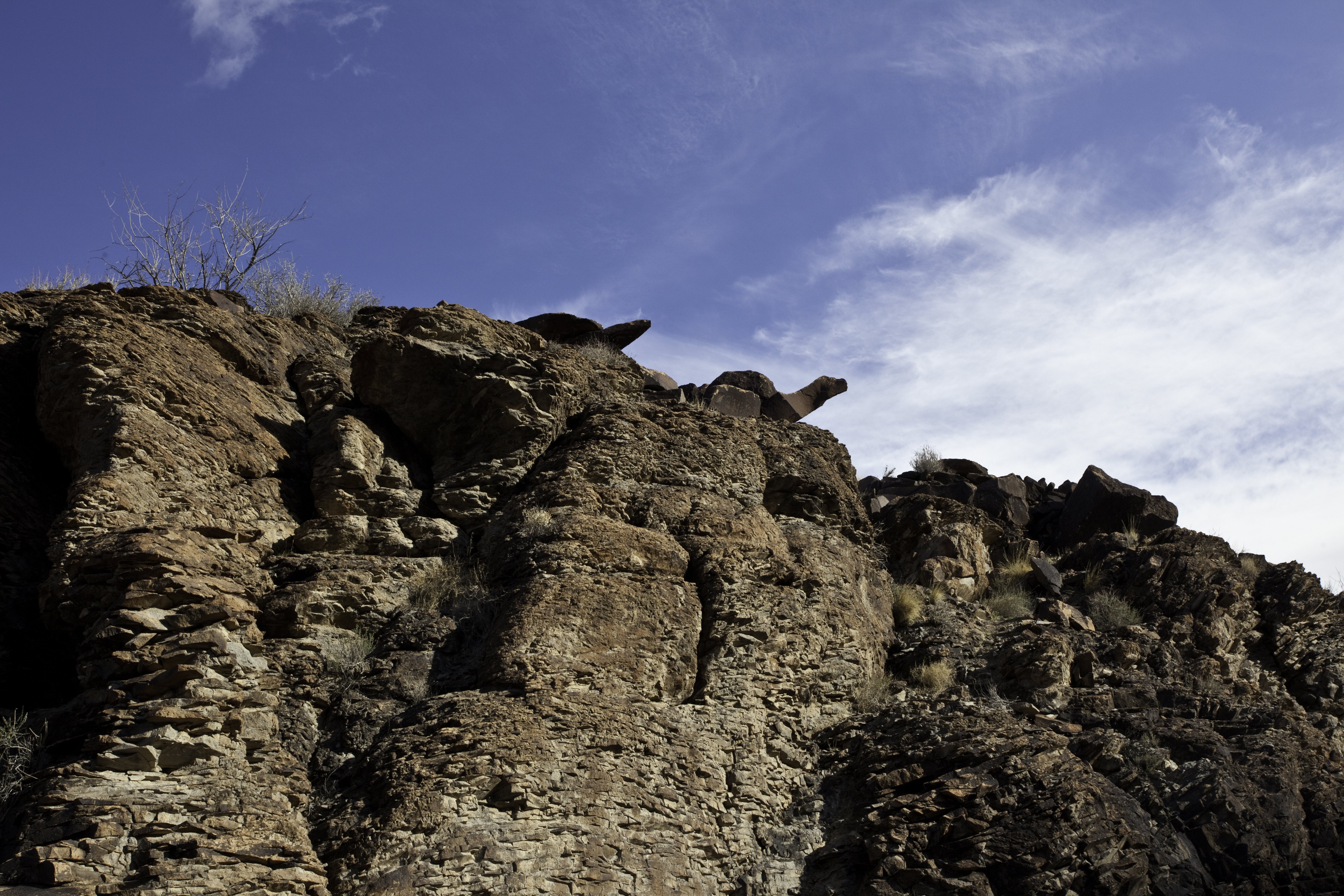
Sloan Canyon National Conservation Area is one of the few remaining wild places near Las Vegas, a rugged expanse of desert mountains visible from almost anywhere in the valley when you look south toward Henderson. The 48,000-acre NCA protects a remarkable collection of Native American petroglyphs — rock art dating back up to 2,000 years — along with desert bighorn sheep, desert tortoises, and birds of prey.
The main draw is the Petroglyph Canyon Trail in Sloan Canyon itself, where hundreds of rock-art panels cover the dark basalt boulders. Joshua trees dot the higher elevations while creosote and cacti dominate below. The NCA also contains the North McCullough Wilderness — 17,000 acres of designated wilderness with steep canyons that reward experienced hikers — and rises toward Black Mountain, the volcanic peak that closes the south end of the Las Vegas Valley.
A high-clearance vehicle is essential to reach the trailheads from the paved road. Follow the dirt power-line road south until you see the Anthem development. The main canyon trail is straightforward but involves some scrambling over rock barriers. Petroglyphs become visible shortly after entering the canyon and are scattered throughout.
Combine a visit with Seven Magic Mountains, Ugo Rondinone's fluorescent-painted boulder installation a short drive south on Interstate 15 — the easiest two-stop day trip out of Las Vegas.