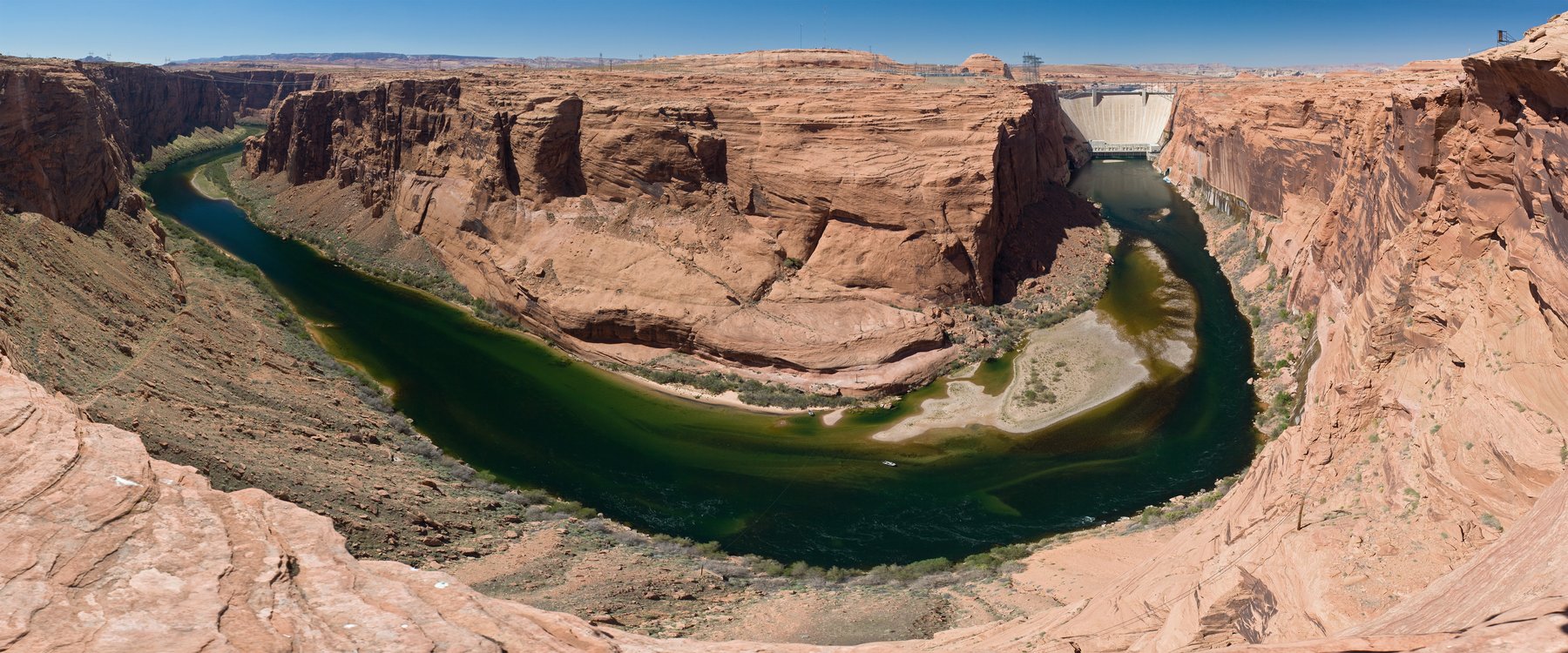
Glen Canyon National Recreation Area is one of the largest and most remote parks in the American Southwest — a vast, sun-scorched landscape of sandstone canyon walls, hidden side canyons, and the enormous blue expanse of Lake Powell stretching 300 kilometres across the Utah-Arizona border. It is a place of stark contradictions: hauntingly beautiful desert country that was deliberately flooded in the 1960s to create one of the largest reservoirs in the United States.
The recreation area stretches from Lees Ferry in Arizona north to the Orange Cliffs of southern Utah, encompassing dramatic geology, Indigenous rock art, and a layered human history. Lake Powell itself was formed by the construction of Glen Canyon Dam in 1966 — a project that sparked fierce debate and helped birth the modern environmental movement. Edward Abbey's The Monkey Wrench Gang was set here, and the canyon's flooding remains controversial to this day.
For visitors, the appeal is immediate: boating on the lake's calm red-walled arms, swimming in hidden coves, fishing for striped bass and catfish, and hiking into backcountry slot canyons that remain untouched. Antelope Canyon — the famously photogenic slot canyon — lies just outside the recreation area near Page, Arizona, and makes a natural companion visit. The view from Horseshoe Bend, where the Colorado River loops dramatically below sheer sandstone cliffs, is a short walk from Page and justifiably draws crowds.
The landscape is unforgiving in summer, with temperatures regularly exceeding 40°C (104°F). Spring and autumn are the best times to visit. Water and shade are scarce in the backcountry — take both seriously.