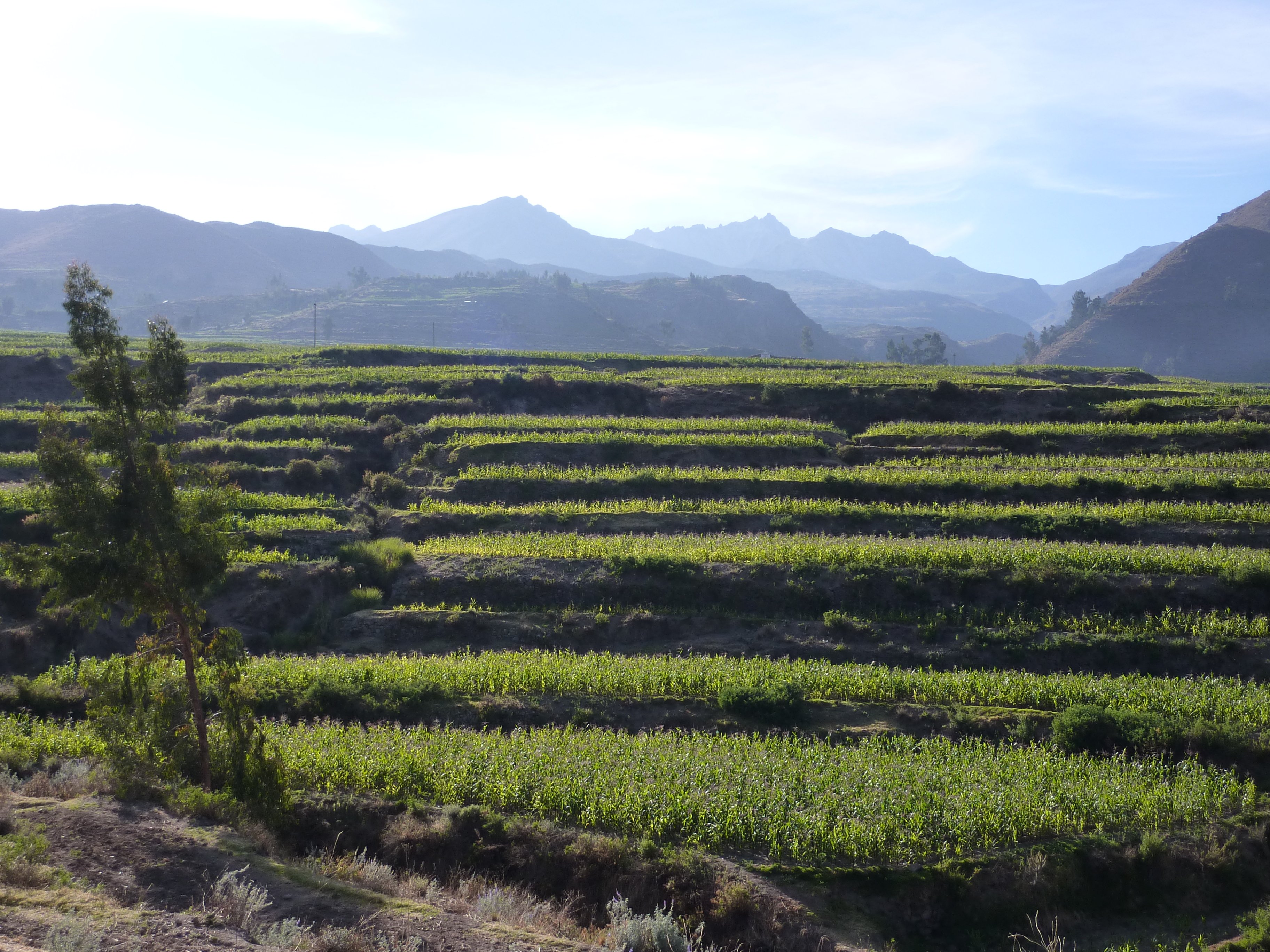
Small Colca Canyon town used as the starting point for hikes down to Sangalle.
Cabanaconde is a small, dusty town at the far end of the Colca Canyon, and the starting point for most hikes down into the canyon. Stock up on water and supplies here before heading down — there is little available below.
From Cruz del Cóndor you can take a bus or walk to Cabanaconde. If walking, follow the road until water crosses it, then look for a water channel behind a small house on the right — follow the channel along the hillside (through a small tunnel) to cut off the road switchbacks.
The hike down to Sangalle — known as the Oasis — takes about two and a half hours on a steep, dusty trail. At the bottom, a green paradise of palm trees and swimming pools awaits: three lodges — Eden, Oasis, and Paradiso — offer basic bamboo huts, set meals, and pools. Paradiso tends to be the best choice. The climb back up is tough — three to four hours depending on fitness. Start early in the morning or late in the afternoon to avoid the worst of the sun. The standard alternative is the multi-day Colca trek via San Juan de Chuccho, Cosñirhua, and Malata.
Buses leave from the plaza for Arequipa several times daily.
Guide
Eating Out
Eating in Cabanaconde is straightforward: simple Peruvian highland food (soup, rice, potatoes, alpaca steak, fried trout, plates of stewed chicken) at a handful of places clustered around the plaza. The hostels and small hotels mostly run their own restaurants and these are the easiest options for dinner — they cook around the menu and the climbing hikers' appetites.
The cafe at Pachamama Hostel is the long-running favourite for breakfast and pizzas, with a decent fire-warmed dining room useful on cold nights. Stock up on energy snacks and bottled water at the small shops on the plaza before heading down into the canyon; there is little for sale at the canyon-floor lodges and prices double as soon as you descend.
Guide
Getting There
Buses to Cabanaconde leave from the Terminal Terrestre in Arequipa several times a day, run mostly by Reyna and Andalucía. The journey takes between five and seven hours depending on the bus and the road conditions, climbs over the Patapampa pass at 4,910 metres (snow possible in winter), and passes through Chivay before turning west along the rim of the canyon.
Coming from Cuzco or Puno, you change in Arequipa or — much more rarely — in Chivay if you find a connecting service. The route from Chivay to Cabanaconde runs the length of the canyon north side and stops at Yanque, Pinchollo, Maca, and other villages along the way. Most travellers buy a two-day Arequipa-based tour that includes Cabanaconde at the far end; doing it independently saves money but adds at least one night to the trip.
Guide
When to Go
The dry season (May to October) is the best time to visit Cabanaconde and the Colca Canyon. Trails are dry and the skies are clear, which matters both for hiking and for condor spotting — the birds are most active at Cruz del Cóndor on clear mornings. June, July, and August are the peak tourist months; the canyon is busier but the conditions are reliable.
The wet season (November to April) brings daily rain, often heavy in January and February. The canyon trails become slippery and the river can rise. Condors still fly but cloud cover is more frequent at the viewpoint. December, January, and February are the coldest nights in Cabanaconde (the altitude is 3,287m), and the oasis at Sangalle can feel remote and isolated with few other hikers.
The Virgen del Carmen festival in Cabanaconde (around 16 July) brings music, dancing, and considerable quantities of chicha to the village plaza — a reason in itself to visit in mid-July if the timing works.