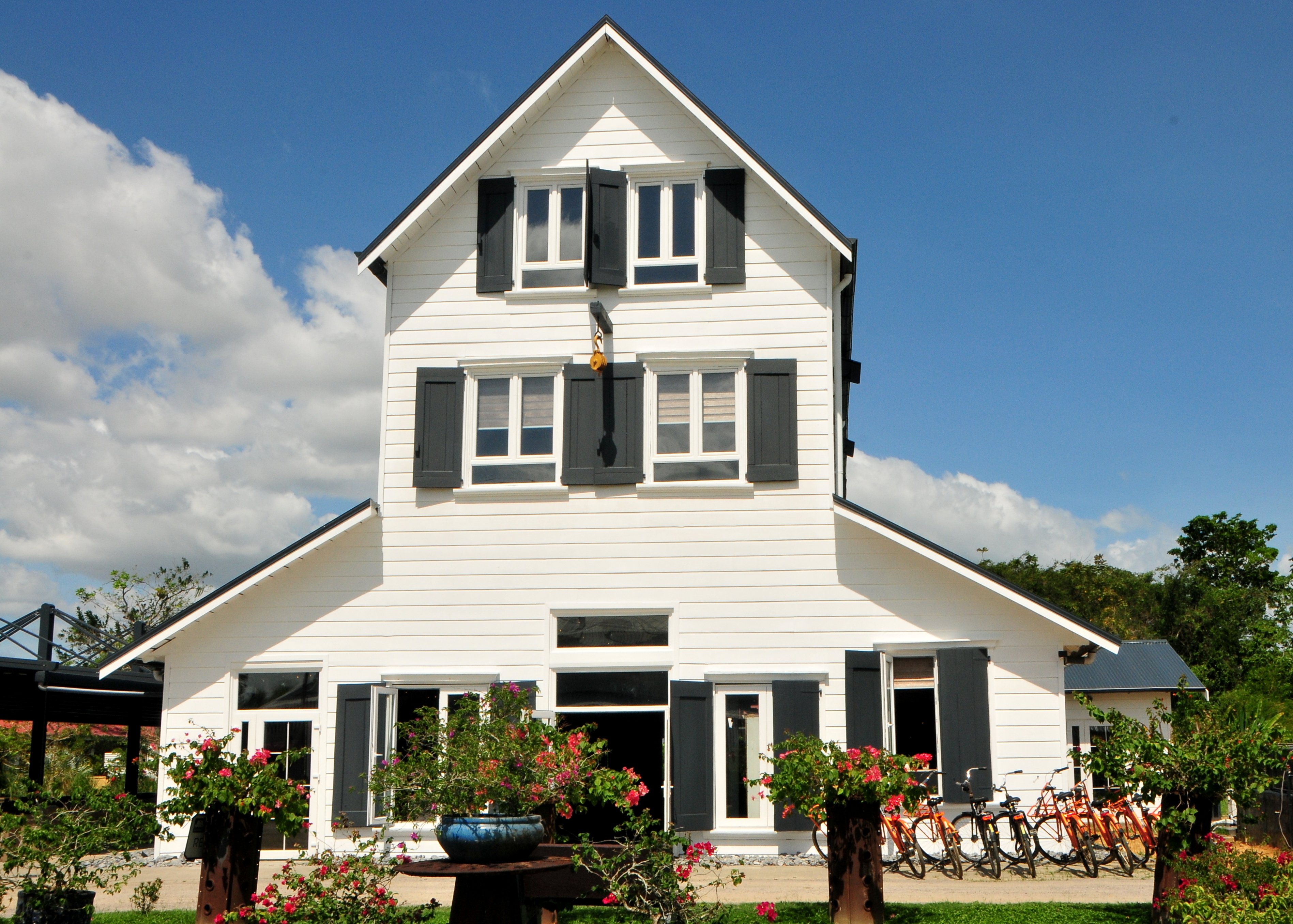
Commewijne
©
Commewijne

Commewijne

Plantation district east of Paramaribo, threaded by rivers, wetlands, old estates, and quiet farming communities

Commewijne begins just across the Suriname River from Paramaribo, but its pace is immediately more rural. Rivers, canals, former coffee and sugar estates, Javanese communities, and strips of secondary forest make it Suriname's easiest day outside the capital.

The standard river outing looks for Guiana dolphins near the confluence, then stops at Fort Nieuw Amsterdam and one or more plantation sites. Dolphin sightings are possible, not promised. A guide who treats the plantations as places of slavery and indentured labour rather than pretty old estates is worth seeking out.

Peperpot Nature Park is the best independent stop: an old coffee and cacao plantation where forest has returned around canals and paths. Museum Bakkie, farther downriver at former plantation Reynsdorp, rewards advance planning with a rare personal collection on the district's history. By bicycle or car you can combine Peperpot with Nieuw Amsterdam; Bakkie needs a separately arranged river journey.

Guide

Activities

The Commewijne district across the river from Paramaribo is a half-day trip: the old coffee and cacao plantations at Frederiksdorp and Rust en Werk, the fort at Nieuw Amsterdam, and — at the confluence where the Commewijne meets the Suriname — a resident group of Guiana river dolphins.

Boats leave from Leonsberg on the Paramaribo side, and the dolphin trips are timed for late afternoon when the animals are feeding and the light is worth having.

Crossing under your own steam. Besides the organised tours, small boats cross the river all day from Leonsberg to Nieuw Amsterdam, and on the other routes — Paramaribo to Meerzorg, Domburg to Laarwijk. There is generally somebody at the landing willing to take you across; you agree the fare on the spot and pay cash. None of these boatmen advertise or take bookings, so it is a matter of turning up rather than arranging anything in advance.