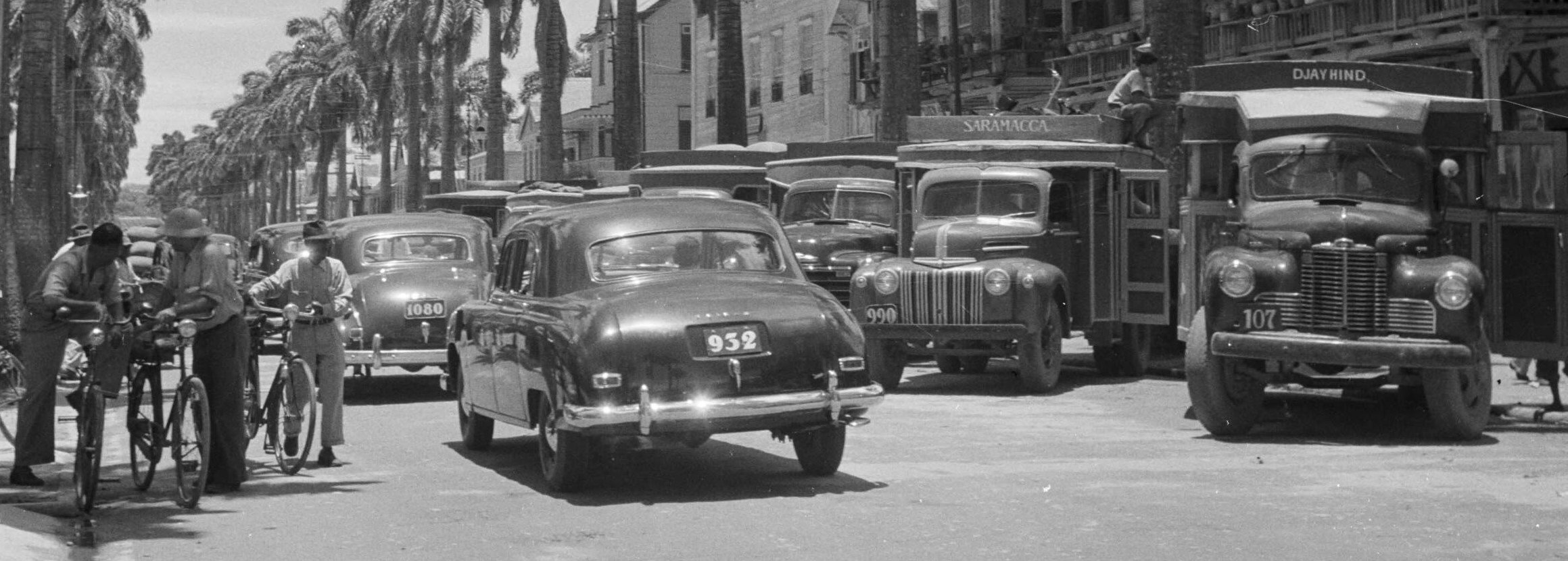
Paramaribo is a wooden Dutch colonial city rebuilt for the tropical coast and made Surinamese by the people who live in it. The UNESCO-listed centre has broad streets, deep verandas, a fort beside the brown river, and religious buildings that make the city's diversity visible. Its best argument, though, may be lunch: roti, Javanese saoto, Creole pom, and Chinese-Surinamese dishes all belong here.
The old city runs from Fort Zeelandia and the Surinaams Museum along the Waterkant and inland past Onafhankelijkheidsplein. The immense timber Cathedral of Saints Peter and Paul is the architectural surprise. A few blocks away, Neveh Shalom Synagogue and the Keizerstraat Mosque are immediate neighbours rather than a travel-guide metaphor.
Some wooden buildings have been restored; others are collapsing or have been lost to fire. That vulnerability is part of the UNESCO site's real condition, not romantic scenery. Walk in the morning, when the heat is gentler, and treat Palmentuin as a daytime stop rather than a shortcut after dark.
The Central Market and Maroon Market pull the wider country into the city through fruit, fish, herbs, and ritual ingredients. For deeper context, add the Koto Museum, the Lalla Rookh Museum, and Readytex Art Gallery. Spend an evening eating Javanese-Surinamese food in Blauwgrond, or book the Surinaamsch Rumhuis for the story behind local rum. Two full days is enough for the centre and museums; allow more if you want Commewijne or Jodensavanne as day trips.