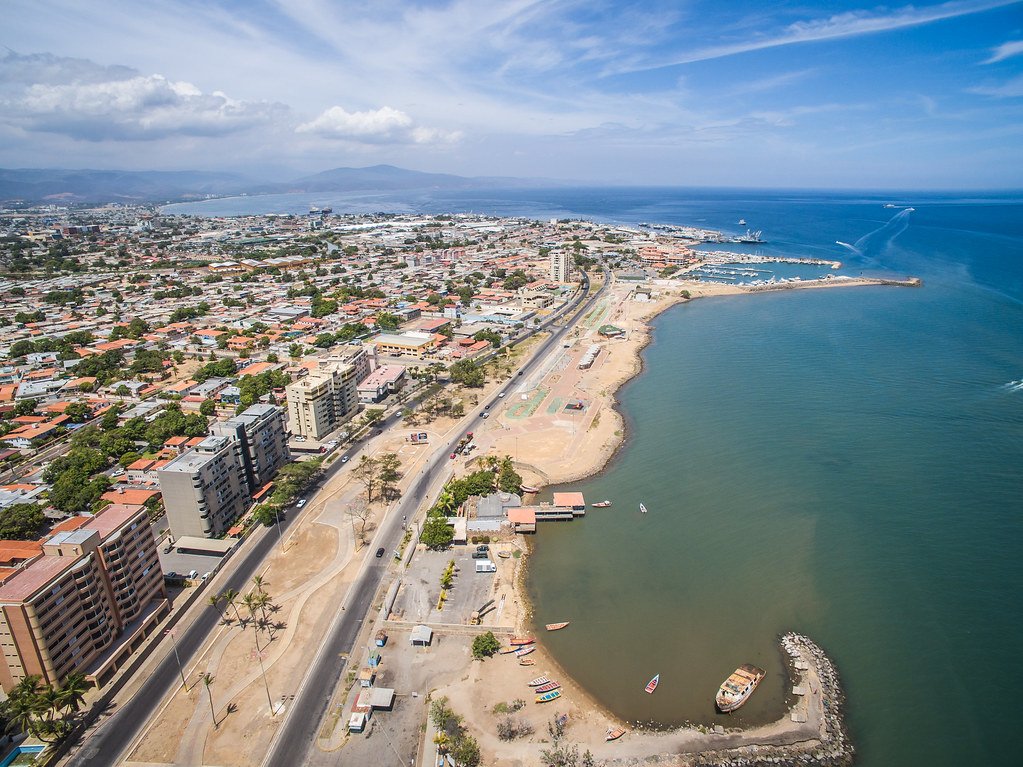
Cumaná holds a remarkable distinction: it is the oldest continuously inhabited European settlement in South America, founded in 1521 by Gonzalo de Ocampo on the shores of the Gulf of Cariaco. That history is still visible in its colonial forts, churches, and the old quarter that lines the Manzanares River as it meets the sea.
The city is the capital of Sucre state, one of Venezuela's least-visited regions despite being one of its most rewarding. The coastline east of Cumaná leads toward the Paria Peninsula and the islands of the Caribbean; the interior rises into coffee-growing hill country. Most travelers pass through on their way to Isla Margarita or the Paria Peninsula, but Cumaná rewards a day or two of its own.
The Castillo de San Antonio de la Eminencia dominates a hilltop above the city, a yellow-painted fort rebuilt several times after earthquakes — the region sits on active faulting. The cathedral and the historic core near the waterfront carry the layered character of a city that has been remade and rebuilt over five centuries. The Casa Natal de Andrés Eloy Blanco preserves the birthplace of Venezuela's best-loved 20th-century poet, and the long curve of Playa San Luis provides an easy swim at the western edge of town.