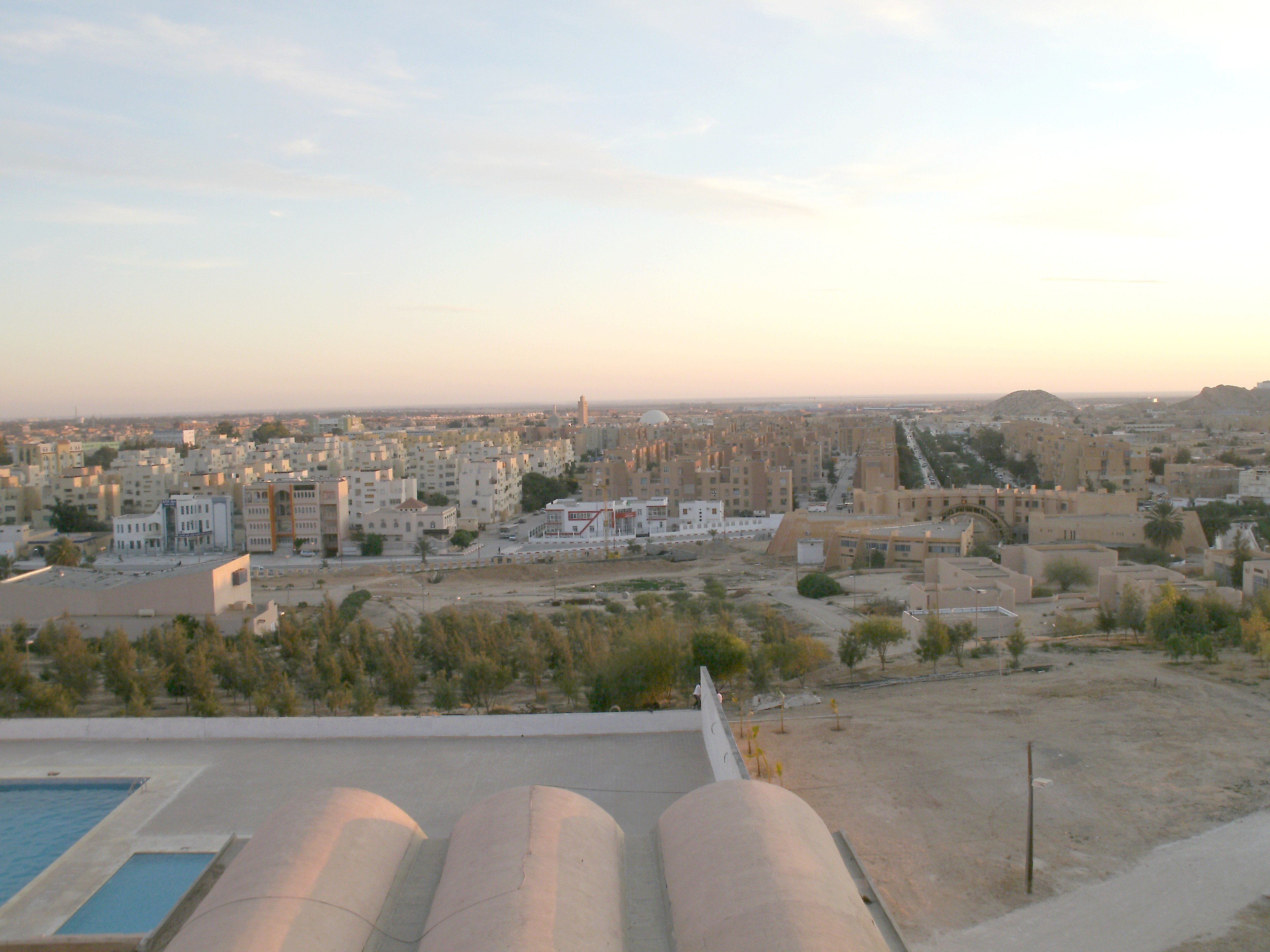
Biskra sits right at the line where the Tell Atlas gives way to the Sahara, and you can feel the transition. To the north, green mountains; to the south, palm groves and then open desert. This is Algeria's "gateway to the Sahara," a phrase that for once actually means something -- the climate, the light, and the landscape all change dramatically as you arrive.
The city has been drawing outsiders for a long time. In the 19th and early 20th centuries, European writers and painters came here seeking warmth and exoticism -- Andre Gide wrote parts of "The Immoralist" here, and Etienne Dinet settled permanently, painting scenes of local life that now hang in major European museums. The Palmeraie de Biskra — hundreds of thousands of date palms stretching for kilometres — is still its most distinctive feature, and the Ziban Deglet Nour dates harvested here are among the finest in the world.
Modern Biskra is a working Algerian city of around 300,000 people, not a tourist destination in any conventional sense. But it has genuine character. The Hammam Salhine thermal baths, built on springs used since Roman times, are well worth an afternoon. The real draws are outside town: the Gorges d'El Kantara to the north, where the road cuts through a dramatic 120-metre limestone canyon at the precise line between the Tell Atlas and the Sahara, and the Mosque of Sidi Okba 35 kilometres to the southeast — one of the oldest Islamic monuments in North Africa, built over the tomb of the Arab commander who brought Islam to the Maghreb. The regional museum has a worthwhile collection of Roman finds and Berber ethnography. The weekly market is lively and worth timing a visit around.
The best time to visit is between October and April. Summers in Biskra are genuinely fierce, with temperatures regularly exceeding 45 degrees. The city is well connected by road and rail from the north, with direct trains from Constantine and buses from most major cities.