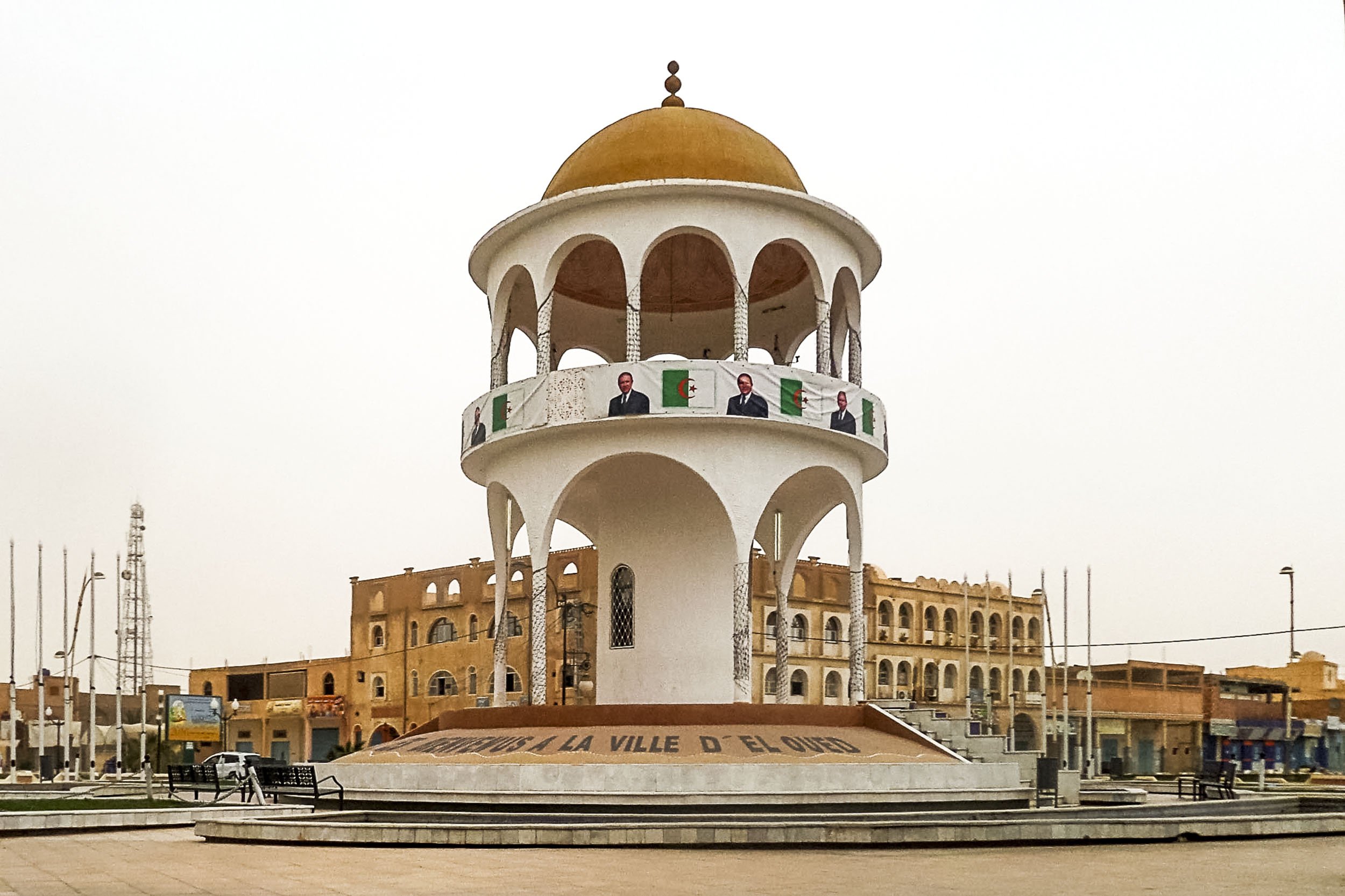
El Oued
©
El Oued

El Oued

Saharan oasis city known for white domed buildings that cool homes in the Oued Souf.

El Oued is known as the City of a Thousand Domes — and when you see it from above, you understand why. Every building in the old town is topped with a small white dome, a traditional design that keeps interiors cool in the fierce Saharan heat. The effect, spreading across the valley of the Oued Souf, is unlike anything else in Algeria or anywhere else in North Africa.

The town sits at the edge of the Grand Erg Oriental, the vast sand sea of eastern Algeria, and its economy runs on dates — the Souf valley's ingenious ghout farming system sinks gardens into craters dug down to the water table, allowing date palms to grow in the middle of the desert. You can see these sunken gardens around the outskirts of town. The central market is lively and colourful, with dates, spices, and desert roses (natural gypsum crystal formations found in the surrounding sand). The Sidi Salem mosque just west of the centre, with its cluster of small white domes, is the spiritual heart of the Souf.

El Oued is reached by road from Biskra or Touggourt, or by air from Algiers. The town is hot — summer temperatures regularly exceed 45°C — so visit between November and March if you can. The Thursday market is the biggest of the week.

Guide

Getting There

By air. Guemar Airport (ELU) is around 20 kilometres north of central El Oued. Air Algérie runs flights from Algiers, typically several times a week, plus occasional services to other Algerian cities. The flight from Algiers takes about 90 minutes and is far quicker than the long bus journey across the country. A taxi from the airport into town costs around the equivalent of a few dollars.

By road. El Oued is reached from Biskra (about 270 km, 4 hours) along the well-maintained N3, and from Touggourt (about 90 km) to the west. Long-distance buses run from both, and from Algiers (around 700 km, an overnight journey). For travellers coming overland from Tunisia, there is a crossing at Taleb Larbi to the east; bring a vehicle paperwork or use a service taxi.

Train. El Oued has no train station. The nearest line ends at Touggourt; from there it is a two-hour bus or taxi onward.

Foreign travellers entering Algeria's south often need to be travelling with a registered local guide or agency, depending on current security regulations — check the requirements before you set out.

Guide

Things to Do

El Oued's main draw is the town itself — wandering the alleys of the old city under the white-domed roofs, watching the desert light play across the sand-coloured walls. The Souf Museum covers the history and ethnography of the region. The central market is the social heart, busiest on Thursday. Just outside town, the Sidi Salem mosque and the surrounding ghout date palm gardens — sunken plantations dug down to the water table — are the iconic Souf valley landscapes. For desert excursions into the Grand Erg Oriental, local guides run trips ranging from a few hours to several days.

Guide

When to Go

El Oued is one of the hottest cities in Algeria, and the difference between visiting in winter and visiting in summer is brutal. From May to September, daytime temperatures regularly exceed 40°C and often top 45°C; July and August can hit 48°C or more, and the desert wind can push the temperature higher. Most desert excursions don't run in summer, and ordinary sightseeing becomes a question of finding shade between dawn and dusk.

November to March is the time to come. Daytime temperatures sit between 15°C and 25°C — pleasant in the sun, cool in the shade — and nights can drop close to freezing in December and January. Pack layers. The light is at its best in winter too, with long shadows over the ghout craters and dunes.

October and April are shoulder seasons: warm but tolerable, and lighter on tourists than the deep winter months.

The Thursday market is the biggest day of the week; if you can plan your visit to overlap, the souk is at its most lively. The main religious festival of the year is the ziyara of Sidi Salem, generally held in spring (date varies with the Islamic calendar) — worth attending if you can time it but expect the town to be packed.