Sal
©
Sal

Sal

Flat Cape Verdean island of salt flats, trade winds, resort beaches, and warm Atlantic water

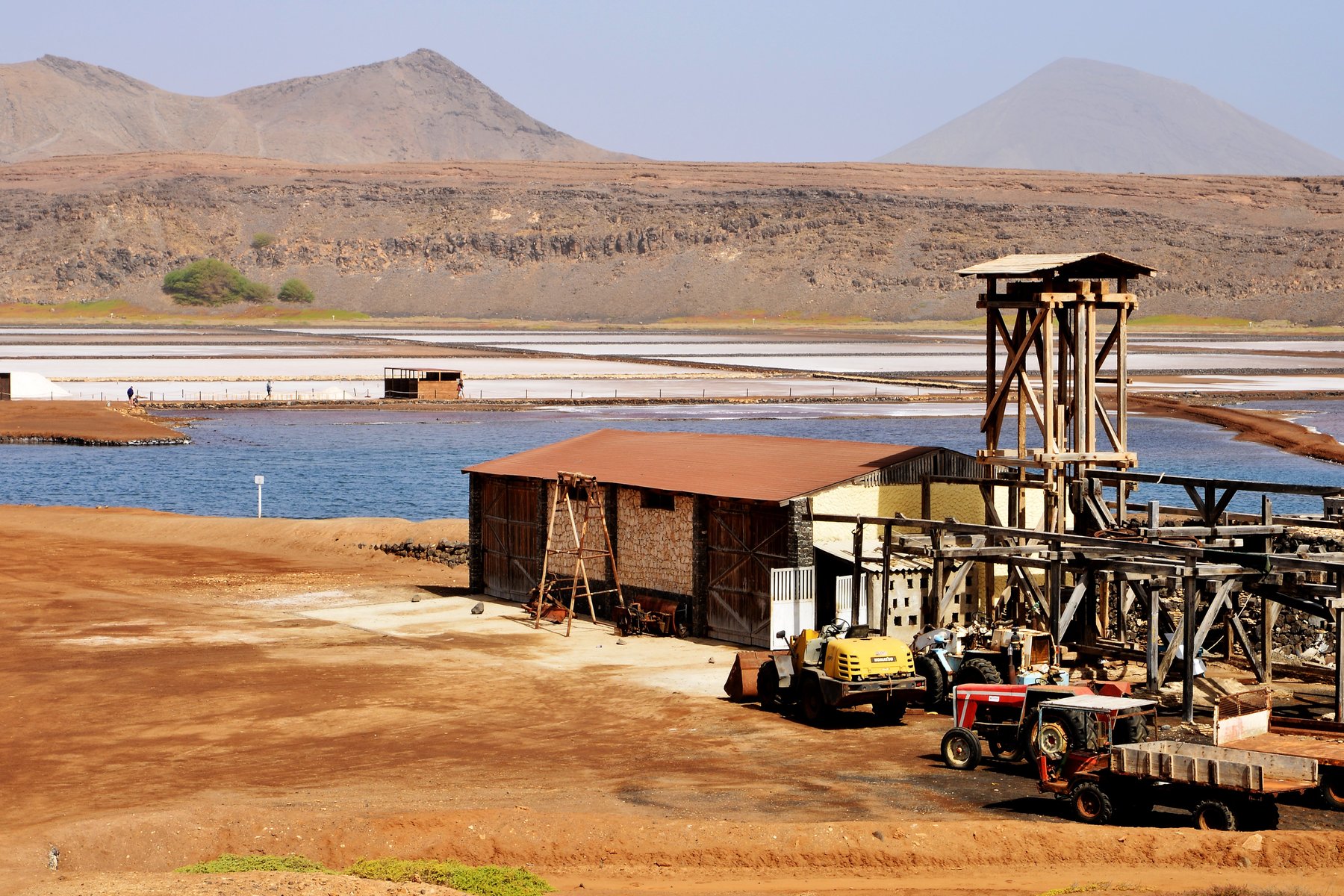
Sal is the flattest and most arid island in Cape Verde — a disc of volcanic rock and sand in the middle of the Atlantic with barely a tree in sight. It is also the most visited, thanks almost entirely to its international airport, which deposits European package tourists directly into the resort village of Santa Maria on the south coast.

That sounds unpromising, but Sal has a genuine draw beyond the resort infrastructure. The beaches are excellent, the water is warm and clear year-round, and the consistent trade winds make the island one of the world's better spots for kitesurfing and windsurfing. And scattered around the flat interior are a few things worth seeing: the volcanic salt crater at Pedra de Lume — where you float in water so salty it holds you up without effort — and the eerie rock formation at Buracona on the northwest coast, where light filters through a sea cave to create the famous "Blue Eye."

Espargos, the island's actual capital, sits in the middle near the airport. It's a working town rather than a resort, and a better base than Santa Maria for travellers who want local prices and local food — in particular, the cachupa stew that is Cape Verde's national dish. There are daily inter-island flights from Sal to Praia on Santiago and to Mindelo on São Vicente.

Guide

Eating Out

Sal has two distinct dining scenes: the tourist restaurants of Santa Maria, dominated by grilled fish, pizza, and international menus aimed at European package tourists; and the local restaurants of Espargos and the smaller villages, which serve cachupa, grilled tuna, and lobster at considerably lower prices.

Cachupa is Cape Verde's national dish — a slow-cooked stew of maize, beans, and seasonal vegetables, with fish or meat stirred in. The version eaten for lunch by working people (refogada) is lighter; the weekend version (rica) adds more protein and simmers longer. Any local restaurant in Espargos will do a good one.

Fresh tuna and wahoo are regularly landed at Palmeira harbour on Sal's west coast. Several restaurants in both Santa Maria and Espargos serve grilled tuna steaks at prices that make European visitors do a double-take.

Guide

Getting There

Sal has an international airport (Amílcar Cabral International Airport) near Espargos, and it is Cape Verde's main entry point for European tourists. Direct charter and scheduled flights operate from the UK, Portugal, the Netherlands, Germany, and several other European countries. TAP Air Portugal connects Sal to Lisbon with regular service, from where flights fan out across Europe. Binter Canarias operates connections between Sal and the Canary Islands.

Inter-island flights connect Sal to Praia (Santiago), Mindelo (São Vicente), and other islands within the archipelago. TACV (Cabo Verde Airlines) and Bestfly operate these routes.

There are no regular ferry services from the mainland; Cape Verde is too distant from Africa and Europe for practical sea connections.