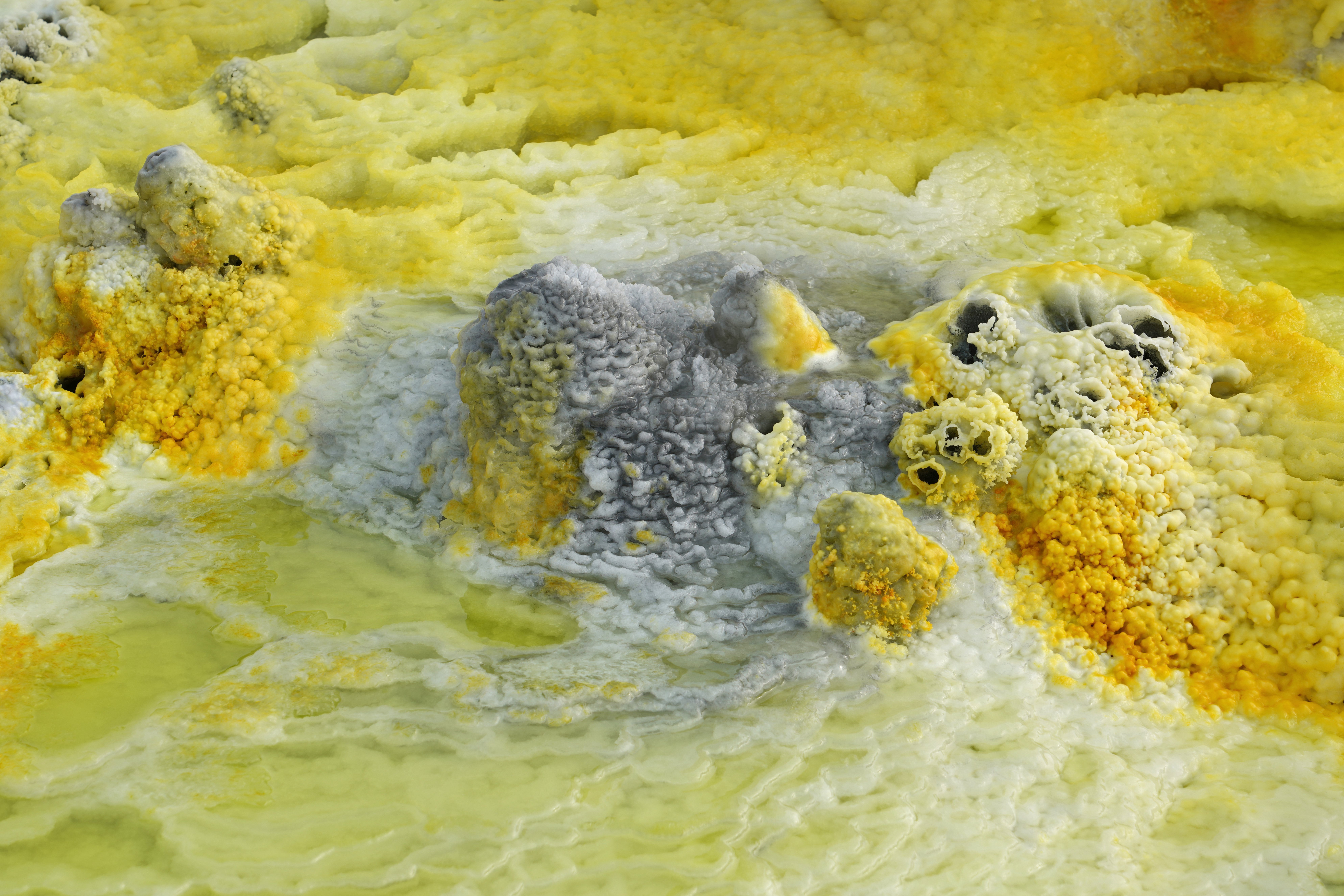
The Danakil Depression is one of the most extreme landscapes on earth — a vast sunken plain in the Afar Region of northeastern Ethiopia, sitting at up to 125 metres below sea level and baking under an average annual temperature exceeding 34°C. It is geologically one of the most active places on the planet, sitting at the junction of three tectonic plates that are slowly pulling apart, and the surface shows it: volcanic shields, sulphurous hydrothermal springs, acid lakes in hallucinogenic colours, and enormous salt flats where ancient seabeds have been exposed by the retreating water.
Visiting requires commitment and organisation. The Danakil is not a place you drive through casually — tours from Mekele typically run three to four days, cover several hundred kilometres of rough roads, and require armed escorts provided by the Afar Regional Security Authority. The bureaucracy and logistics are real, but what you see justifies every inconvenience. The Dallol hydrothermal field looks like no other place on earth: acid pools of sulphur-yellow, malachite-green, and blood-red, boiling and bubbling on a surface of crystallised salt and mineral deposits, all below sea level in one of the hottest inhabited regions on the planet. The salt flats of Lake Asale are traversed by Afar camel caravans harvesting salt blocks exactly as they have for centuries. And Erta Ale, the "smoking mountain," is one of a handful of volcanoes in the world with a permanently active lava lake — viewed at night, with the caldera glowing orange above you, it is an experience that stays with you permanently.
The Danakil is not suitable for solo travel or independent exploration. All visits require an organised tour through a licensed operator, an armed escort, and careful preparation for extreme heat — temperatures regularly exceed 50°C in summer, and even in the cool season (October-March) daytime temperatures are brutal. Drink quantities of water that seem excessive, start moving before dawn, and rest in shade through the hottest midday hours.