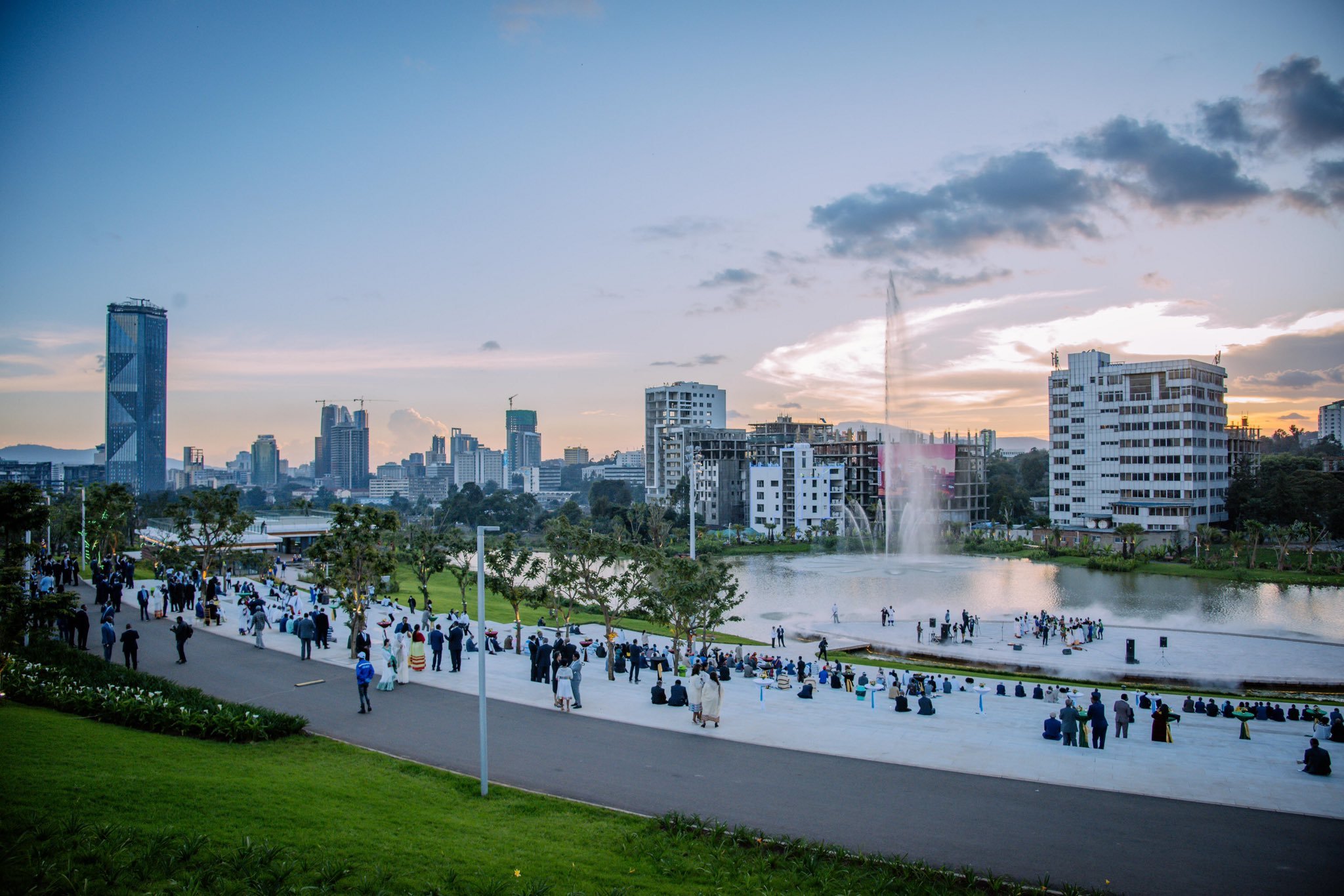
Addis Ababa sits at 2,500 metres in the Ethiopian highlands, a city that feels perpetually spring-like despite being just a few degrees from the equator. Founded in 1886 by Emperor Menelik II, its name means "New Flower" in Amharic, and the city has been growing restlessly ever since. Today it is home to over five million people and serves as the diplomatic capital of Africa, hosting the African Union and dozens of embassies.
The city is not conventionally beautiful. Grand monuments and colonial-era buildings stand alongside corrugated-iron neighbourhoods and half-finished construction. But that rawness is part of its appeal. Addis is a city where you can visit a world-class museum in the morning, eat injera with your hands at a streetside restaurant for lunch, and spend the evening listening to Ethio-jazz in a smoky bar.
The Piazza district, a legacy of the brief Italian occupation in the 1930s, has some of the city's best restaurants and a faded European feel — including the Taitu Hotel, Ethiopia's oldest, and Fendika Azmari Bet, where traditional bard musicians improvise sharp-edged songs until late into the night. Bole Road is the modern centre, lined with cafes, shops, and the kind of energy that comes with a rapidly growing African capital. The Mercato, one of the largest open-air markets on the continent, is overwhelming and exhilarating in equal measure.
Addis also works well as a base for exploring Ethiopia more broadly. The city's elevation means cool mornings and warm afternoons year-round, and Bole International Airport connects to destinations across the country and continent.