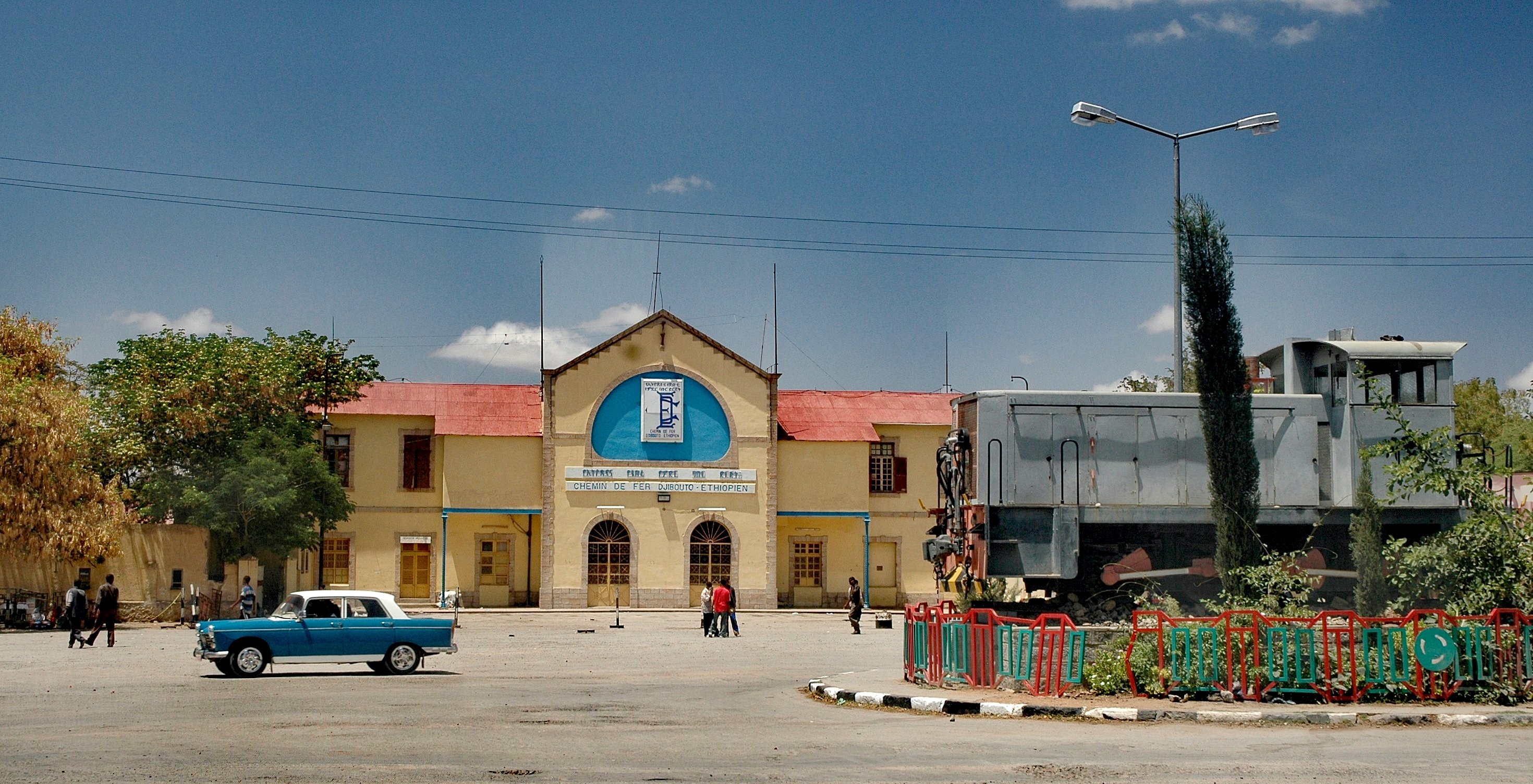
Eastern Ethiopian railway city with contrasting Kezira boulevards and the Somali-influenced Megala market quarter.
Dire Dawa is Ethiopia's second city, a railway town built in the early 1900s when the French-built Djibouti–Addis Ababa line reached this spot in the Rift Valley lowlands. The Kezira district, the old European quarter, has wide boulevards, art deco buildings, and a relaxed, almost Mediterranean feel that is completely different from the highland cities — helped by the hot, dry climate.
The Megala, the old market area on the other side of the seasonal river, is a sprawling, vibrant Somali-influenced quarter where chat (khat) trading dominates the economy. The contrast between the two halves of the city is striking. The old railway station, once the heart of the city, has grand ambitions visible in its architecture even if the trains no longer run as they once did. Just south of town, the Porc-Épic cave is one of the great Middle Stone Age archaeological sites of the Horn of Africa.
Dire Dawa is a gateway to Harar, the walled Islamic city about 50 km to the south, and to the Somali region beyond. The city has good domestic flight connections to Addis Ababa.
Guide
Getting There
Dire Dawa Airport (DIR) is 3 kilometres west of the centre, with several Ethiopian Airlines flights a day to and from Addis Ababa (about an hour). It is by far the easiest way in.
The new Addis Ababa–Djibouti Railway runs through Dire Dawa with Chinese-built electric passenger trains a few times a week — about 8 hours to Addis or 2 hours to Djibouti. The new station is north of the centre; check current schedules locally.
By road, Addis Ababa is about 450 kilometres west on a tarred but slow highway (10–12 hours by bus). Harar is 50 kilometres south, an hour by shared minibus from the Megala bus stand. The road to Djibouti is open but the border can be tedious.
Guide
When to Go
Dire Dawa lies at 1,200 metres — far lower than highland Ethiopia — and is one of the hottest cities in the country. Daytime temperatures from March to May regularly exceed 35°C, with little shade and dusty winds.
November to February is the best time to visit, with daytime temperatures in the high twenties and cool evenings. The "small rains" (March to May) and "big rains" (July to September) bring brief but heavy storms; the Dechatu wadi can flood spectacularly in August.
The Muslim festivals (Eid al-Fitr, Eid al-Adha) and the Orthodox Christian Genna and Timkat are observed in the city. The Christmas-and-New-Year period brings cool evenings and a relaxed atmosphere in the Italian cafés of Kezira.