Amboseli National Park sits at the foot of Kilimanjaro on Kenya's southern border with Tanzania, and the view alone is worth the journey. On clear mornings the mountain fills the entire southern horizon — a perfect snow-capped cone rising to 5,895 metres above a flat expanse of dusty savanna, dry lake bed, and swamp. The combination of that backdrop with the densest elephant population in Kenya — over 1,600 individuals in a well-studied, semi-habituated population — makes Amboseli one of the most photogenic game parks in Africa.
The park covers about 392 square kilometres, centred on the dried-up lakebed of Lake Amboseli and the permanent swamps fed by underground meltwater from Kilimanjaro. The swamps — Enkongo Narok and Ol Okenya — draw an exceptional variety of wildlife year-round, including hippos, massive buffalo herds, and thousands of birds. The elephant families here are the subject of the longest continuous study of wild elephants anywhere in the world, begun in 1972 by Cynthia Moss and still ongoing; individual animals are recognisable by name.
Wildlife beyond elephants is strong: lions, cheetahs, hyenas, Maasai giraffe, zebra, and wildebeest all occur, along with the spectacularly horned fringe-eared oryx. Over 600 bird species have been recorded. The Observation Hill near the southern swamps is the best vantage point for panoramic views, especially at dawn before the dust haze builds. The camp at Ol Tukai in the centre of the park is close to the swamps and close to where the elephants tend to concentrate.
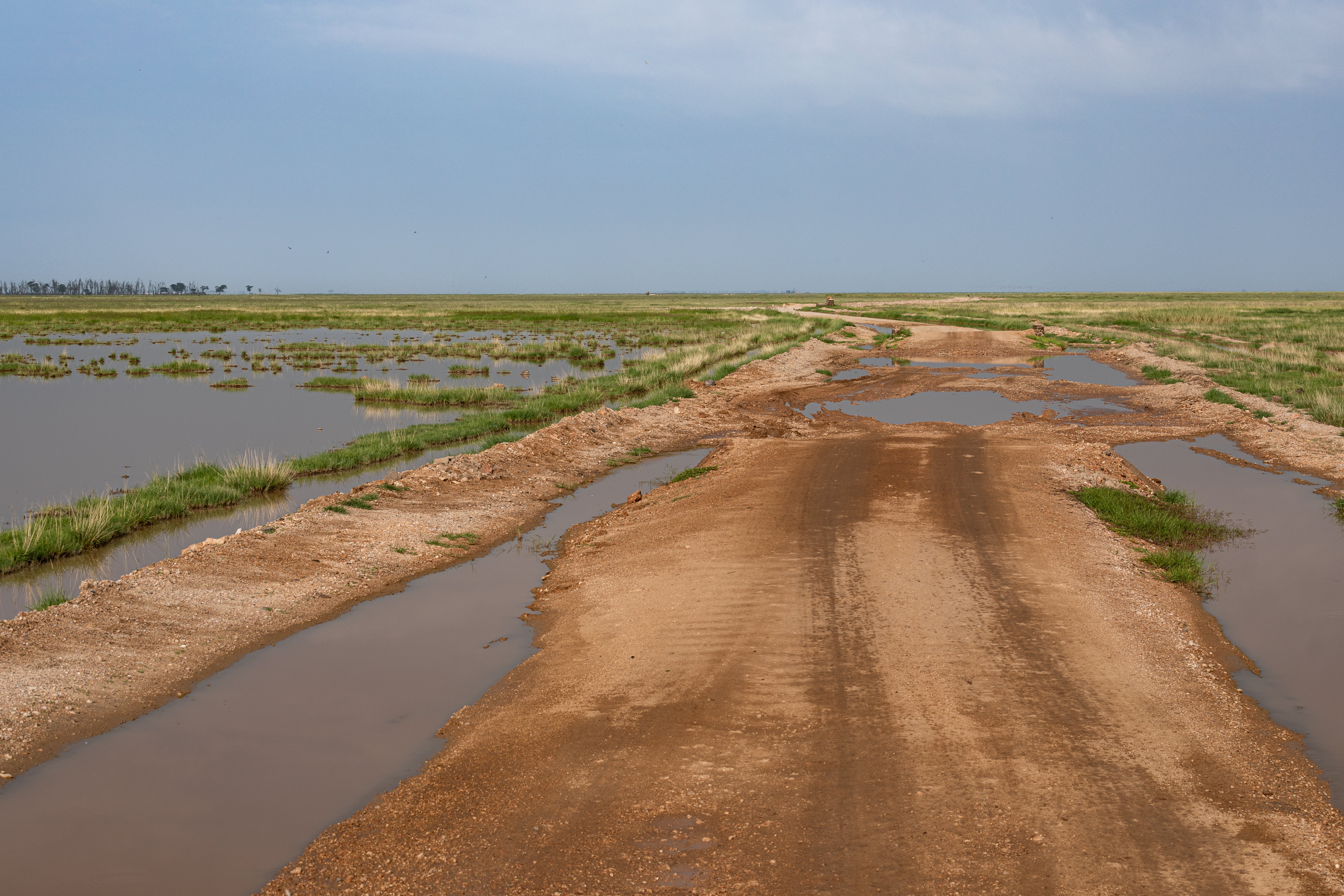
Most visitors come from Nairobi, either on a five-hour drive via Namanga (the Nairobi-Arusha highway) or a short charter flight to Amboseli Airport, which sits just north of the park. Day visits from Nairobi are possible but leave little time; two nights is the minimum for a proper visit. The dry seasons — January to March and June to October — are the best times to visit, when animals concentrate around the swamps and the mountain tends to be clearer. After heavy rains the lakebed floods and road conditions deteriorate sharply.