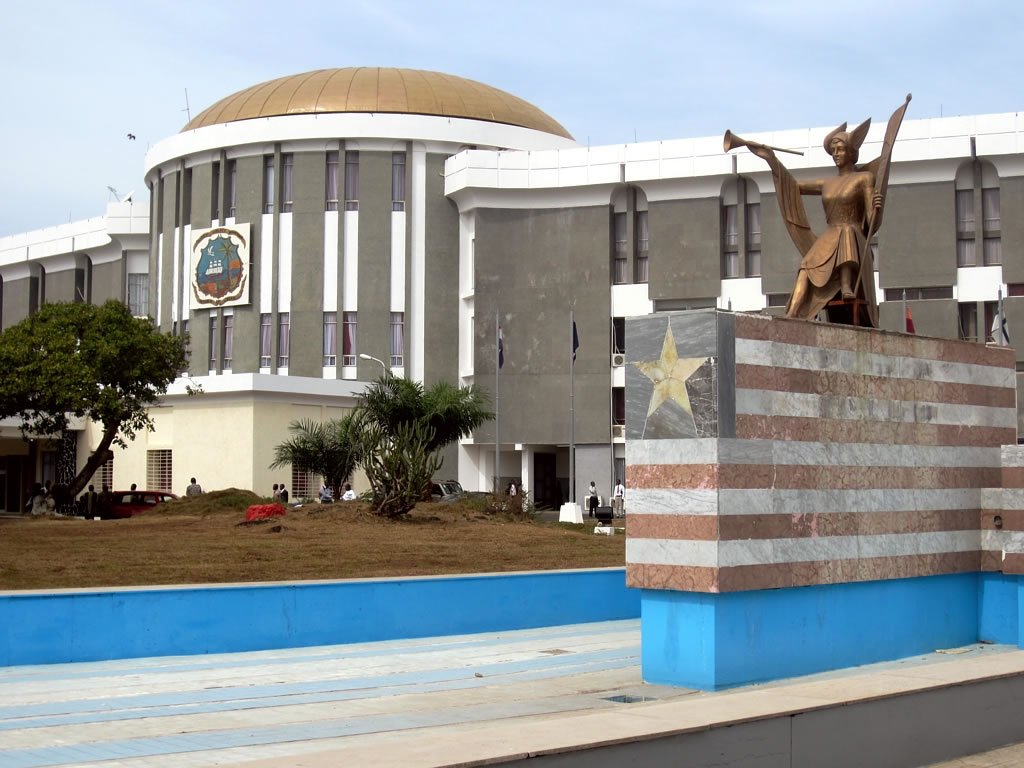
Monrovia is the capital and largest city of Liberia, founded in 1822 by freed American slaves repatriated under the auspices of the American Colonization Society. It was named after US President James Monroe, who supported the colonization effort. That origin — the oldest republic in Africa, built by formerly enslaved people — gives the city a history unlike anywhere else on the continent.
The city sits on a peninsula where the Mesurado River meets the Atlantic, and its layered, sometimes ruinous landscape reflects both ambition and decades of civil war. The Ducor Palace Hotel, once one of West Africa's grandest, looms over the city centre as a skeletal ruin — a stark monument to what Liberia was before the wars. Providence Island, at the mouth of the river, is where the first settlers landed; it now holds the remains of a fort and a small memorial park. Down in the city, Waterside Market is the chaotic, vital commercial heart — fabrics, electronics, food, hardware, all stacked and haggled over in one dense warren of stalls.
Recovery has been slow and uneven, but Monrovia has real life in it. The beaches along the coast — Elwa, Kendeja, and further out — are wide and largely uncrowded. Kendeja, about 16 km from the centre, was historically a crafts village; descendants of artisans brought there generations ago still work there. The National Museum of Liberia on Broad Street is the best introduction to the country's history, and the Masonic Temple and Palm Grove Cemetery round out the colonial-era sights. For wildlife, Sapo National Park to the southeast is one of the last significant rainforests in West Africa, home to pygmy hippos and forest elephants — it rewards the effort of getting there.