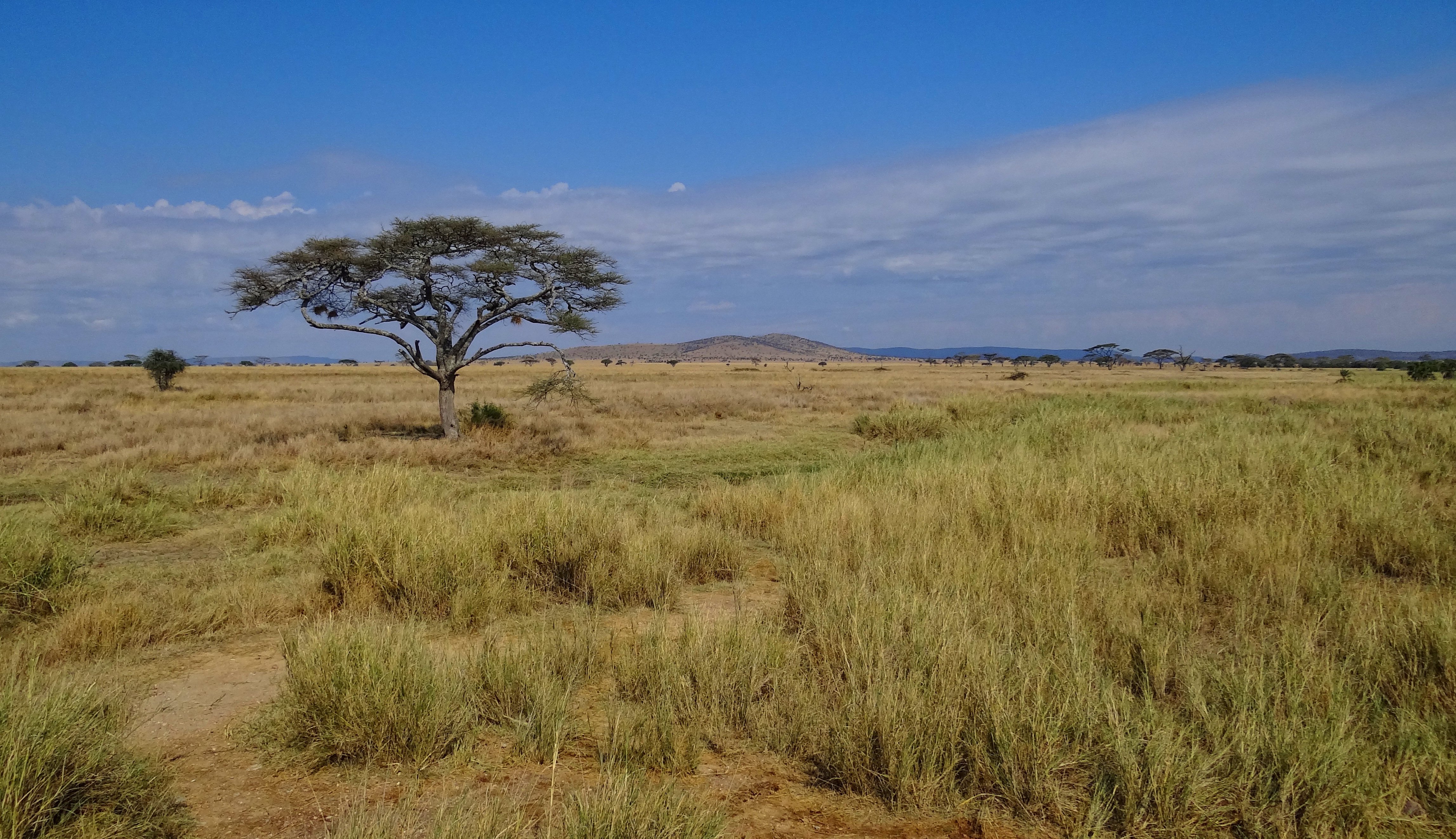
The Serengeti is Africa's most famous wildlife reserve and one of the oldest ecosystems on earth. The name comes from the Maasai word siringet, meaning "the place where the land moves on forever" — and on the open plains in the dry season, that is exactly what it looks like. The park covers nearly 15,000 square kilometres of northern Tanzania, running from the Ngorongoro highlands in the south to the Kenyan border in the north, where it connects with the Masai Mara to form a single continuous ecosystem.
The park is best known for the Great Migration — the annual movement of roughly 1.5 million wildebeest, 200,000 zebra, and 350,000 gazelles across the ecosystem in search of fresh grass. The herds move in a rough circuit throughout the year: calving on the southern plains between January and March, moving north through the Grumeti River corridor in June, and crossing into Kenya in July and August before returning south. The river crossings, where the animals plunge into crocodile-filled waters en masse, are among the most dramatic wildlife spectacles on the planet.
The Seronera Valley at the centre of the park is the most accessible area and holds wildlife year-round. Big cats — lion, leopard, and cheetah — are resident in large numbers. The Serengeti has some of the highest lion densities anywhere in Africa, and leopards are regularly seen in the trees along the river courses. The open grassland east of Seronera, the Ndutu area in the south, and the remote northern Serengeti each offer different habitats and wildlife profiles.
Olduvai Gorge — technically just outside the park boundary in the Ngorongoro Conservation Area — is where Louis and Mary Leakey found the 1.75-million-year-old skull of Paranthropus boisei in 1959, changing our understanding of human evolution. The small museum there is worth a stop on any circuit of the northern parks.